Can you imagine a hotel stay so perfectly tailored to you, it feels like they read your mind? A room rate that feels just right, always reflecting demand and value, not some arbitrary number? For years, we've dreamed of this level of seamless, intuitive service in hospitality. And now, my friends, it’s not a dream anymore. It’s becoming a reality, thanks to some truly brilliant minds at Google DeepMind.
Here in Azerbaijan, where our hospitality sector is blossoming with new hotels and a growing influx of tourists eager to explore our ancient history and modern marvels, this news feels especially electrifying. We are building a future, and AI is our blueprint. The Caucasus is having a moment, and innovations like this will help us shine even brighter on the global stage.
The Breakthrough in Plain Language: AI That Anticipates Your Every Need
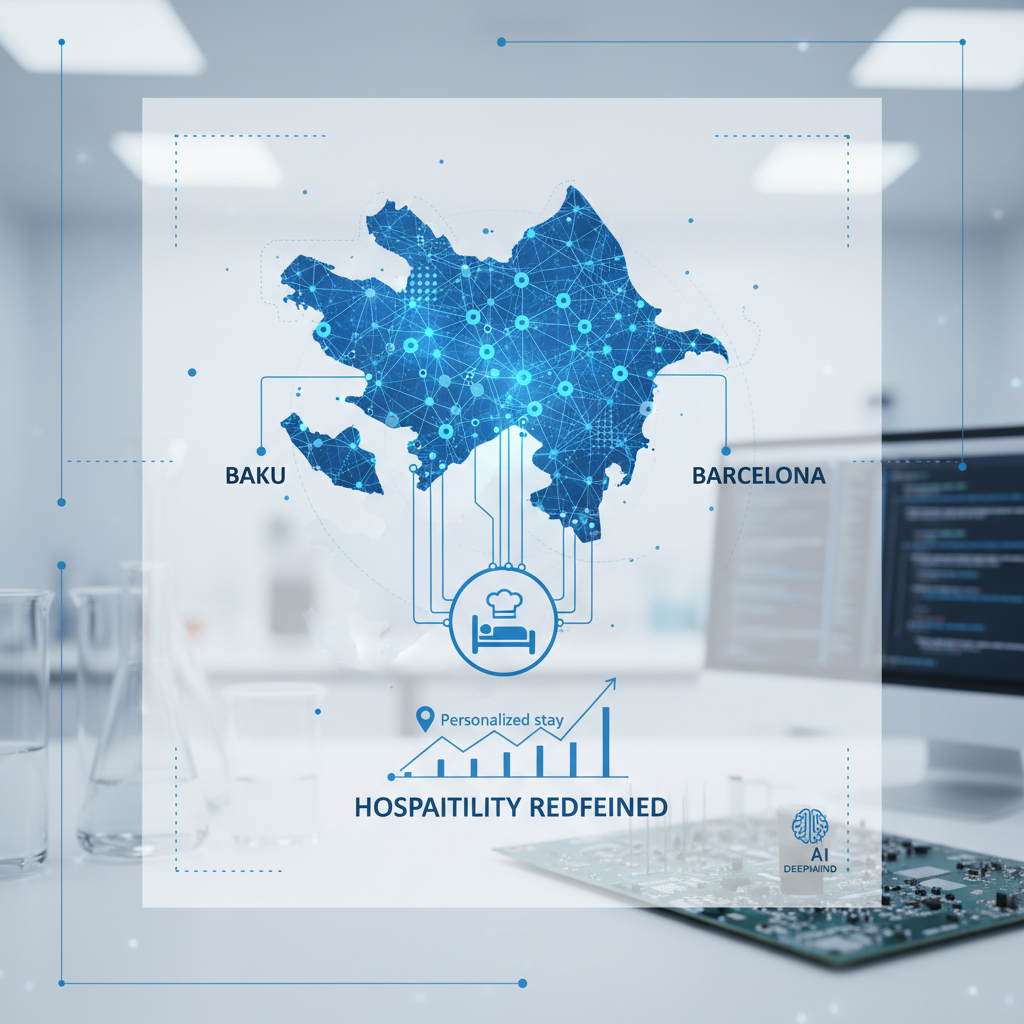
So, what exactly happened? Researchers at Google DeepMind have unveiled a sophisticated new AI model, a multi-agent reinforcement learning system, that can simultaneously optimize complex operational decisions across an entire hotel enterprise. Think of it like this: instead of separate systems handling pricing, housekeeping schedules, and guest requests, this AI acts as a central brain, learning from vast amounts of data to make interconnected, real-time decisions. It's not just predicting; it's optimizing.
This isn't just about making things a little bit better; it's about a fundamental shift. It’s like moving from a traditional bazaar where prices are haggled individually and services are offered on the fly, to a hyper-efficient, personalized digital marketplace where every interaction is informed by deep intelligence. The model considers everything from local events and weather patterns to individual guest preferences and historical booking data, all in milliseconds.
Why This Matters: A New Era for Hotels, Guests, and Economies
Why should we be so excited about this, especially here in Azerbaijan? Well, for our burgeoning tourism industry, this is a game changer. Imagine a boutique hotel in Baku's Old City, or a luxurious resort in Gabala, leveraging this AI to offer the perfect room at the perfect price to a traveler from Dubai, while simultaneously ensuring housekeeping is efficiently deployed and the restaurant is stocked for their preferred breakfast. The potential for increased revenue, reduced waste, and unparalleled guest satisfaction is immense.
“The ability for AI to integrate and optimize across multiple hotel functions, from dynamic pricing to personalized guest services, represents a significant leap forward,” says Dr. Elena Petrova, a leading expert in AI applications for business at the London School of Economics. “It moves beyond predictive analytics to prescriptive action, creating tangible value for both operators and consumers.”
For guests, this means an end to generic experiences. The AI learns your preferences: do you like a quiet room, a certain type of pillow, or perhaps a specific local tea waiting for you upon arrival? It can even anticipate needs based on your past stays or public information, ensuring a truly bespoke experience. This level of personalization elevates a simple stay into a memorable journey, something we value deeply in Azerbaijani culture where hospitality is paramount.
Operationally, hotels can see massive efficiency gains. Reduced energy consumption through optimized climate control, smarter staffing based on predicted occupancy, and proactive maintenance scheduling are just a few examples. This translates directly to lower costs and higher profit margins, which is crucial for any business, especially in competitive markets.
The Technical Details: Multi-Agent Reinforcement Learning in Action
At its core, the Google DeepMind model employs a form of multi-agent reinforcement learning. Think of it as a team of specialized AI agents, each responsible for a particular aspect of hotel operations, but all collaborating and learning from each other under a master AI. One agent might handle dynamic pricing, another guest personalization, and a third operational logistics.
These agents learn through trial and error, much like how we learn from experience. They are given a goal, like maximizing revenue or guest satisfaction, and they experiment with different actions. When an action leads to a positive outcome, the AI reinforces that behavior. Over countless simulations and real-world data interactions, the system develops optimal strategies.
Key to this is the model’s ability to handle interdependencies. Changing a room price affects occupancy, which affects housekeeping needs, which affects staffing. Traditional systems struggle with this complexity. This new AI, however, is designed to understand these intricate relationships and make decisions that benefit the entire ecosystem. It uses deep neural networks to process vast, unstructured data, identifying patterns that human analysts might miss. For a deeper dive into the technical underpinnings of such systems, you can often find fascinating discussions on arXiv.org.
Who Did the Research: Google DeepMind Leading the Charge
This groundbreaking work comes from the brilliant minds at Google DeepMind, a powerhouse in AI research known for its pioneering work in areas like AlphaGo and AlphaFold. Their team, composed of researchers and engineers with diverse backgrounds in machine learning, economics, and operations research, has been pushing the boundaries of what AI can do for complex real-world problems. While specific paper titles and researcher names are often under wraps until formal publication, the general direction of DeepMind’s research into multi-agent systems and real-world optimization has been well-documented. Their commitment to solving complex, societal challenges with AI is truly inspiring.
“Our goal is to create AI systems that can not only understand but also effectively manage and optimize highly dynamic environments,” stated Dr. Demis Hassabis, CEO of Google DeepMind, in a recent interview with Wired. “Hospitality, with its intricate web of decisions and human interactions, presents a perfect challenge for our latest advancements in reinforcement learning.”
Implications and Next Steps: The Future is Now
The implications for the global hospitality industry are profound. We’re looking at a future where hotels can operate with unprecedented efficiency, offering personalized services that were once the exclusive domain of ultra-luxury establishments, now accessible to a much broader market. This could democratize high-quality service and make travel more enjoyable for everyone.
For Azerbaijan, this technology offers a unique opportunity to leapfrog traditional development stages. As we continue our oil-to-tech transition, adopting cutting-edge AI in sectors like hospitality can position us as a regional leader in smart tourism. Our government’s focus on digital transformation, as seen in initiatives like Asan service, creates fertile ground for such innovations to flourish. Imagine our beautiful hotels, from the Fairmont Flame Towers to the historic Caravanserai, powered by such intelligent systems, offering unparalleled experiences to visitors from around the world.
Of course, challenges remain. Data privacy, ethical considerations in personalization, and the need for skilled professionals to implement and manage these AI systems will require careful attention. But these are challenges we can overcome with foresight and collaboration.
The rollout of these advanced AI models will likely begin with pilot programs in major hotel chains and then gradually expand. We can expect to see more partnerships between AI research labs and hospitality giants in the coming months and years. The era of truly intelligent hospitality is not just on the horizon; it’s here, and it’s going to make our world a more welcoming, efficient, and personalized place. Azerbaijan is writing its own tech story, and this is a thrilling new chapter.