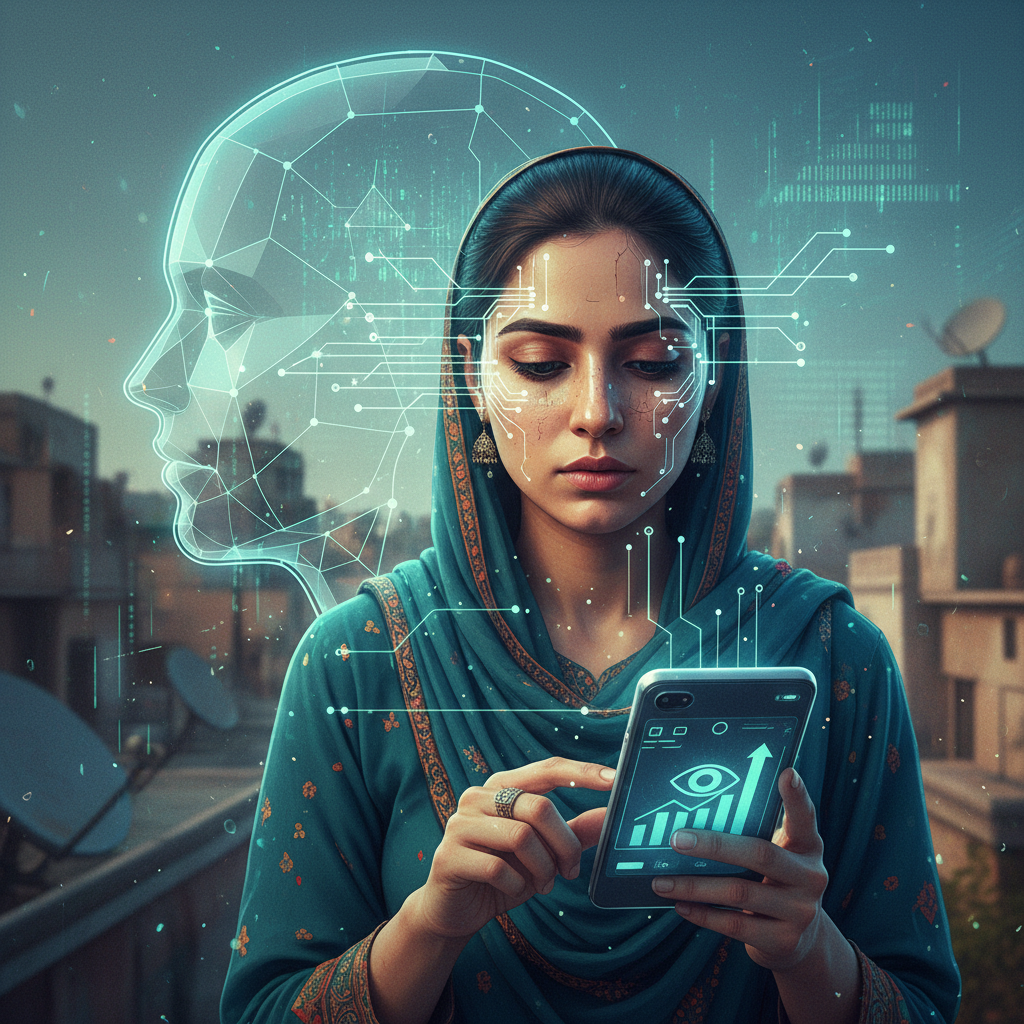

The scent of spices and the hum of textile looms usually define Ahmedabad, a city rich in heritage and enterprise. But tucked away in a bustling innovation hub, a different kind of energy is brewing, one that promises to light up not just India, but the entire world. This is where I found Dr. Anjali Sharma, a woman whose journey from a small Gujarati village to the cutting edge of AI and nuclear fusion research is nothing short of inspiring.
Anjali, with her bright, inquisitive eyes and a warmth that reminds me of a summer afternoon in my own hometown, is the visionary behind AgniFusion. She is not just building a company; she is building a future. "For generations, my family has worked with fire, in our kitchens, in our small pottery business," she told me, a gentle smile playing on her lips. "Now, I am working with the fire of the stars, trying to bring it safely to Earth." This story will change how you think about the future of energy.
The Spark of an Idea: Anjali's 'Aha Moment'
Anjali's path was not straightforward. A brilliant student, she excelled in physics and computer science, eventually earning a scholarship to study abroad. Her career took her to the hallowed halls of Google DeepMind, where she spent years immersed in complex AI models, particularly in reinforcement learning and predictive analytics. She worked on projects that optimized everything from data center energy consumption to complex logistical networks. "It was fascinating work, truly," she recalled, "but I always felt a pull back to something bigger, something that could directly impact the lives of millions, especially in places like India where energy access is still a daily struggle for so many." Google DeepMind is known for its groundbreaking work, and Anjali was right there at the forefront.
Her 'aha moment' came during a visit home to India. She saw firsthand the challenges of energy scarcity, the reliance on fossil fuels, and the dream of abundant, clean power. She also read about the immense, almost intractable problems facing nuclear fusion research: the instability of plasma, the extreme temperatures, the sheer complexity of maintaining a reaction that mimics the sun. "I realized then," she explained, "that the same AI algorithms I was using to predict weather patterns or optimize supply chains could perhaps be applied to the most complex system of all: a fusion reactor's plasma." The idea, initially met with skepticism by some of her peers, became an obsession.
The Unruly Beast: Taming Plasma with AI
The problem AgniFusion is solving is monumental. Nuclear fusion, the process that powers the sun, promises virtually limitless clean energy. However, replicating it on Earth involves heating hydrogen isotopes to hundreds of millions of degrees Celsius, creating a superheated, ionized gas called plasma. This plasma is incredibly difficult to control, prone to instabilities that can extinguish the reaction or damage the reactor. Traditional methods of predicting and mitigating these instabilities are often too slow or imprecise.
"Imagine trying to hold a blob of lightning in a magnetic cage, and you need to keep it perfectly still for a very long time," Anjali analogized, her hands gesturing expressively. "That's what fusion scientists are up against. Our AI acts like a super-intelligent, ultra-fast conductor, constantly adjusting the magnetic fields to keep that lightning stable and hot." This is where AgniFusion steps in.
The Technology: Predictive Control and Digital Twins
AgniFusion's core technology revolves around two pillars: advanced predictive AI models and high-fidelity digital twins. They use a combination of deep reinforcement learning and neural networks, trained on vast datasets from existing experimental fusion reactors worldwide, including Iter in France and India's own Aditya tokamak. Their AI learns to anticipate plasma instabilities milliseconds before they occur, then recommends precise adjustments to the magnetic confinement system.
"We're building a 'digital twin' of the entire reactor," explained Dr. Rohan Patel, AgniFusion's Chief Technology Officer, a former researcher from the Institute for Plasma Research in Gandhinagar. "This digital twin allows us to simulate millions of scenarios, test control strategies, and essentially 'teach' our AI how to manage the plasma in a virtual environment before applying it to a real one. It dramatically reduces experimental time and costs, which are massive in fusion research." This approach is a game-changer, according to experts. "The sheer computational power required to simulate and predict plasma behavior has always been a bottleneck," noted Professor Kavita Rao, a leading fusion physicist at the Homi Bhabha National Institute. "AgniFusion's approach, leveraging modern AI, offers a viable path to overcoming that." MIT Technology Review has highlighted similar digital twin applications in other complex systems, but fusion presents unique challenges.
The Market Opportunity: A Trillion-Dollar Promise
The market opportunity for successful fusion technology is staggering. The global energy market is valued in the trillions, and the demand for clean, reliable power is only growing. While commercial fusion is still decades away, the incremental steps toward it are incredibly valuable. AgniFusion isn't just selling a future product; they're selling optimization and acceleration today. Their AI can help existing experimental reactors run more efficiently, reduce downtime, and speed up the data collection process, shaving years off development timelines.
"We estimate that by optimizing plasma control, we can reduce the operational costs of experimental reactors by up to 20% and accelerate research timelines by 15-25%," Anjali stated, citing internal projections. "This translates into hundreds of millions of dollars saved for major international projects and national research labs." The long-term vision, of course, is to license their AI control systems to the first generation of commercial fusion power plants, positioning AgniFusion as a critical enabler of the future energy grid.
The Competitive Landscape: A Niche, But Growing Field
The field of AI in fusion research is specialized, but competition is emerging. Major players like Google DeepMind and OpenAI are investing heavily in scientific discovery AI, and some of their general-purpose models could potentially be adapted. However, AgniFusion's deep domain expertise in plasma physics, combined with their AI prowess, gives them a significant edge. Other startups, often university spin-offs, are also exploring AI for fusion, but few have AgniFusion's blend of ex-DeepMind talent and direct access to Indian research facilities.
"Our advantage isn't just the algorithms; it's the cultural understanding, the ability to work closely with Indian and international fusion scientists, and a lean, agile approach that big tech often struggles with," Dr. Patel explained. "We're not just throwing AI at the problem; we're integrating it deeply into the scientific process." The company recently secured a seed round of $15 million, led by a consortium of Indian and Silicon Valley venture capitalists, including a significant investment from a fund focused on deep tech in emerging markets.
What's Next: From Lab to Grid
AgniFusion's immediate goals include expanding their partnerships with international fusion research facilities and further refining their AI models. They are also actively recruiting top talent from India's burgeoning AI and physics communities. "We want to build a world-class team right here in Ahmedabad," Anjali affirmed. "India has an incredible pool of talent, and we want to show that we can solve the world's hardest problems from our own backyard." Indeed, in Gujarat's diamond district, AI sparkles differently, promising a future brighter than any gem.
Looking further ahead, AgniFusion envisions their AI becoming the standard operating system for fusion reactors globally. They are exploring applications beyond plasma control, including AI-driven materials science for reactor components and predictive maintenance for complex fusion machinery. The journey from a theoretical concept to a commercial power plant is long and arduous, but with pioneers like Anjali Sharma and her team at AgniFusion, the dream of clean, abundant fusion energy feels a little closer, a little more tangible. It is a testament to human ingenuity, powered by the boundless potential of artificial intelligence, and rooted in the spirit of innovation that thrives even in the most traditional of places. This is not just about technology; it's about people, their dreams, and their relentless pursuit of a better world. For more on AI's impact on various industries, you can check out articles on TechCrunch's AI section.