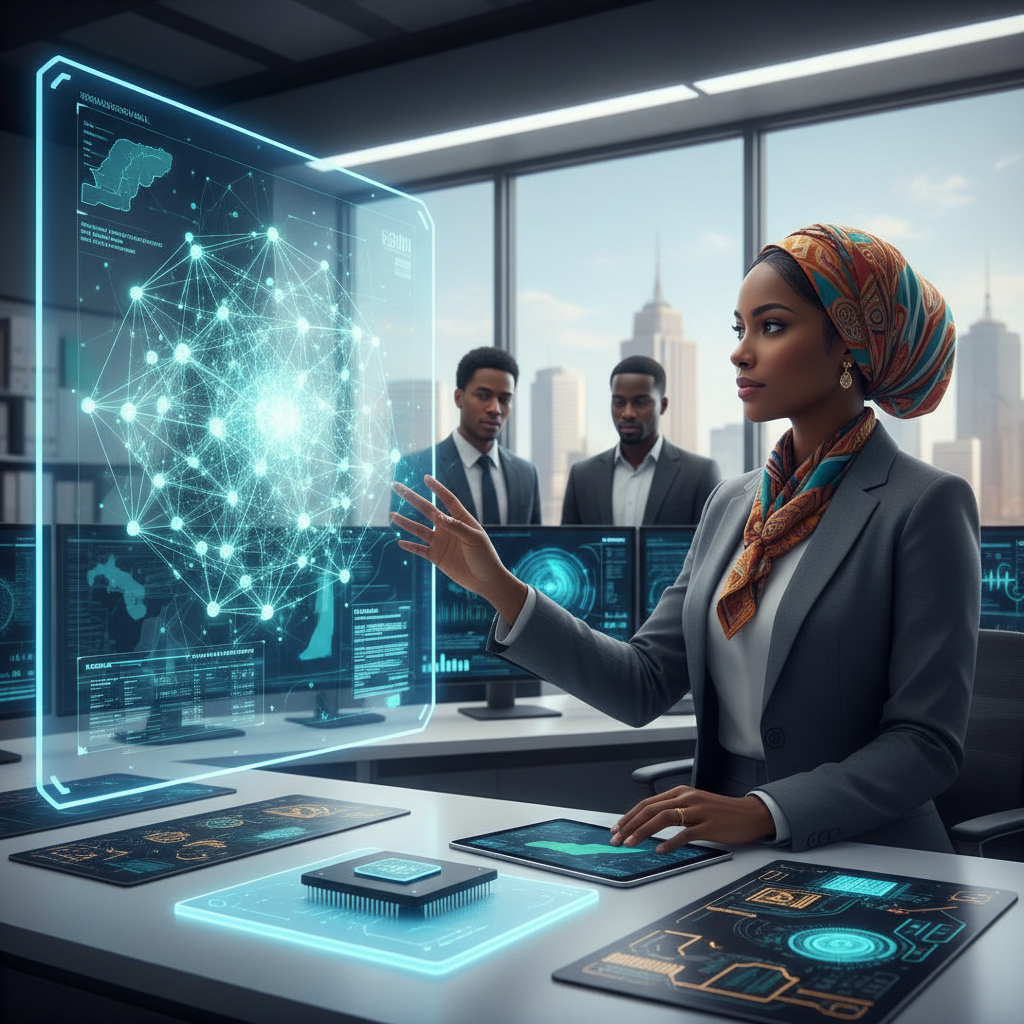
The sun was just beginning to dip below the horizon, casting long shadows across the bustling streets of Abidjan, a city that never truly sleeps. The air was thick with the scent of grilled fish and exhaust fumes, a symphony of daily life that has always inspired me. But today, my thoughts were far from the vibrant chaos of the market. I was contemplating a different kind of race, one that is reshaping our world faster than any of us can fully grasp: the global AI arms race.
From Washington to Beijing, from Brussels to Silicon Valley, the competition for AI supremacy is fierce. Nations are pouring billions into research, infrastructure, and talent acquisition, all vying for a leading edge in a technology that promises to redefine everything from healthcare to defense. But what about Africa, my home continent, and specifically, Côte d'Ivoire? Are we merely spectators in this grand global game, or do we have a hand to play?
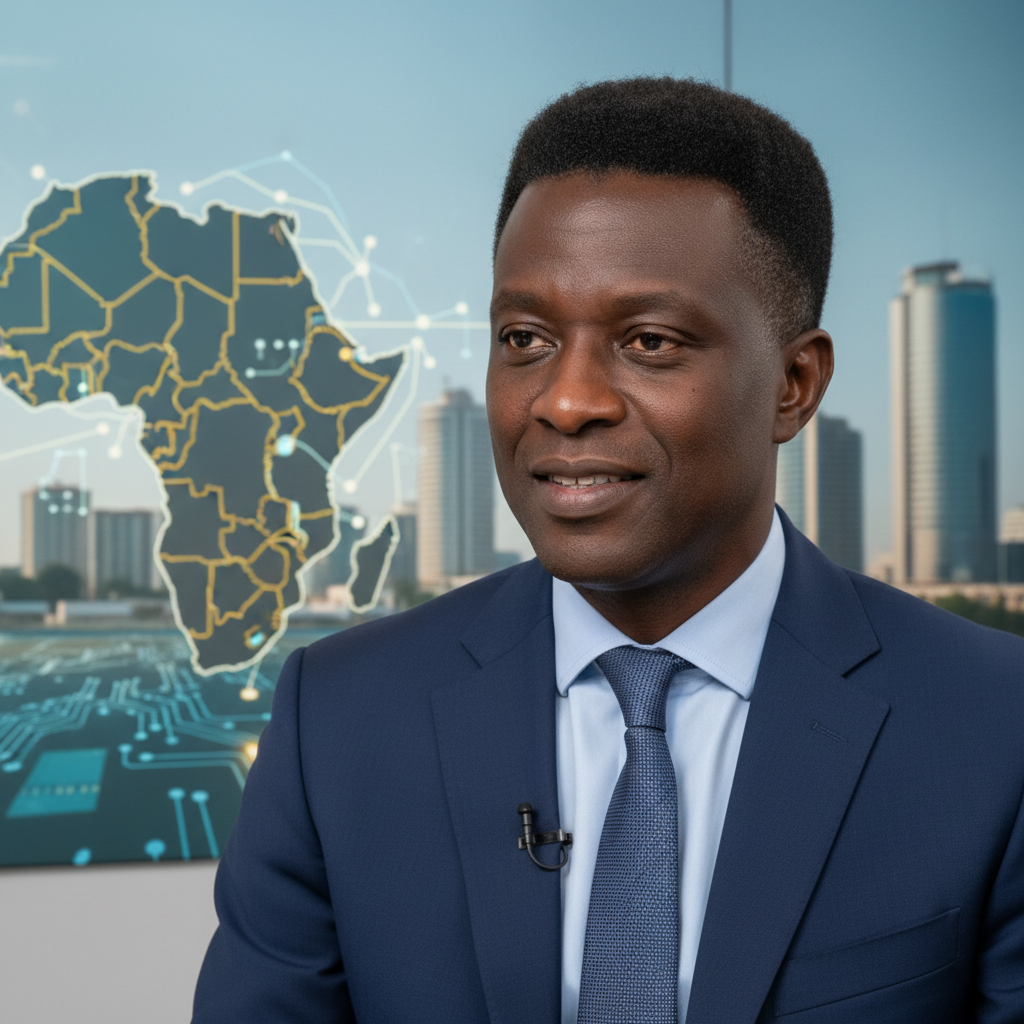
To answer this, I sought out a mind that understands both the intricate dance of global AI politics and the unique heartbeat of our continent: Dr. Moustapha Cissé. He is a name that resonates with pride across West Africa, a brilliant Senegalese scientist who leads Google AI's research center in Accra, Ghana. His work is not just about algorithms and data sets, it is about empowering a continent, about ensuring Africa is not left behind in this technological revolution. Picture this: a young man from Senegal, educated in France, now at the helm of a major AI research hub for one of the world's largest tech companies, right here in West Africa. It is a powerful narrative of possibility.
Our conversation began not in a sterile corporate office, but over strong café touba, a traditional Senegalese coffee, in a quiet corner of a bustling Accra café. The aroma was grounding, a perfect counterpoint to the expansive ideas we were about to discuss. Dr. Cissé, with his calm demeanor and thoughtful gaze, immediately put me at ease. He is a man who speaks with both profound knowledge and genuine humility.
He started by painting a picture of the current global landscape. “The AI arms race is not just about who has the most advanced models or the most powerful chips,” Dr. Cissé explained, his voice measured. “It is fundamentally about data sovereignty, talent retention, and the ability to define your own technological future. For Africa, this means building our own capacity, not just consuming what others produce.” This is the story they don't want you to hear, the one that goes beyond the headlines of Silicon Valley breakthroughs and delves into the deeper geopolitical currents.
Dr. Cissé's journey to this pivotal role is itself a testament to African potential. After completing his PhD in machine learning in France, he spent time at Facebook AI Research, now Meta AI, before joining Google and eventually establishing their first AI research center in Africa in 2019. His vision for the Accra center was clear: to conduct fundamental AI research relevant to Africa's challenges, focusing on areas like healthcare, agriculture, and education. He believes that AI developed in Africa, by Africans, is essential for addressing the continent's specific needs and ensuring ethical, culturally appropriate applications.
“We cannot simply import solutions designed for different contexts and expect them to work perfectly here,” he emphasized. “Our languages, our agricultural practices, our healthcare systems, they are unique. We need to build AI that understands these nuances, that speaks our languages, literally and figuratively.” This resonated deeply with me, as I have often seen how technology designed elsewhere can sometimes miss the mark when applied to our local realities. For instance, an AI diagnostic tool trained solely on European data might struggle with diseases prevalent in tropical climates or with diverse skin tones.
When discussing the global competition, Dr. Cissé acknowledged the significant investments being made by the US, China, and the EU. He noted that these regions benefit from vast data resources, established research ecosystems, and substantial government funding. However, he sees Africa's strength not in trying to replicate these models, but in forging its own path. “Our advantage lies in our youth, our rapidly growing digital population, and the sheer diversity of our challenges, which can be fertile ground for innovative AI solutions,” he stated. He pointed to initiatives like the African Master's in Machine Intelligence (ammi), which he co-founded, as critical for nurturing local talent. Ammi, based in Rwanda and now expanding, trains top African students in advanced machine learning, creating a pipeline of researchers and practitioners who can contribute to Africa's AI ecosystem.
He told me something I'll never forget about the importance of ownership. “If we do not develop our own AI capabilities, we risk becoming perpetual consumers of foreign technology, subject to the priorities and biases of others,” he said. “Sovereign AI for Africa means having the ability to build, deploy, and govern AI systems that align with our values, protect our data, and serve our development goals.” This isn't just about economic independence, it is about cultural preservation and self-determination in the digital age. It is about ensuring that the future of AI is not just shaped by a few powerful nations, but by the rich tapestry of human experience.
Indeed, the stakes are high. The US, with its tech giants like OpenAI, Google, and Microsoft, continues to lead in foundational model development and venture capital investment. China, with companies like Baidu and Tencent, is making rapid strides in AI applications and government-backed research. The EU is focusing heavily on regulation and ethical AI, aiming to set global standards. Emerging nations, including those in Africa, must carve out their niche, focusing on areas where they have unique data or domain expertise.
For Côte d'Ivoire, this means investing in digital infrastructure, promoting Stem education from an early age, and fostering an environment where local startups can thrive. It means encouraging collaboration between universities, government, and industry, much like the successful models seen in places like Israel or South Korea. The Ivorian government's digital transformation agenda, with its focus on e-governance and digital literacy, is a good start, but more targeted investment in AI research and development is crucial.
Dr. Cissé also touched upon the ethical considerations, a topic close to my heart as a journalist who often focuses on the human impact of technology. “As we build AI, we must ensure it is fair, transparent, and accountable,” he asserted. “Bias in AI is a global problem, but it can be particularly damaging in contexts where historical data may reflect societal inequalities. We have an opportunity in Africa to build AI with ethics embedded from the ground up, drawing on our communal values of ubuntu and collective well-being.” This perspective is often overlooked in the rush to innovate, but it is vital for building trust and ensuring that AI serves humanity, not just profit.
As our conversation concluded, the café was buzzing again, the evening crowd settling in. Dr. Cissé left me with a sense of cautious optimism. He believes Africa can indeed compete, not by mirroring the strategies of larger powers, but by leveraging its unique strengths and fostering a new generation of AI leaders. “The race is on,” he said, “but it is not just about speed. It is about direction, purpose, and who gets to define the finish line.”
His words echoed in my mind as I made my way back through the vibrant streets of Abidjan. Africa's place in the global AI arms race is not predetermined. It is being forged right now, by people like Dr. Moustapha Cissé and by the countless young Africans who are eager to learn, innovate, and build a future where AI serves our continent's aspirations. The journey will be challenging, but the potential rewards, for our people and for the world, are immense. For more on global AI developments, you can explore resources like TechCrunch's AI section or MIT Technology Review for deeper analysis. The future, as always, is in our hands, and it is being written, one line of code and one human story at a time. I also recall a relevant discussion about African enterprise AI dreams in a previous article, From Abidjan's Markets to IBM's Boardrooms: Can Watson's Rebirth Truly Serve Africa's Enterprise AI Dreams? [blocked], which touches on the importance of local context in AI solutions.