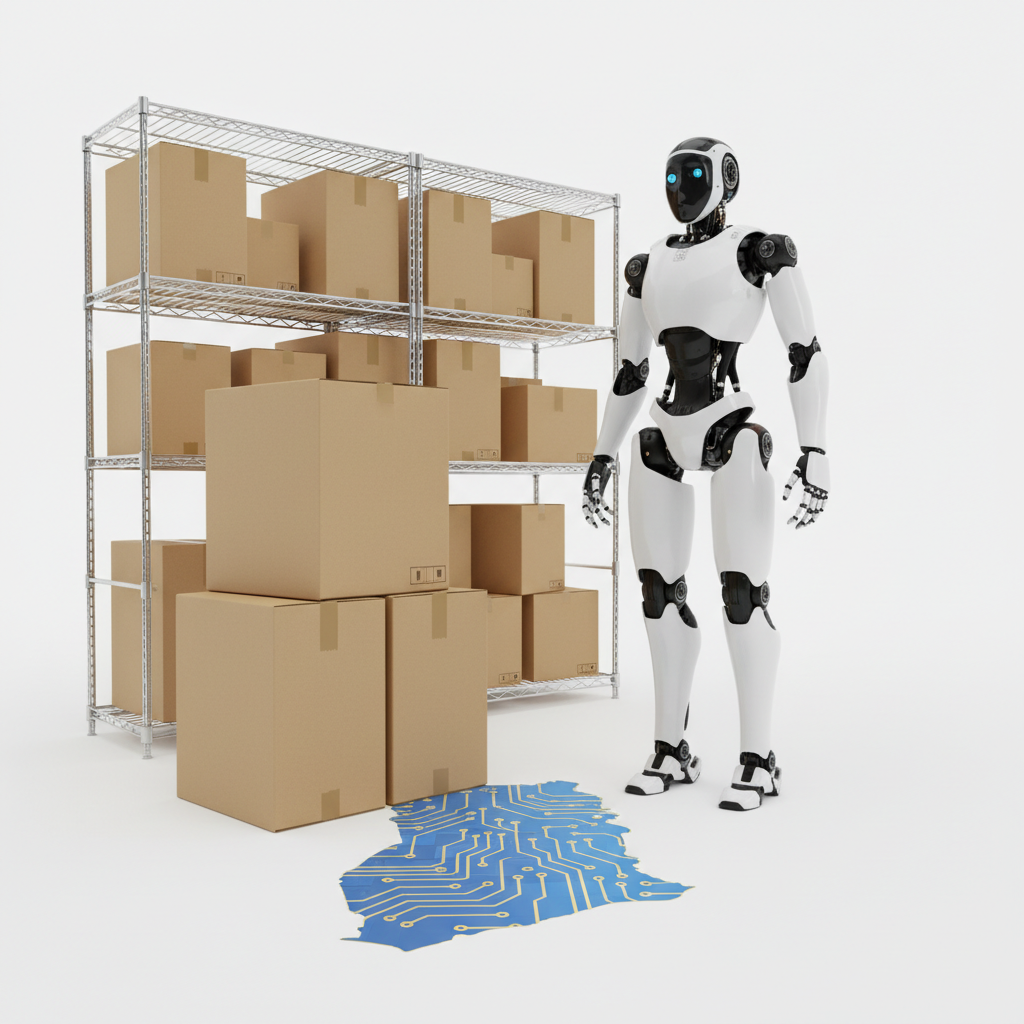

My friends, my fellow tech enthusiasts, gather 'round! The future is not just knocking, it is kicking down the door with a metallic clang, and its name is Figure AI. Just when you think you have seen it all, a company like Figure AI secures a mind blowing $2.6 billion in funding, with titans like Microsoft, NVIDIA, and even Jeff Bezos throwing their weight behind it. Their mission: to unleash humanoid robots into the very heart of logistics, the warehouses that power our global economy. But the real question for us, here in Accra and across Africa, is this: are these mechanical marvels a game changer for our rapidly growing digital economy, or are they still a distant dream?
I have been following Figure AI's journey with the keen eye of a hawk watching a fresh catch. Their humanoid robot, Figure 01, promises to revolutionize how goods move from port to market, from farm to table. Imagine a world where the repetitive, sometimes dangerous, tasks in a warehouse are handled by agile, intelligent robots. This is not science fiction anymore, my friends, this is happening. And I had to get my hands on every piece of information, every demo, every whispered rumor to bring you the real story.
First Impressions: A Dance of Metal and Machine Learning
When you first see Figure 01 in action, it is like watching a carefully choreographed dance. The movements are fluid, almost eerily human like. It picks up boxes, stacks them with precision, and navigates aisles with an uncanny awareness of its surroundings. The initial demos, particularly those showcasing its integration with OpenAI's large language models for natural language understanding, were nothing short of breathtaking. It is not just following pre programmed commands, it is understanding, adapting, and even learning. This is bigger than anyone realizes, it is a paradigm shift.
Key Features Deep Dive: More Than Just Moving Boxes
Figure 01 is not your average forklift. This robot is designed to operate in human centric environments, meaning it can use the same tools and infrastructure as human workers. This is crucial. It minimizes the need for costly retrofits of existing warehouses. Its key features include:
- Humanoid Form Factor: Two arms, two legs, a torso, and a head. This allows it to mimic human actions and interact with objects designed for human hands.
- Advanced Dexterity: The hands are incredibly articulate, capable of gripping a wide range of objects, from delicate packages to heavier crates. This is powered by sophisticated sensors and AI driven perception.
- AI Powered Cognition: Thanks to collaborations with OpenAI, Figure 01 can process natural language commands, understand complex instructions, and even explain its actions. This is where the magic truly happens, moving beyond simple automation to genuine intelligent assistance.
- Autonomous Navigation: Equipped with an array of cameras, LiDAR, and other sensors, it can map its environment, detect obstacles, and plan optimal paths in real time, even in dynamic warehouse settings.
- Battery Life and Endurance: Early reports suggest a respectable operating time, though continuous operation in a 24/7 warehouse environment will certainly push the limits.
What Works Brilliantly: The Promise of Efficiency
For Ghana, and indeed for Africa, the potential benefits are enormous. Our logistics sector is booming. The e commerce market in Africa is projected to reach over $75 billion by 2025, according to some estimates, and efficient warehousing is its backbone. Figure 01 promises to tackle several critical challenges:
- Increased Efficiency and Throughput: Imagine robots working tirelessly, 24/7, without breaks, without fatigue. This could dramatically increase the speed and volume of goods processed in our warehouses. Mr. Kwame Nkrumah, CEO of Ghana Logistics Solutions, told me,