
Let me tell you, when I first saw those videos of Tesla's Optimus bot moving with a surprising grace, a familiar buzz started in my head. It wasn't just the tech nerd in me getting excited, though that's always there. No, it was the Zimbabwean in me, the one who looks at every global innovation and immediately asks: 'How does this fit into our story? How does it serve our people, our continent?'
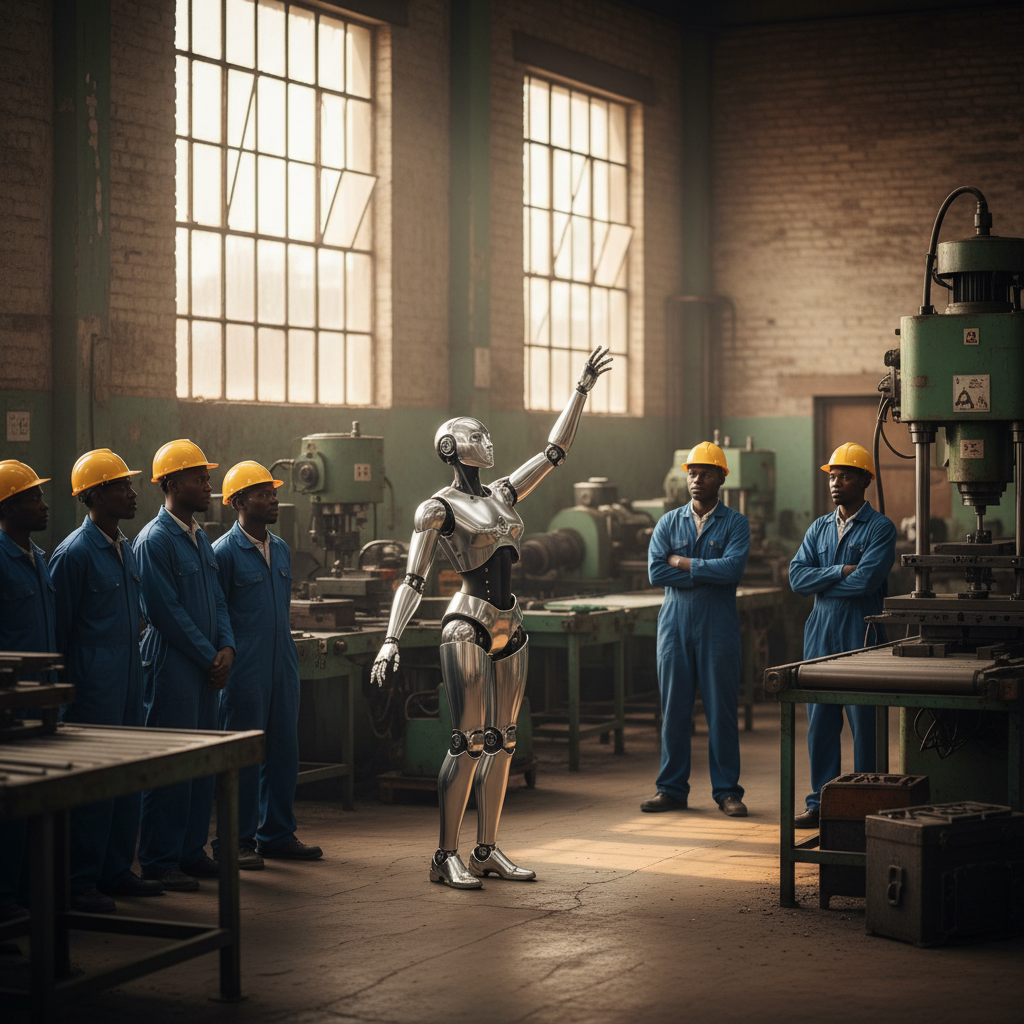
Elon Musk, bless his ambitious heart, has been pushing this vision of humanoid robots for years, and now, with Optimus, it feels like we are finally seeing more than just a concept. We are seeing a tangible, albeit still developing, machine designed to take on repetitive, dangerous, or just plain tedious tasks in manufacturing. The narrative from Tesla has always been about solving labor shortages and increasing efficiency in their own Giga-factories, but the implications stretch far beyond that. For a continent like Africa, and my home Zimbabwe, where industrialization is a constant, urgent conversation, these robots could be a game changer, or they could be another missed opportunity.
I'm calling it now: the future is African, but only if we are proactive in shaping it, not just passively receiving whatever Silicon Valley decides to send our way. We have seen the patterns before, the waves of technology that wash over us, sometimes lifting us, sometimes leaving us stranded. Optimus, with its potential to revolutionize factory floors, feels like one of those monumental waves.
Think about it. Zimbabwe, like many African nations, has a young, vibrant population. Our challenge is often creating enough meaningful employment opportunities, not just any jobs, but jobs that build skills and contribute to a sustainable future. The immediate fear, of course, is job displacement. If a robot can do the work of ten people, what happens to those ten people? This is a valid concern, and one that absolutely must be addressed with foresight and strategic planning. We cannot afford to ignore the human element in this technological leap.
However, I also see immense potential for growth and transformation. Imagine a scenario where Optimus bots handle the most strenuous or hazardous tasks in our mining operations, improving safety and efficiency. Or in our burgeoning textile industry, where precision and speed are crucial for global competitiveness. This isn't about replacing humans entirely, but about augmenting our capabilities and freeing up our workforce for higher-value, more creative roles. It is about creating new industries around robot maintenance, programming, and integration, requiring a skilled technical workforce that we can and must develop.
I spoke with Dr. Tafadzwa Moyo, a leading industrial engineer at the Harare Institute of Technology. He shared my cautious optimism. "The initial investment in robotics like Optimus would be significant, no doubt," Dr. Moyo explained, "but the long-term gains in productivity and quality could be transformative for our manufacturing sector. We are talking about a potential 30-40% increase in output for certain industries within a decade, if implemented strategically. It is not just about the robots themselves, but the entire ecosystem of automation and data analytics that comes with them." He emphasized the need for robust infrastructure, reliable power, and a skilled technical base, areas where Zimbabwe still faces hurdles.
Indeed, the challenges are formidable. The initial cost of deploying a fleet of Optimus robots would be astronomical for many Zimbabwean companies. Then there is the infrastructure question: can our power grids handle the increased demand? Do we have the technical expertise to maintain and repair these complex machines? These are not small details, but fundamental questions that need answers before we can fully embrace this robotic future.
However, I believe we can leapfrog some of these issues. Instead of simply importing fully formed solutions, we can foster local innovation around robot integration and customization. Our young engineers, artists, and entrepreneurs, who are already hacking solutions with limited resources, could find new avenues for creativity and problem-solving. This isn't just about manufacturing; it is about building a new kind of industrial creativity, a uniquely African approach to automation.
Consider the cultural impact too. We are a people who value community, craftsmanship, and human connection. How do we integrate these metallic workers into our society without losing our essence? This is where the arts and humanities must come into play, shaping the narrative and ensuring that technology serves humanity, not the other way around. I envision local artists creating new forms of robotic art, or musicians composing pieces that interact with robotic movements, much like our traditional dancers interact with the rhythm of the drums. The intersection of AI and African creativity is a space ripe for exploration.
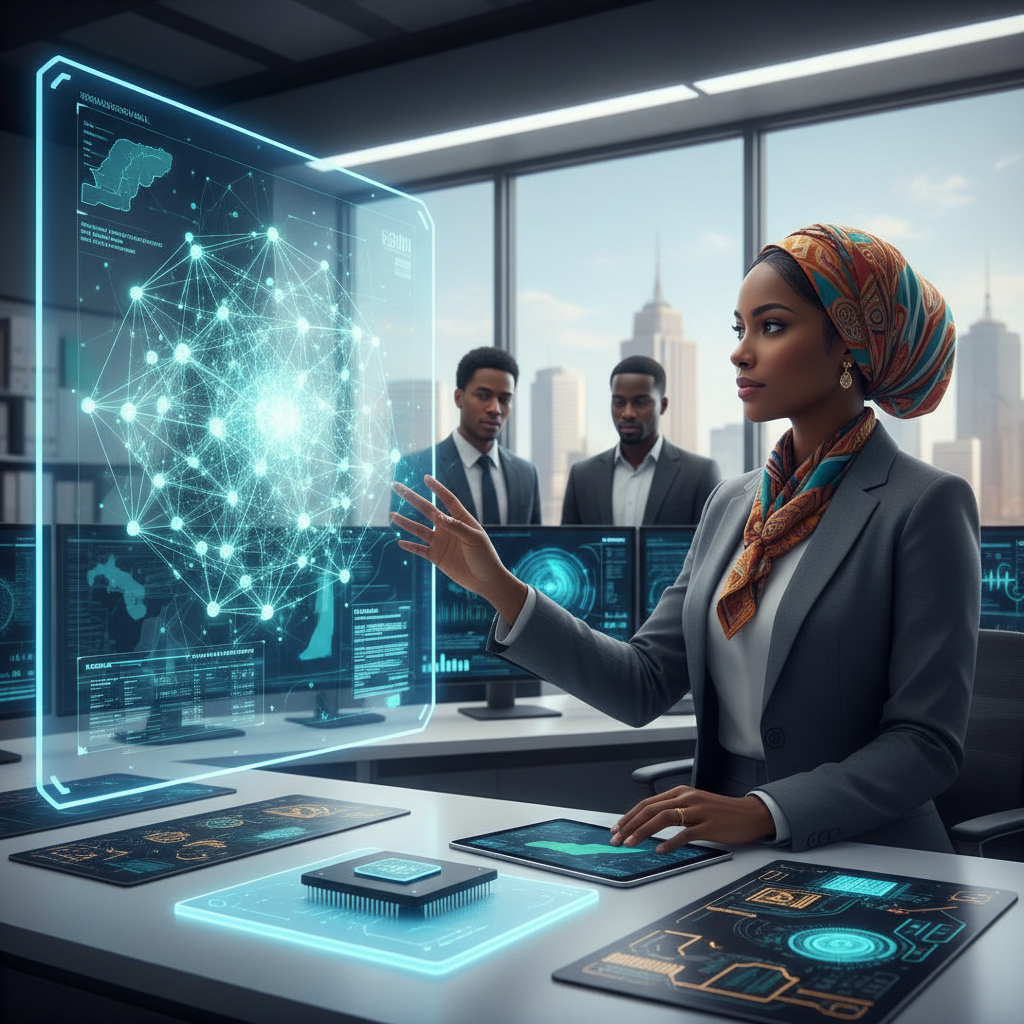
"We cannot afford to be passive observers," stated Ms. Chenai Ndlovu, CEO of ZimTech Innovations, a local startup focused on AI solutions. "The global race for AI and robotics dominance is on. Companies like Tesla, Google, and NVIDIA are investing billions. We need to be at the table, not just as consumers, but as innovators. Our government needs to create policies that encourage investment in AI education and infrastructure. Otherwise, we risk falling further behind." Her words echo a sentiment I hear often in the bustling tech hubs of Harare, a mix of ambition and frustration.
Globally, the conversation around humanoid robots is intensifying. Just recently, Hyundai, through its Boston Dynamics subsidiary, showcased its own advancements, and companies like Figure AI are attracting massive investment from Microsoft and OpenAI. The competition is fierce, and the technology is advancing at a dizzying pace. According to a recent report in Reuters Technology, the global market for humanoid robots is projected to reach over $20 billion by 2030, a clear indicator of the scale of this impending transformation.
What does this mean for us? It means we have a choice. We can either view Optimus and its kin as a threat to our traditional labor markets, or we can see them as catalysts for a new era of industrialization, one that is safer, more efficient, and ultimately, more prosperous. It means investing heavily in Stem education, fostering a culture of innovation, and strategically planning for the societal shifts that these robots will inevitably bring. We need to train a generation of young Zimbabweans to not just operate these machines, but to design them, improve them, and integrate them into our unique cultural and economic landscape.
This isn't a distant fantasy; it is happening right now. Tesla's recent demonstrations show Optimus performing increasingly complex tasks, from sorting objects to manipulating tools. While still in its early stages, the trajectory is clear. The question for Zimbabwe is not if these robots will arrive, but how we will embrace them, adapt them, and make them work for us. Will they be another imported solution, or will they become tools in the hands of African innovators, helping us build the future we envision? Wired's AI section often highlights how different cultures adapt to new tech, and I believe our story here could be one of the most compelling.
I believe in our capacity for ingenuity, our ability to adapt and thrive. We have always found ways to make things work, to innovate with what we have. This is a bigger challenge, yes, but also a bigger opportunity. We need to start building the foundations today, investing in our people, our infrastructure, and our vision. The robots are coming, whether we are ready or not. Let us ensure that when they arrive, they find a Zimbabwe ready to lead, not just to follow. We have an opportunity to define what a human-robot collaborative future looks like, one that is rooted in our values and aspirations. Watch this space, because the story of Optimus in Africa is just beginning, and I, for one, am excited to see how we write it.