
The pronouncements from Silicon Valley often arrive with an almost messianic zeal, promising to reshape industries, economies, and indeed, the very fabric of human labor. Elon Musk, never one for understatement, has positioned Tesla's Optimus humanoid robot as a potential panacea for manufacturing woes, a tireless worker ready to fill the gaps on factory floors worldwide. From a distance, the vision is compelling: legions of autonomous humanoids performing repetitive, strenuous, or dangerous tasks, boosting productivity and efficiency. But here in Sri Lanka, where the realities of industrial development are far more complex than a sleek promotional video suggests, I find myself asking the perennial question: does this actually work, or is it merely another grand narrative destined to collide with ground truth?
I've been tracking this for months, observing the global discourse around Optimus and similar projects from companies like Figure AI and Boston Dynamics. The enthusiasm is palpable in certain circles, particularly among investors and those far removed from the actual shop floor. Tesla’s recent demonstrations, while incrementally more impressive than earlier iterations, still betray a certain fragility, a deliberate choreography that belies the chaotic, unpredictable nature of a real manufacturing environment. The robot can pick up objects, walk, and even sort items, but the leap from a controlled laboratory setting to the dynamic, often imperfect conditions of a factory, particularly in a developing economy, is monumental.
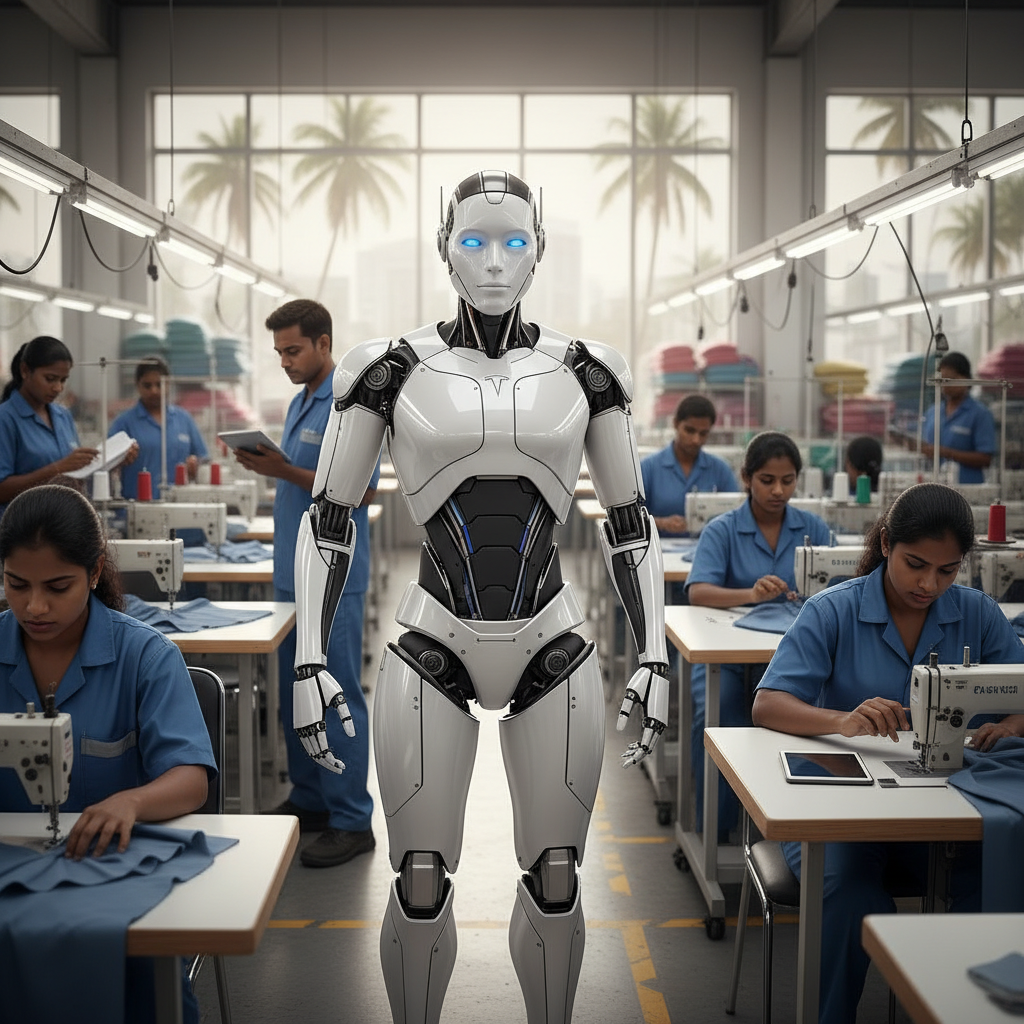
Consider the manufacturing sector in Sri Lanka, a cornerstone of our economy, particularly in apparel and tea processing. These industries rely heavily on a nuanced blend of manual dexterity, problem-solving, and adaptability that current robotics, let alone humanoid forms, struggle to replicate. "The idea of a general-purpose humanoid robot seamlessly integrating into our garment factories, for instance, is frankly premature," states Dr. Anusha Fernando, Head of Robotics and AI Research at the University of Moratuwa. "Our production lines are not designed for robots with human form factors; they are optimized for human operators. Retrofitting would be prohibitively expensive, and the robots themselves lack the fine motor skills and cognitive flexibility for tasks like fabric handling or intricate stitching. The promises don't match the reality of our operational needs."
Indeed, the economic calculus for adopting such advanced, and presumably expensive, technology in Sri Lanka is a formidable barrier. A single Optimus unit is projected to cost around $20,000, according to Musk's own estimates, though commercial pricing could be significantly higher. For a country grappling with economic recovery and striving to maintain competitive labor costs, this investment represents a substantial outlay. The return on investment, particularly when considering the inevitable maintenance, programming, and specialized infrastructure required, becomes highly questionable. Our factories often operate on thin margins, and capital expenditure of this magnitude must yield immediate, tangible benefits, not speculative future gains.
Moreover, the notion of a 'general-purpose' robot often overlooks the specific challenges of diverse manufacturing environments. Unlike the highly standardized, often purpose-built automotive factories where Tesla might envision Optimus thriving, Sri Lankan manufacturing facilities are varied. From the precision required in electronics assembly to the robust handling in rubber production, each sector presents unique demands. Optimus, in its current form, appears more suited to highly structured, repetitive tasks in environments already optimized for automation, not the often semi-manual, adaptive workflows prevalent here.
Here's what the data actually shows: global investments in industrial robotics continue to surge, with the International Federation of Robotics reporting a record 553,000 new robot installations in 2022, primarily in the automotive and electronics industries. However, the vast majority of these are traditional industrial arms and automated guided vehicles, not humanoids. Humanoid robots still represent a minuscule fraction of the market, largely confined to research and development. The hype surrounding Optimus, while effective for brand visibility, has yet to translate into widespread industrial adoption, even in highly developed economies. TechCrunch regularly covers the funding rounds of humanoid robot startups, but commercial deployment at scale remains elusive.
Beyond the technical and economic hurdles, there are significant societal implications. The introduction of humanoid robots on a large scale would inevitably raise questions about labor displacement. While proponents argue that robots free humans for higher-value tasks, the transition is rarely smooth or equitable, especially in economies where job creation is a constant priority. "We cannot ignore the potential social disruption," explains Mr. Kamal Perera, Secretary of the Free Trade Zones & General Services Employees Union. "Our workforce is skilled and resilient, but if automation is introduced without careful planning, retraining, and social safety nets, it could exacerbate unemployment and inequality. We need a national dialogue, not just corporate mandates, on the future of work with AI and robotics."
This is not to say that advanced robotics has no place in Sri Lanka's future. Targeted automation, particularly in hazardous or extremely repetitive tasks, could offer benefits. Collaborative robots, or 'cobots,' which work alongside human operators, are already finding niches in some local industries, offering a more incremental and less disruptive path to automation. These systems often leverage existing infrastructure and human expertise, rather than attempting to replace it wholesale. MIT Technology Review has published extensively on the practical applications of cobots in various global manufacturing settings.
The enthusiasm for Optimus, driven largely by Elon Musk's singular vision, must be tempered with a pragmatic assessment of its current capabilities and the specific needs of diverse global manufacturing landscapes. For Sri Lanka, a nation that has learned the hard way about the perils of uncritical adoption of foreign models, the path forward must be one of careful evaluation, strategic investment, and a keen awareness of our unique economic and social context. The spectacle of a robot walking on a stage is one thing; its ability to consistently, reliably, and affordably contribute to a complex production line in Katunayake or Biyagama is quite another. Until that gap is demonstrably closed, the promises of a humanoid manufacturing revolution will remain, for us, largely aspirational. The real story, as always, is far more nuanced than the headlines suggest.