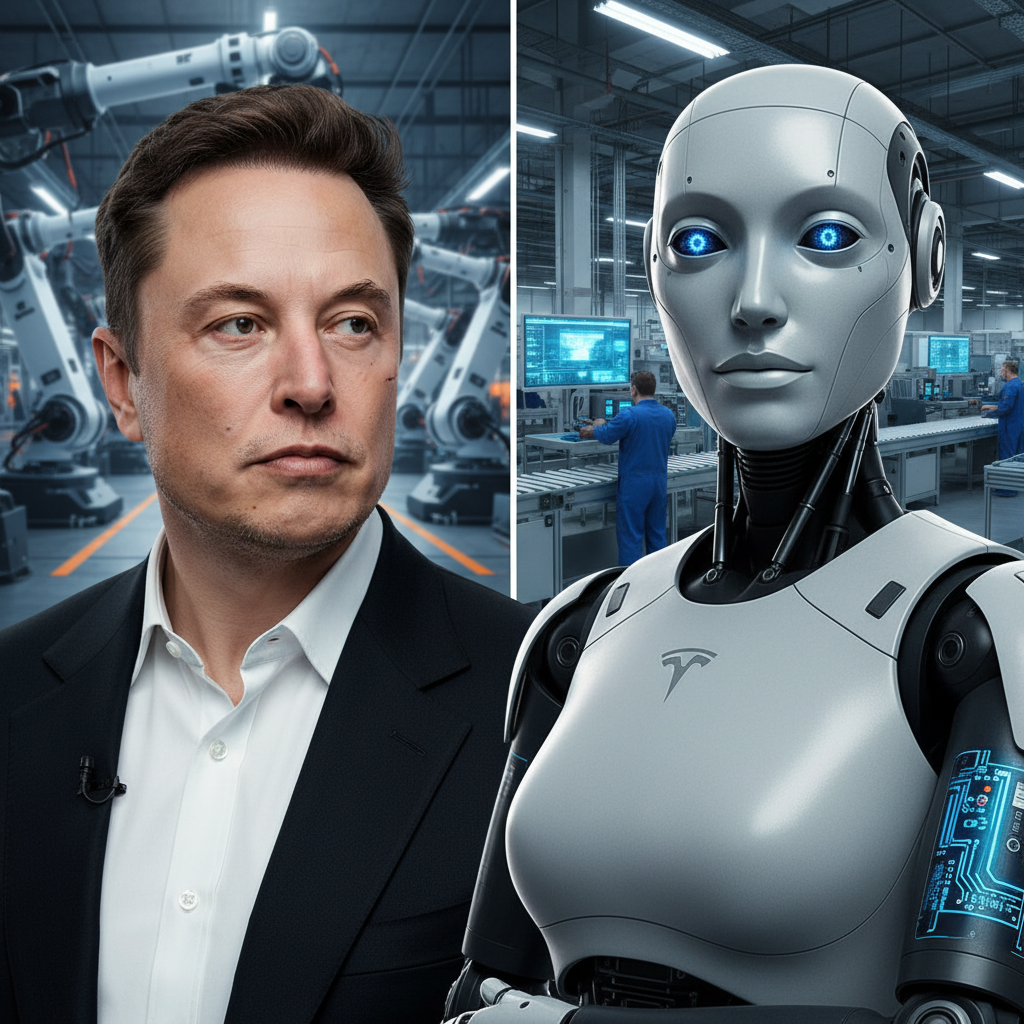
Drahí čitatelia, my heart is practically thumping with excitement today, because we are diving deep into a topic that feels like it’s been ripped straight from a science fiction novel, yet it’s unfolding right before our very eyes. We are talking about Tesla’s Optimus, the humanoid robot that Elon Musk envisions as a future factory worker, and its truly mind-boggling potential for manufacturing, especially here in Central Europe. It’s a vision that sparks both wonder and a healthy dose of practical questions, particularly for a nation like Slovakia, with its rich automotive history and skilled workforce.
I’ve been following the Optimus project with bated breath since its inception. From the initial concept of the 'Tesla Bot' to the more recent demonstrations of its evolving dexterity, it’s clear that Musk is not just building a robot, he is trying to redefine the very essence of physical labor. He has often spoken about the need for a general purpose humanoid robot, capable of performing tasks that are 'boring, repetitive, and dangerous' for humans. This isn't just about efficiency, it's about a fundamental shift in how we approach production, a shift that could unlock unprecedented levels of productivity and, dare I say, human flourishing.
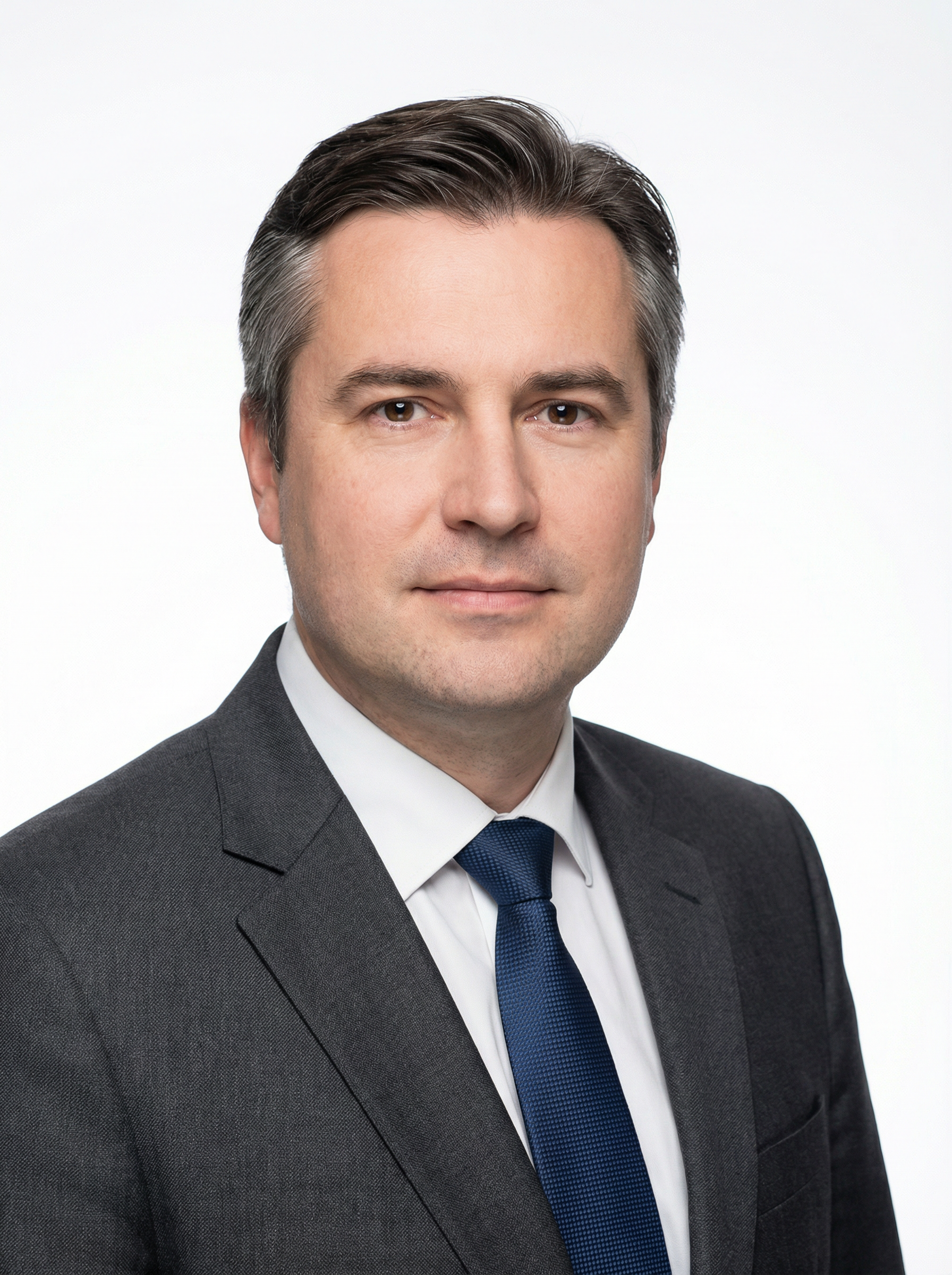
To really get a handle on what this could mean for our corner of the world, I sought out someone who understands both the cutting edge of robotics and the intricate dance of European industry. I recently had the immense pleasure of speaking with Professor Ján Hrabovský, a distinguished robotics expert and head of the Department of Automation and Control at the Slovak University of Technology in Bratislava. Professor Hrabovský, with his deep understanding of industrial automation and his pragmatic yet optimistic outlook, is exactly the kind of voice we need in this conversation. He has been a vocal proponent of integrating advanced robotics into Slovak manufacturing for years, championing initiatives that bridge academic research with real world industrial application.
Our conversation began with the sheer ambition of Optimus. Musk has publicly stated his belief that Optimus will eventually be more valuable than Tesla's car business itself, a bold claim that underscores the transformative potential he sees. Professor Hrabovský nodded thoughtfully as I brought this up. "Elon Musk has a remarkable track record of pushing boundaries, and Optimus is no exception," he observed. "The idea of a truly general purpose humanoid robot, one that can operate in environments designed for humans without extensive retooling, is the holy grail of robotics. If Tesla can deliver on that promise, the implications for manufacturing are enormous. Imagine a factory floor where robots can pick up any tool, operate any machine, and adapt to new tasks with minimal programming. That is the vision."
Professor Hrabovský emphasized that while industrial robots have been a staple in automotive plants for decades, they are typically fixed in place, highly specialized, and require meticulously structured environments. Optimus, if it lives up to its billing, represents a departure from this. "Current industrial robots are fantastic at repetitive, high volume tasks, like welding car bodies or painting," he explained. "But they lack the adaptability and dexterity to handle the myriad of unstructured tasks that still require human intervention. Optimus aims to fill that gap, operating alongside humans, or even taking over tasks in environments that are too complex or dangerous for traditional automation." He pointed out that Musk has often highlighted the importance of Optimus being able to navigate and manipulate objects in human-centric spaces, a critical differentiator.
This adaptability is where the real game changer lies, especially for countries like Slovakia. We are a nation with a proud tradition of manufacturing, particularly in the automotive sector. Volkswagen, Kia, Jaguar Land Rover, and Stellantis all have significant operations here, employing tens of thousands of people. The introduction of highly adaptable humanoid robots could either be seen as a threat or an incredible opportunity. Professor Hrabovský firmly believes it is the latter. "For Slovakia, with our strong manufacturing base and highly skilled engineering talent, this is not a threat to jobs, but an evolution of them," he asserted with conviction. "We have Slovakia's hidden tech talent that can pivot from traditional automation to programming, maintaining, and even designing the next generation of humanoid robot systems. The focus shifts from manual labor to higher value tasks, to innovation, and to oversight."
He cited Musk's public statements about Optimus being designed to eventually cost less than a human worker, perhaps around $20,000, and its ability to work tirelessly without breaks. "That kind of economic efficiency, combined with versatility, could make manufacturing incredibly competitive again in regions where labor costs are rising, or where specific skills are in short supply," Professor Hrabovský noted. "It allows us to keep production local, even enhance it, rather than seeing it move to other parts of the world. It’s about creating smart factories, not just automated ones."
Of course, the path to widespread adoption is not without its challenges. The current iterations of Optimus, while impressive, are still in their early stages. Dexterity, balance, and the ability to handle unexpected situations are complex hurdles. "The software is arguably the hardest part," Professor Hrabovský stated, echoing sentiments often expressed by Musk himself. "Teaching a robot to perceive the world, understand context, and react intelligently, that is where the real AI challenge lies. It requires massive amounts of data, sophisticated machine learning models, and robust control systems. But given the pace of AI development, particularly in areas like large language models and reinforcement learning, I am optimistic about the progress we will see in the coming years." He mentioned that Tesla's approach of using its vast real world data from its vehicle fleet to train its AI models could give Optimus a unique advantage.
Looking ahead, Professor Hrabovský painted a vivid picture of a future where Optimus, or robots like it, become commonplace. "Imagine them not just in factories, but in logistics, in elder care, even in hazardous environments like disaster relief or nuclear decommissioning. The potential is truly boundless," he enthused. "For us, in Bratislava, and across Central Europe, this is an invitation to be at the forefront of this revolution. We have the engineering schools, the industrial know-how, and the entrepreneurial spirit. We must invest in research, in education, and in pilot projects to ensure we are not just consumers of this technology, but active participants in its development and deployment. Bratislava is having its moment, and this could be another defining chapter."
He concluded with a thought that resonated deeply with me. "The goal is not to replace humans, but to augment human capability, to free us from the mundane and dangerous, allowing us to focus on creativity, innovation, and truly human endeavors. This is Central Europe's quiet revolution, a transformation that will redefine our industrial landscape and our place in the global economy. It’s an exciting time to be alive, and an even more exciting time to be in Slovakia, witnessing and contributing to this future."
As I left Professor Hrabovský, I felt that familiar surge of optimism. The road ahead for Optimus is long and complex, but the vision is clear. If Tesla can truly miniaturize and generalize the capabilities it demonstrates in its vehicles into a bipedal form, then the manufacturing world, and indeed the world at large, is in for an incredible ride. And I, for one, cannot wait to see where it takes us, especially here in our beautiful Slovakia. The future is not just coming, it is being built, piece by robotic piece. And we are ready. We are so ready. {{youtube:j7JEDWuqLE}}