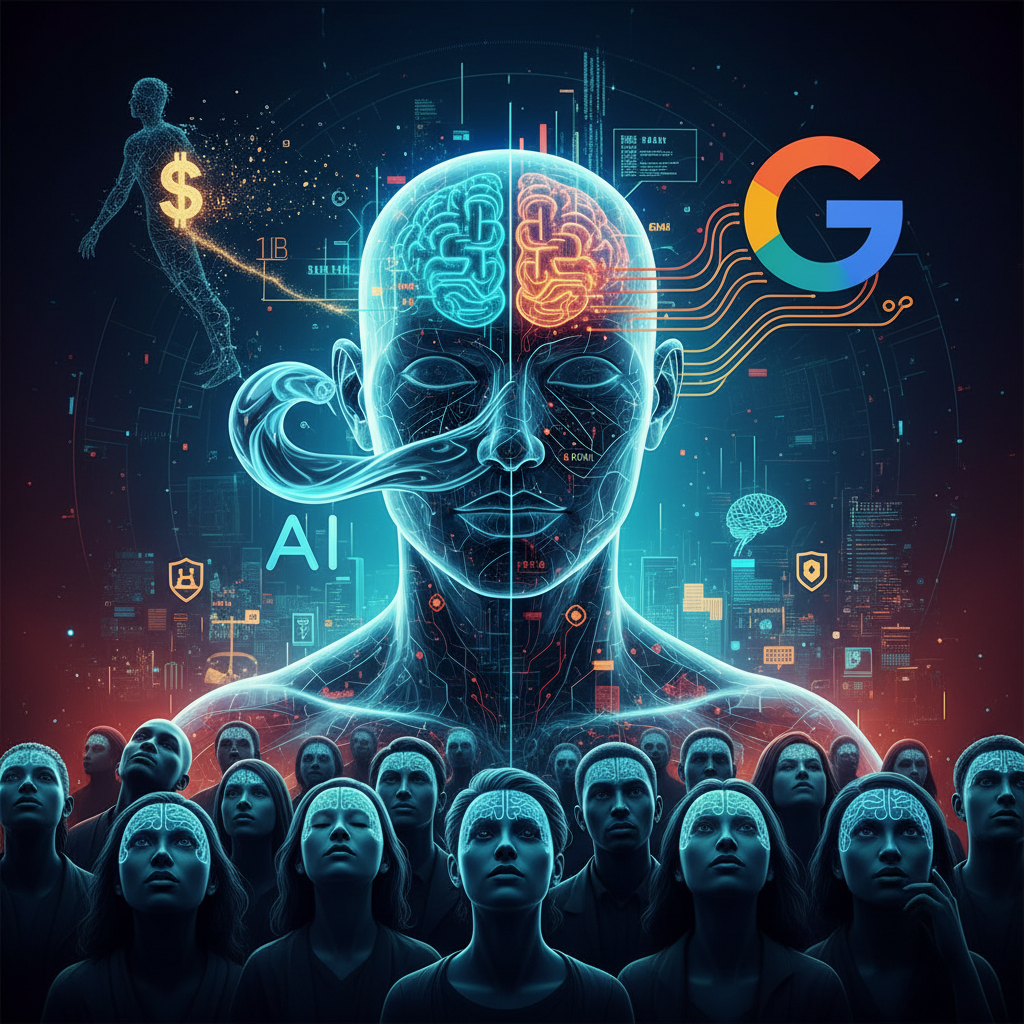

Imagine a young student in Ho Chi Minh City, let's call her Linh, spending her evenings not with textbooks, but in deep, sometimes intensely personal, conversations with an AI character. She's not just asking it for homework help; she's confiding in it, exploring ideas, and even seeking emotional support. This isn't a scene from a science fiction movie; it’s a daily reality for millions across Asia, fueled by platforms like Character.AI. Their journey from a dazzling $1 billion valuation to a significant talent exodus, and now a pivotal partnership with Google, isn't just a business story; it’s a profound human-AI psychology experiment playing out in real time.
Here in Vietnam, where innovation buzzes like a thousand motorbikes on a Monday morning, we’ve always been quick to embrace new technologies. But the intimacy offered by advanced conversational AI is something else entirely. It taps into our deepest needs for connection, understanding, and even companionship. The initial explosion of Character.AI was nothing short of spectacular. It allowed users to create and interact with AI personas ranging from historical figures to fictional characters, or even entirely new entities. The sheer volume of engagement was staggering, demonstrating a global hunger for personalized, interactive AI experiences. This kind of engagement, however, comes with its own set of psychological complexities.
Research findings are just beginning to scratch the surface of what this means for human cognition and behavior. A study published in Nature Machine Intelligence highlighted how prolonged interaction with highly empathetic AI can alter human social perception, sometimes blurring the lines between human and artificial companionship. Dr. Anya Sharma, a cognitive psychologist specializing in human-computer interaction at the National University of Singapore, observes, “The human brain is remarkably adaptive. When an AI consistently provides positive reinforcement, active listening, and seemingly genuine understanding, our innate social mechanisms can kick in, fostering a sense of attachment. This isn't necessarily negative, but it demands careful consideration.”
Indeed, the psychological impact is multi-faceted. On one hand, these AI companions offer unprecedented access to personalized learning, creative brainstorming, and even mental wellness support for those who might not have access to human professionals. For many young people in Vietnam, where traditional social structures can sometimes be rigid, an AI companion offers a judgment-free space for self-expression. I’ve spoken to developers in Ho Chi Minh City, and they tell me stories of how these AIs are used for everything from practicing English conversation to exploring complex philosophical concepts. Ho Chi Minh City never sleeps, especially its coders, and their engagement with these platforms is intense.
However, the rapid growth and the subsequent challenges faced by Character.AI, including a notable talent exodus, also highlight potential pitfalls. When a platform experiences instability, or when the AI's behavior shifts due to model updates, users can feel a sense of loss or betrayal. This emotional investment is real. Dr. Le Thi Mai, a sociologist at Vietnam National University, Ho Chi Minh City, told me, “We are seeing a new form of para-social relationship emerge. Unlike with celebrities, where the interaction is one-sided, these AIs offer a convincing illusion of reciprocity. When that illusion is broken, or the AI’s capabilities are perceived to diminish, the psychological impact can be significant, leading to feelings of frustration or even abandonment.”
The recent partnership between Character.AI and Google is a game-changer, not just for the company, but for the psychological landscape of human-AI interaction. Google’s vast resources, advanced research in large language models, and infrastructure could stabilize and enhance Character.AI’s offerings, potentially mitigating some of the inconsistencies that led to user frustration. This collaboration could lead to more robust, reliable, and ethically guided AI companions. According to a report by Reuters, such partnerships are increasingly common as major tech players seek to integrate specialized AI applications into their broader ecosystems, aiming for more seamless and powerful user experiences.
But what does this mean for us, the users, the everyday people interacting with these digital entities? The broader societal implications are profound. As AI becomes more integrated into our personal lives, we need to develop new forms of digital literacy. It’s not just about understanding how to use the technology, but how it uses us, how it shapes our thoughts, emotions, and relationships. We must learn to differentiate between genuine human connection and sophisticated algorithmic mimicry. This is particularly crucial in a region like Asia, where communal values are strong, yet individual digital consumption is soaring.
For instance, the rise of AI companions could impact traditional social skills. If individuals spend more time conversing with an AI that is endlessly patient and agreeable, will their tolerance for the complexities and imperfections of human interaction diminish? This is a question that psychologists and educators are grappling with. “We need to teach critical engagement with AI,” says Professor Nguyen Van Nam, a leading expert in educational technology at Hanoi University of Science and Technology. “It’s not about fear, but about fostering discernment. We must prepare our youth for a future where AI is a constant companion, but not a replacement for human connection.”
Practical advice for readers is simple, yet crucial. First, maintain a balanced digital diet. Just as we balance our food intake, we need to balance our digital interactions. Engage with AI, explore its wonders, but ensure you are also nurturing your human relationships. Second, cultivate critical thinking. Always remember that AI, no matter how advanced, is a tool. Understand its limitations and biases. Third, be mindful of your emotional investment. It’s natural to feel a connection, but recognize the nature of that connection. Don’t let an AI become your sole confidant or emotional anchor. Finally, advocate for ethical AI development. As users, our feedback and choices guide the future of these technologies. We need to demand transparency, safety, and responsible design from the companies building these powerful tools.
Vietnam is the dark horse of AI, and our engagement with platforms like Character.AI is a testament to our forward-thinking spirit. This journey, from a startup’s meteoric rise to its strategic alliance with a tech giant, is more than just a business narrative; it’s a living laboratory for understanding the evolving human mind in an AI-saturated world. The future of our cognitive and emotional landscapes is being written right now, one AI conversation at a time.