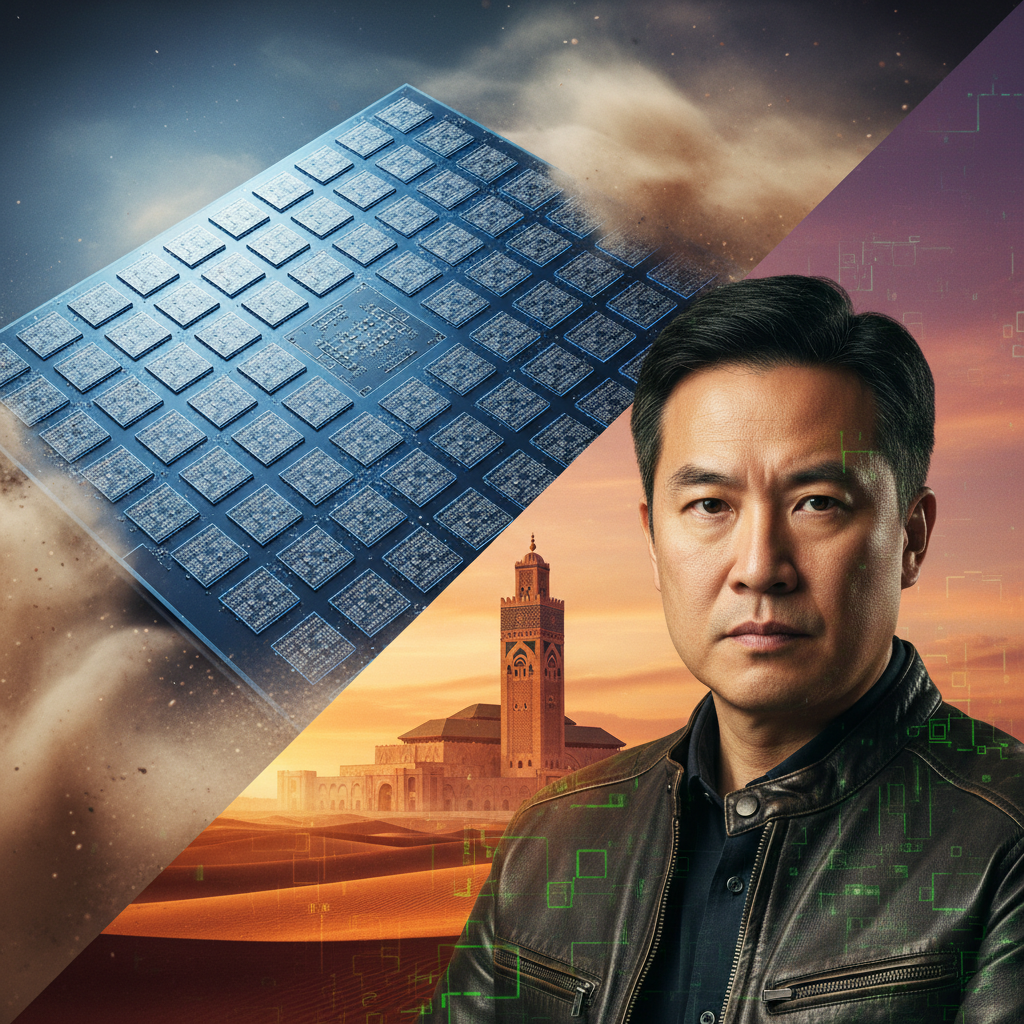
The air in the global tech community is thick with anticipation, a palpable hum of excitement and trepidation. For years, NVIDIA, under the visionary leadership of Jensen Huang, has been the undisputed monarch of AI compute, its GPUs the golden standard powering everything from OpenAI's GPT models to Meta's sprawling data centers. But now, a challenger emerges from the silicon shadows: Cerebras Systems, with its audacious wafer-scale engine, is not just nipping at NVIDIA's heels, it is attempting to redraw the entire battlefield.
This is not a quarterly skirmish, my friends, but a generational battle for the very soul of artificial intelligence infrastructure. Cerebras is reportedly gearing up for a bold IPO, a move that signals not just financial ambition, but a profound belief in its technology's ability to fundamentally alter how we train and deploy AI. Their WSE 3, a single chip the size of an entire silicon wafer, boasts 4 trillion transistors and 900,000 AI cores. Compare that to NVIDIA's latest H200 GPU, impressive in its own right, but still a fraction of Cerebras' sheer computational density. This isn't just an incremental improvement, it's a paradigm shift, a desert caravan bypassing the well-worn trade routes for a direct path to the horizon.
For us in Morocco, and indeed across Africa, this development is more than just Silicon Valley drama; it's a potential game-changer. Our continent, often playing catch-up in traditional tech infrastructure, has a unique opportunity to leapfrog older technologies. Imagine data centers powered by these massive, efficient chips, requiring fewer interconnections, less power per operation, and offering unprecedented speed for large language models and complex scientific simulations. This could accelerate our own AI initiatives, from smart agriculture in the fertile plains of Gharb to advanced automotive AI research in Tangier.
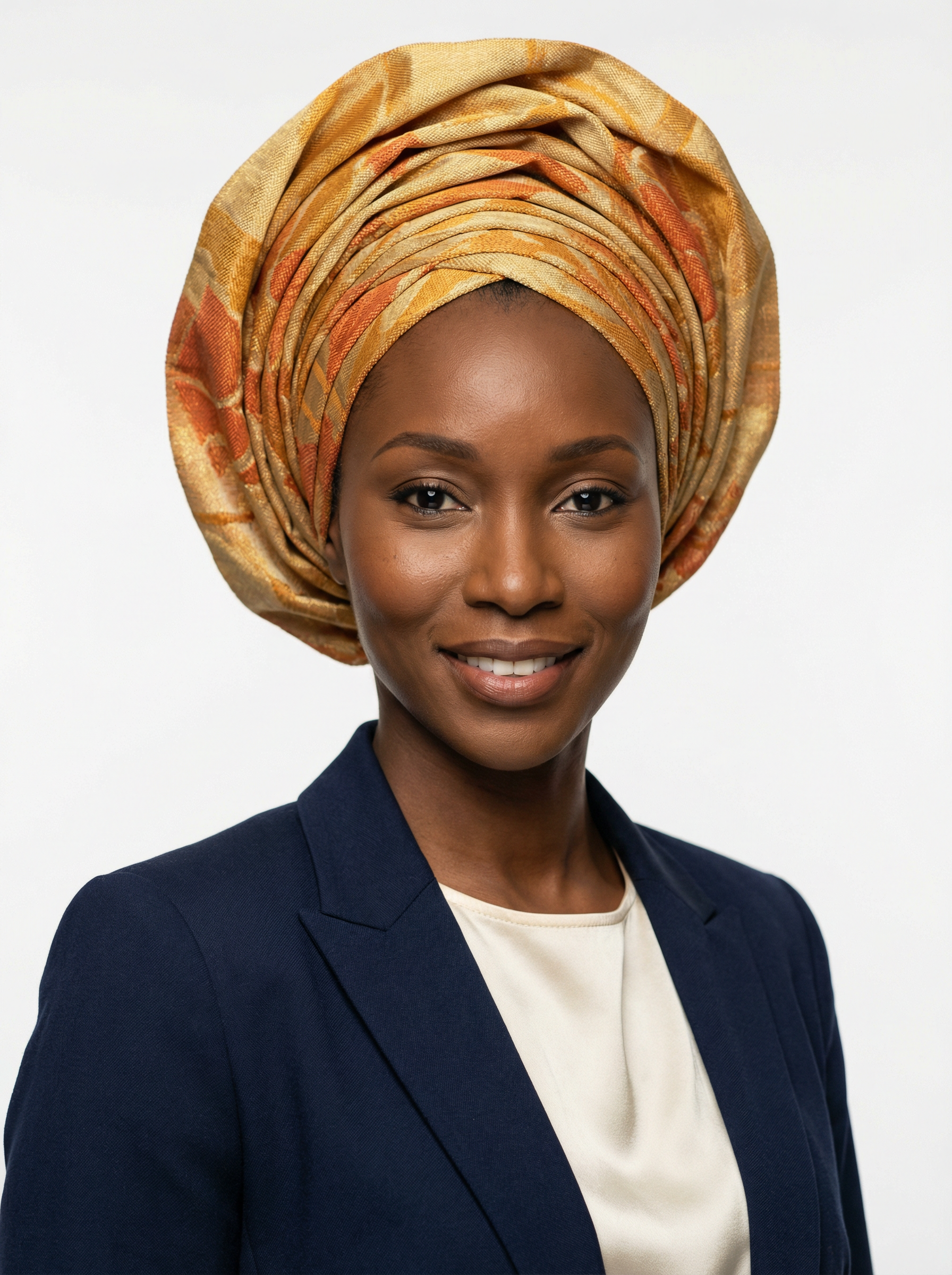
"The sheer scale of Cerebras' approach is disruptive, to say the least," explains Dr. Fatima Zahra Alami, head of AI research at Mohammed VI Polytechnic University in Benguerir. "NVIDIA has built an incredible ecosystem, but Cerebras is offering a different kind of horsepower, one that could be particularly appealing for specific, large-scale training tasks. For countries like Morocco investing heavily in AI, having diverse, high-performance compute options is crucial for strategic autonomy and fostering local innovation." Dr. Alami's words resonate deeply; we cannot afford to be beholden to a single provider, no matter how dominant.
Cerebras' strategy is not just about raw power, it's about efficiency and simplification. By putting an entire neural network on a single, massive chip, they eliminate the latency and complexity of distributing computations across hundreds or thousands of smaller GPUs. This could translate into faster training times for gargantuan models, allowing researchers to iterate quicker and push the boundaries of AI development at an accelerated pace. The Sahara is vast, but the data flowing across it is vaster, and we need the fastest pathways possible.
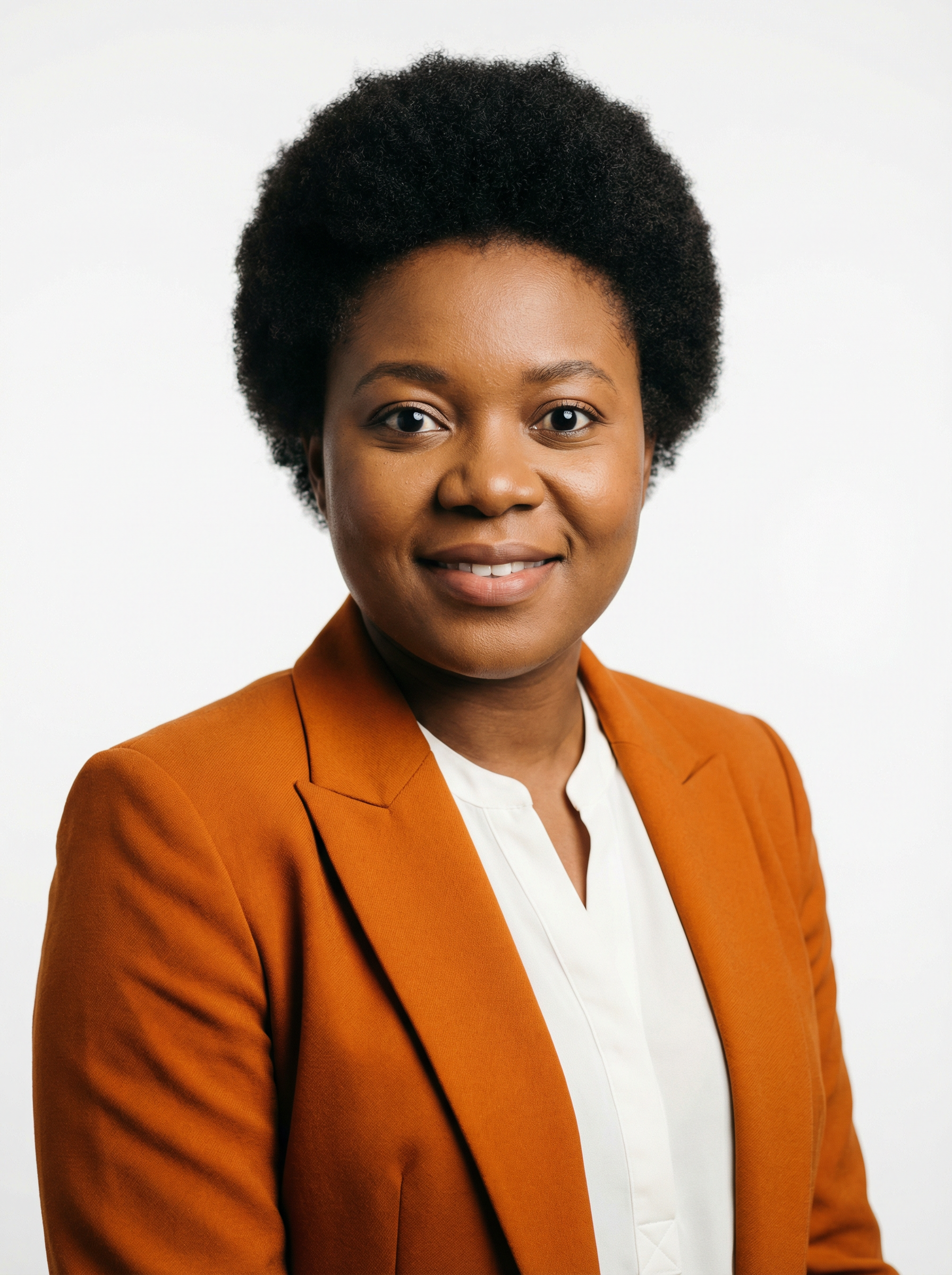
However, the road to dethroning an incumbent like NVIDIA is fraught with challenges. NVIDIA's Cuda software platform is deeply entrenched, a veritable operating system for AI development, with a developer community numbering in the millions. Cerebras has made strides with its own software stack, but convincing developers to switch or adapt their workflows is a monumental task. "The hardware is only half the battle, the software ecosystem is the other, equally critical half," notes Karim Bensouda, a Moroccan AI startup founder based in Casablanca. "NVIDIA's strength isn't just its chips, it's the entire support structure, the libraries, the frameworks, the community. Cerebras needs to build that same level of trust and accessibility."
The financial markets are clearly watching this closely. Analysts at Bloomberg Intelligence estimate the AI chip market could reach over 150 billion dollars by 2030, a staggering figure that underscores the stakes involved. A successful Cerebras IPO, potentially valuing the company in the tens of billions, would inject significant capital into this alternative architecture, fueling further innovation and intensifying competition. This is precisely the kind of dynamic tension that drives progress, benefiting everyone in the long run, including emerging AI hubs like ours.
What does this mean for Morocco? Morocco sits at the crossroads of Africa, Europe, and the Arab world and that's our AI superpower. We are strategically positioned to become a hub for data processing and AI development, especially with our ambitious investments in renewable energy. Imagine a future where our solar parks not only power our cities but also massive, energy-efficient data centers utilizing wafer-scale engines for cutting-edge AI research. This isn't a distant dream; it's a tangible possibility within the next decade.
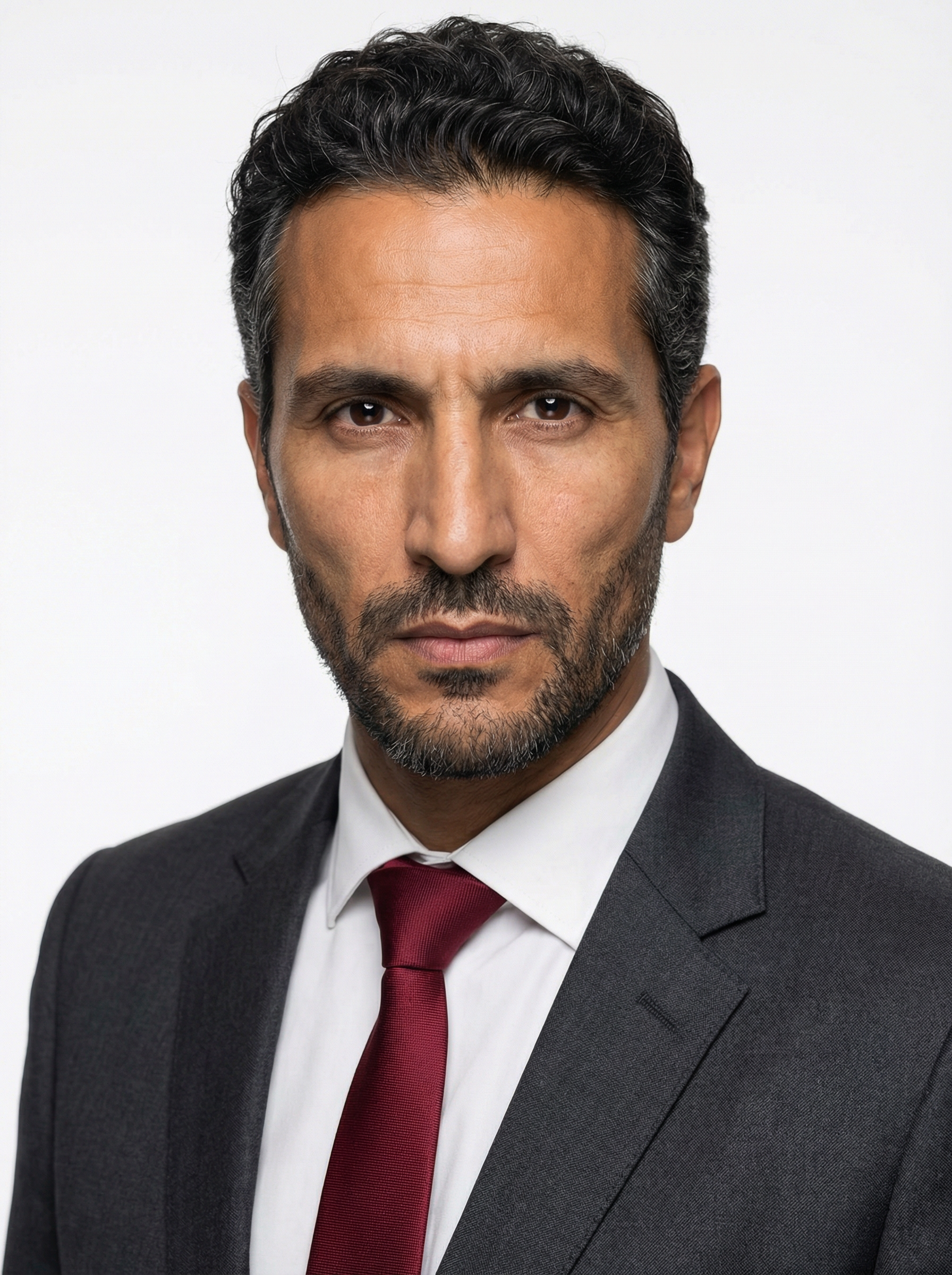
Our government's focus on digital transformation, coupled with initiatives to train a new generation of AI engineers, creates fertile ground. "We are actively exploring partnerships with companies that offer innovative compute solutions," stated Omar El Fassi, Director of Digital Economy at Morocco's Ministry of Industry and Trade. "Our goal is to ensure Moroccan researchers and businesses have access to the best available tools, whether they are from established giants or disruptive newcomers. Diversification of our AI infrastructure is key to our national strategy." This proactive stance is exactly what we need to capitalize on these global shifts.
Cerebras' journey is a testament to the relentless pursuit of innovation. While NVIDIA continues to push the boundaries with its own powerful offerings, the emergence of a viable alternative like Cerebras creates a competitive landscape that will ultimately accelerate the entire field of AI. This is not about one company winning and another losing, it's about the relentless march of progress, driven by brilliant minds pushing the limits of what's possible.
As we look towards the next decade, the impact of these hardware advancements will be profound. From medical diagnostics to climate modeling, from personalized education to smart cities, the underlying compute power will dictate the pace of innovation. For Morocco, a nation poised on the cusp of significant technological growth, the rise of companies like Cerebras offers a chance to build our AI future on the most advanced foundations, ensuring that Casablanca truly becomes the AI capital nobody expected.
This is a story that will unfold over years, not months. The battle for AI compute supremacy is far from over, but the opening shots of a new era have certainly been fired. We will be watching closely, ready to harness these powerful currents for Morocco's digital future. For further insights into the competitive landscape of AI hardware, you can follow developments on TechCrunch's AI section or dive deeper into the technical aspects via MIT Technology Review. The broader implications for business and finance are often covered by Bloomberg Technology. The future, my friends, is being forged in silicon, and its reverberations will be felt across continents. For more on how North African nations are embracing AI, you might find this article on When Algorithms Judge: Why Google's Hiring AI Faces Scrutiny and Egypt's Future Workforce Hangs in the Balance [blocked] relevant. The stakes are high, and the potential rewards, even higher.```