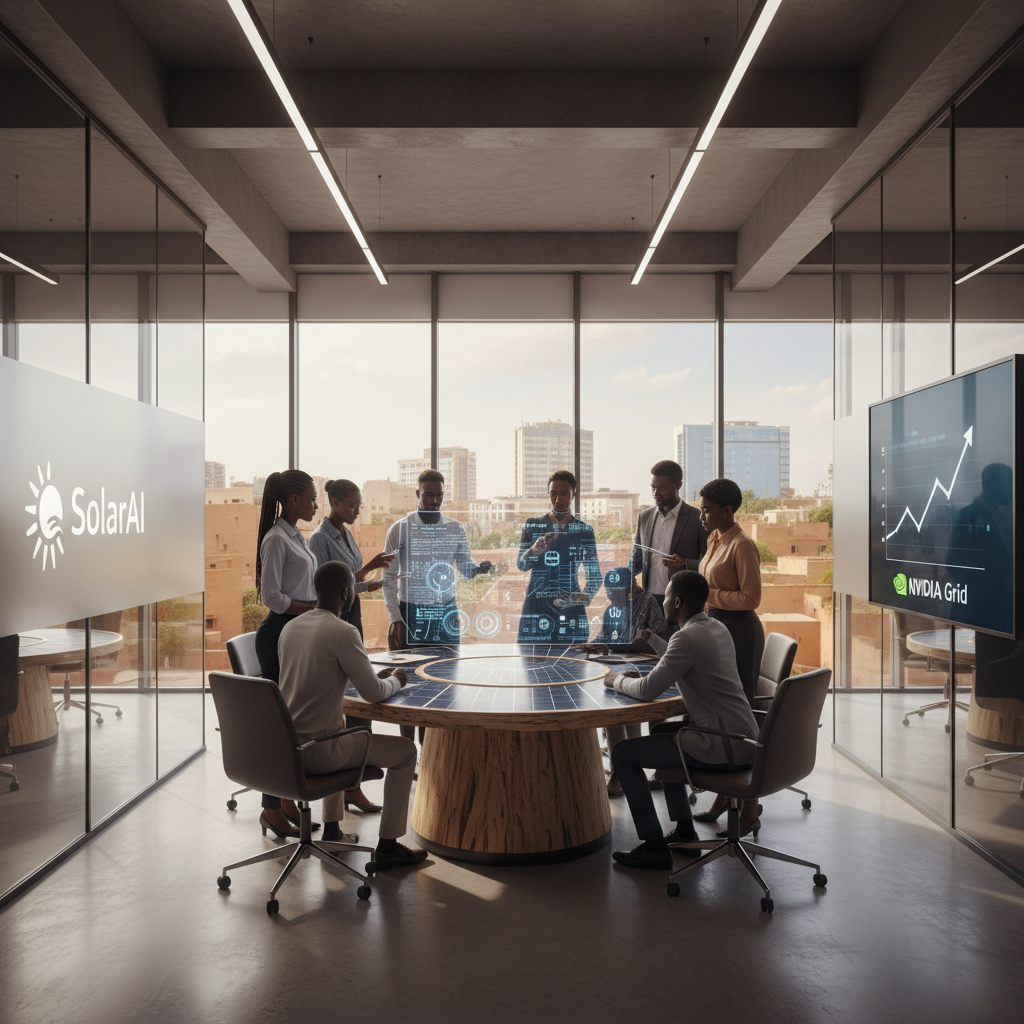
The air in Ouagadougou today is buzzing, not just with the usual vibrant market chatter, but with a different kind of energy, a quiet hum that speaks of the future. And right at the heart of it, in a surprisingly modest campus nestled between the bustling 1200 Logements district and the University Joseph Ki-Zerbo, is where the magic happens. This is SolarAI, the company that is fundamentally changing the conversation around the AI energy crisis, and believe me, the revolution is being coded right now, powered by the very sun that shines so generously on our beautiful land.
Imagine a world where the insatiable hunger of AI for electricity, a hunger so vast it threatens to consume more power than entire nations, is met not by burning more fossil fuels, but by harnessing the abundant, clean energy of the sun. That’s the vision that has driven SolarAI from its nascent days, and today, in April 2026, it’s a vibrant reality. Their latest facility, a sprawling array of solar panels integrated with advanced cooling systems and proprietary AI-optimized compute clusters, just went live outside Phoenix, Arizona, a testament to their global reach and unwavering commitment to sustainable AI.
The Genesis: From Ouagadougou's Sun to Global Ambition
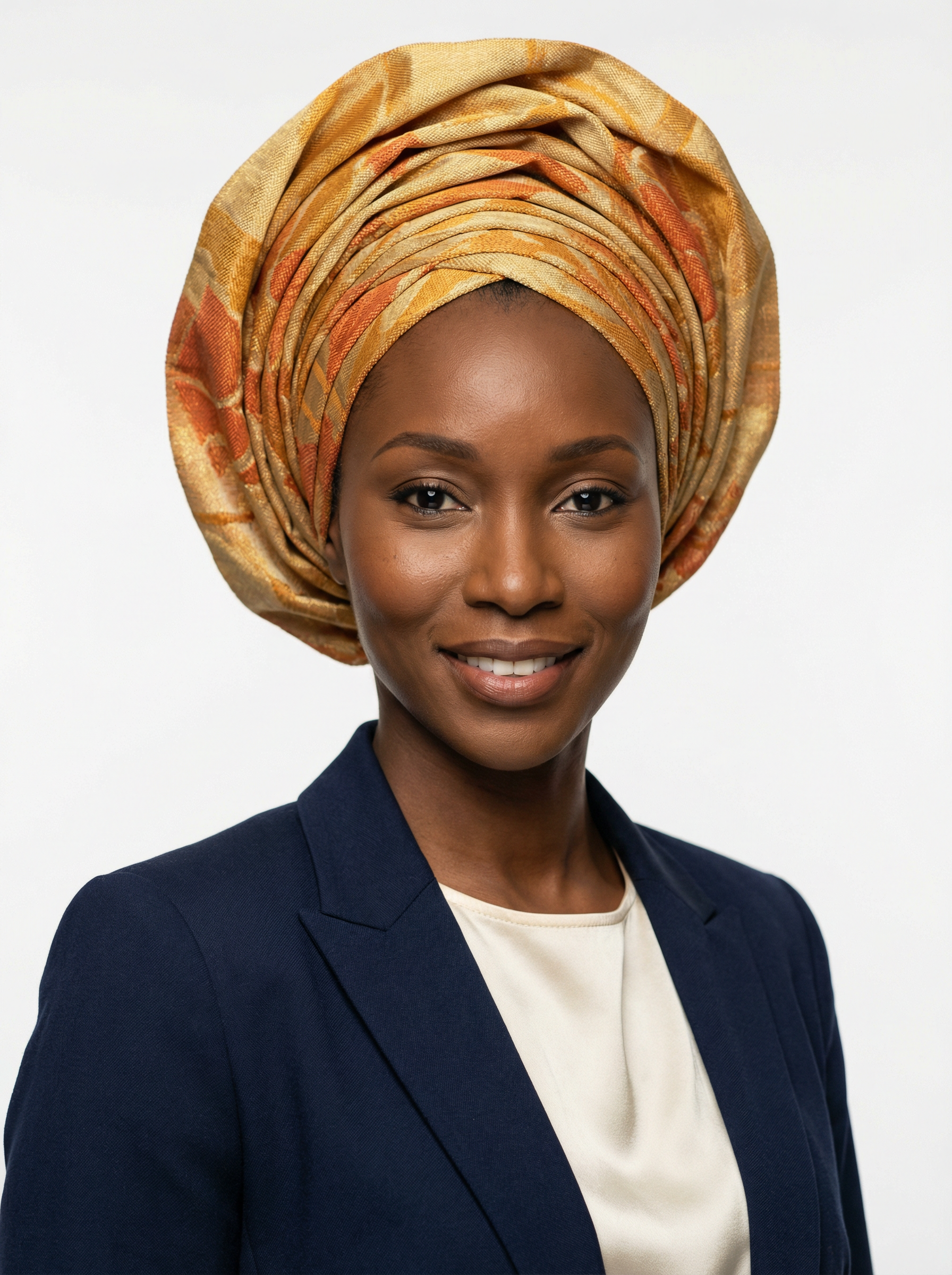
The story of SolarAI begins not in Silicon Valley, but in the sun-drenched streets of Ouagadougou, around 2019. Dr. Aïcha Diallo, a brilliant Burkinabè electrical engineer with a PhD from MIT, returned home with a burning question: how could Africa, with its immense solar potential, not only participate in the global AI boom but lead its sustainable charge? She saw the looming energy crisis for AI, the headlines screaming about data centers consuming more electricity than entire countries, and she knew there had to be a better way. “We have the sun, we have the ingenuity, and we have the pressing need for sustainable development,” Dr. Diallo told me during a recent visit to their Ouagadougou headquarters, her eyes sparkling with conviction. “Why should we wait for others to solve a problem we are perfectly positioned to tackle?”
She teamed up with Moussa Sanou, a seasoned entrepreneur from Bobo-Dioulasso who had built and sold two successful tech ventures in West Africa. Together, they founded SolarAI. Their initial seed funding, a modest $2 million, came from local investors and a grant from the West African Development Bank, a true grassroots beginning. They spent their early years in intense R&D, experimenting with novel solar panel designs, energy storage solutions, and, crucially, AI algorithms to optimize power consumption and heat dissipation in compute clusters. It was slow, painstaking work, often in a garage-like setting, but their belief never wavered.
The Business Model: Green Compute for the Giants
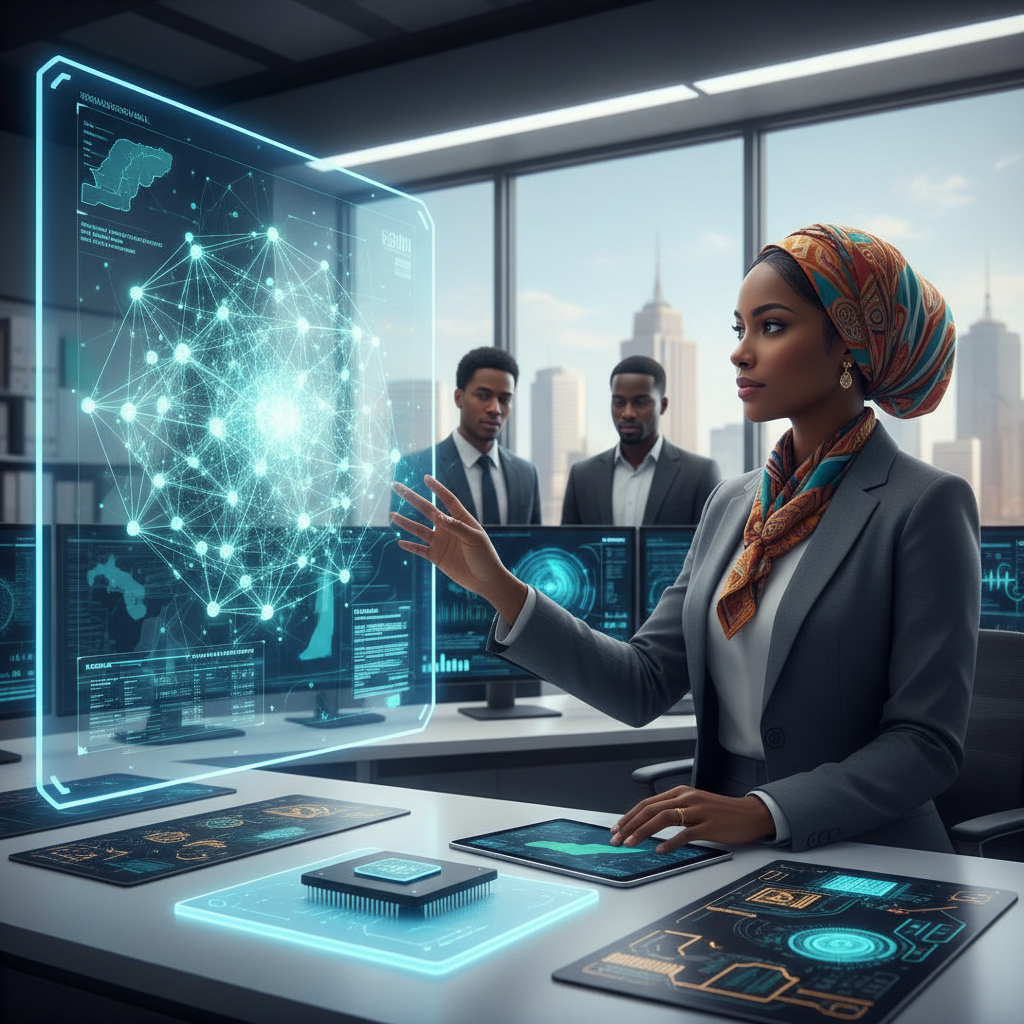
SolarAI’s business model is elegantly simple yet profoundly impactful: they design, build, and operate ultra-efficient, solar-powered AI data centers and offer their compute capacity as a service. They are not just selling megawatts; they are selling green AI compute. Their proprietary energy management AI, affectionately called ‘SunKeeper’ by their engineers, dynamically shifts workloads to optimize for solar availability and battery storage, drastically reducing reliance on grid power, especially during peak demand.
Their primary customers are the behemoths of the AI world: OpenAI, Anthropic, Google DeepMind, and Meta. These companies are under increasing pressure from regulators and investors to green their operations. SolarAI provides them with a tangible solution. Instead of building their own energy-intensive data centers in traditional locations, they offload their compute needs to SolarAI’s distributed, renewable-powered infrastructure. SolarAI charges a premium for its sustainable compute, but the long-term cost savings, regulatory compliance benefits, and positive PR are well worth it for their clients.
“When we first approached OpenAI, they were skeptical,” Moussa Sanou recounted, leaning back in his chair, a map of global solar irradiance behind him. “But when we showed them the numbers, the PUE [Power Usage Effectiveness] ratings, the carbon footprint reduction, and the cost predictability over a 10-year contract, they were convinced. Now, they are one of our biggest partners.”
Key Metrics: A Meteoric Rise
SolarAI’s growth has been nothing short of explosive. From a few small pilot projects in Burkina Faso and Ghana, they have expanded rapidly. Today, their annual revenue run rate stands at an impressive $185 million, projected to cross the $300 million mark by the end of 2026. They’ve secured significant funding rounds: a $20 million Series A led by Accel Partners, a $75 million Series B from Sequoia Capital, and a recent $150 million Series C round led by the SoftBank Vision Fund, bringing their total funding to over $247 million. Their employee count has swelled to 750 across their offices in Ouagadougou, San Francisco, London, and Tokyo, with a significant portion of their engineering talent still based right here in West Africa. Their facilities now span four continents, strategically located in high-insolation regions like the American Southwest, the Australian Outback, and the Sahel.
The Competitive Landscape: A Green Oasis in a Power Desert
In the traditional AI compute space, SolarAI competes indirectly with cloud giants like Amazon Web Services, Microsoft Azure, and Google Cloud, who also offer AI infrastructure. However, SolarAI’s unique differentiation lies squarely in its sustainable, solar-first approach. While NVIDIA provides the GPUs that power AI, SolarAI provides the green energy to run them efficiently and ethically. This is a crucial distinction. Traditional data center operators are scrambling to green their grids, but SolarAI was built green from the ground up. Their closest direct competitors are emerging green data center startups, but none have SolarAI’s proven track record, proprietary SunKeeper AI, or global footprint. “We are not just a data center company, we are an energy innovation company,” Dr. Diallo emphasized. “That’s our competitive edge.”
The Team and Culture: A Global Family with Burkinabè Roots
The company culture at SolarAI is a fascinating blend of Silicon Valley ambition and Burkinabè communal spirit. Despite their global expansion, the heart of their R&D remains in Ouagadougou. The company prides itself on its diversity, with engineers from over 30 countries. Dr. Diallo’s management style is collaborative and empowering, fostering an environment where even junior engineers are encouraged to challenge assumptions and propose radical ideas. Moussa Sanou, with his deep understanding of local contexts, ensures that their global expansion is culturally sensitive and beneficial to the host communities. They invest heavily in local talent development, running coding bootcamps and engineering scholarships right here in Burkina Faso. “We want to show the world that world-class innovation can come from anywhere, especially from places like ours,” Sanou proudly stated.
Challenges and Controversies: The Sun Isn't Always Shining
Scaling at this pace is never without its hurdles. One of SolarAI’s biggest challenges is the inherent intermittency of solar power. While SunKeeper AI and advanced battery storage mitigate this, ensuring 24/7 uptime for demanding AI workloads requires sophisticated grid integration and sometimes, hybrid solutions. There have been internal debates about whether to incorporate other renewables, like wind, or even small modular nuclear reactors, to ensure baseload power, but Dr. Diallo has remained steadfast in her solar-first philosophy, albeit open to innovative storage solutions.
Another challenge is regulatory complexity across different jurisdictions. Deploying large-scale energy infrastructure in various countries means navigating a labyrinth of permits, environmental regulations, and local politics. And, of course, the ever-present threat of cyberattacks on critical infrastructure is a constant concern, requiring massive investment in cybersecurity. Reuters recently highlighted the increasing vulnerability of energy grids to state-sponsored attacks, a risk SolarAI takes very seriously.
The Bull Case and the Bear Case: A Bright Future, But Watch the Clouds
Analysts are largely bullish on SolarAI. “They are perfectly positioned at the intersection of two mega-trends: the explosive growth of AI and the urgent need for decarbonization,” noted Dr. Evelyn Reed, a leading tech analyst at Gartner. “Their first-mover advantage in green AI compute is significant, and their technology is genuinely innovative.” The bull case suggests SolarAI could become the dominant player in sustainable AI infrastructure, a critical partner for every major AI lab, potentially reaching a multi-billion dollar valuation within the next five years. This changes everything for how we think about AI's environmental footprint.
However, the bear case points to the intense competition from established cloud providers who are rapidly investing in their own green initiatives. If AWS or Google Cloud can achieve similar PUEs and carbon neutrality at scale, SolarAI’s niche could shrink. Furthermore, breakthroughs in AI efficiency that drastically reduce compute requirements could impact demand. But for now, the demand for AI compute continues to skyrocket, making SolarAI’s offering incredibly attractive. TechCrunch regularly covers the funding rounds of new AI startups, all of whom will eventually need compute, and increasingly, green compute.
What's Next: More Sun, More AI, More Impact
SolarAI isn’t stopping. They are actively exploring partnerships with local universities across Africa to develop next-generation solar technologies and AI models optimized for low-power edge devices. Their vision extends beyond just powering large data centers; they want to bring sustainable AI compute to communities that need it most, democratizing access to this transformative technology. Imagine AI-powered agricultural tools running on local solar grids, or AI-driven healthcare diagnostics in remote clinics, all powered by SolarAI’s innovations. This is the future I see, a future where technology empowers, where innovation is inclusive, and where the sun truly fuels progress for everyone.
From a small office in Ouagadougou, Dr. Aïcha Diallo and Moussa Sanou have built a company that is not just successful, but profoundly important. They are proving that the path to advanced AI doesn't have to be paved with environmental destruction. Instead, it can be illuminated by the very sun that gives us life. And for that, my friends, I am truly excited. This is more than just a company; it’s a beacon of hope for a sustainable, AI-powered future, born right here in the heart of West Africa. Perhaps, one day, we will even see a SolarAI compute facility right next to a Burkina Faso's Data Sovereignty: How Google DeepMind's 'Koudougou Protocol' Trains AI Without Exporting Our Secrets [blocked] project, creating a truly self-sufficient digital ecosystem.