The sun beats down on the Grand Marché of Ouagadougou, a place where colors explode and stories are traded as freely as shea butter and woven fabrics. Here, art is not just a commodity, it is the soul of our people, passed down through generations. So, when the Ministry of Culture, Arts, and Tourism announced its new decree concerning generative AI imagery, my ears perked up. This was not some distant Silicon Valley debate; this was about our very identity.
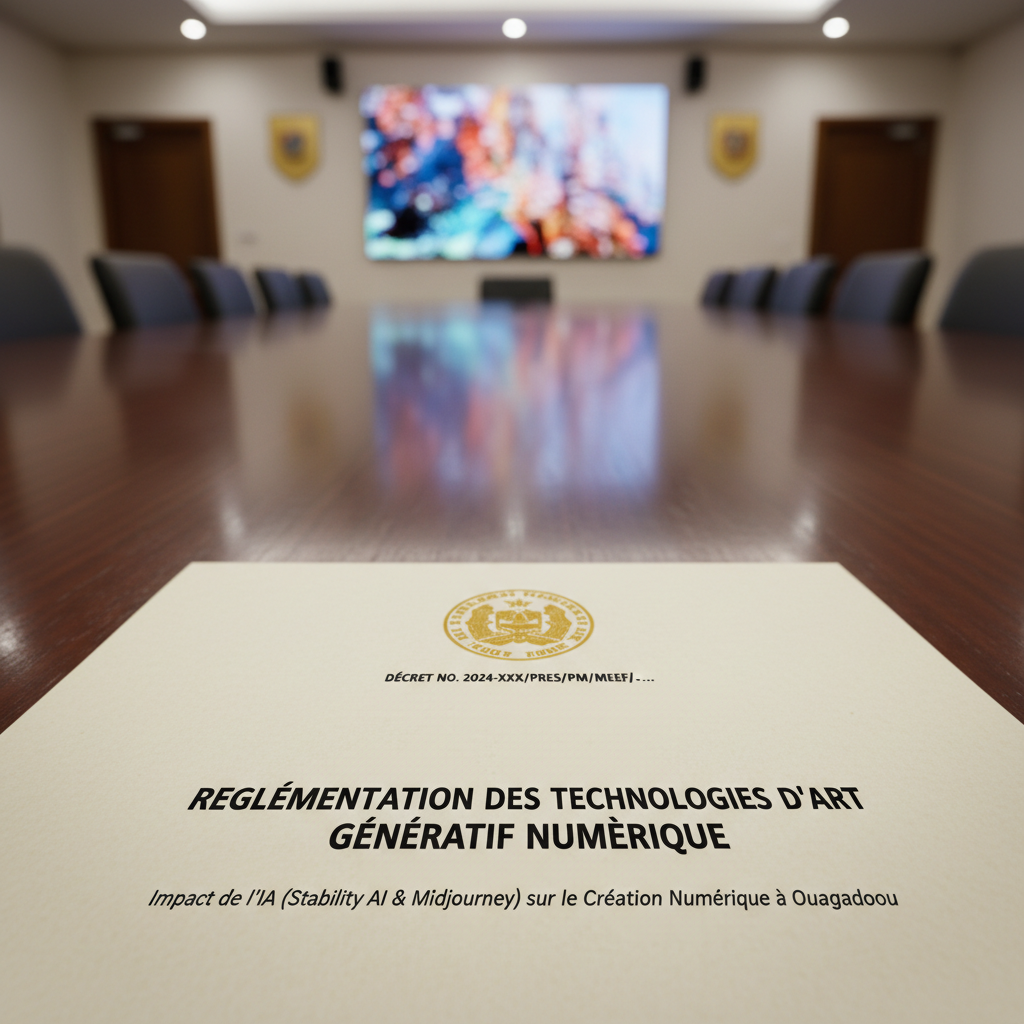
The policy move, officially titled 'Decree No. 2026-003/mcat/sg/dgi on the Regulation and Ethical Use of Generative Artificial Intelligence in Artistic and Cultural Production,' was published in the Official Journal just last month, in March 2026. It establishes a framework for the use of AI tools like Stability AI's Stable Diffusion and Midjourney within Burkina Faso's borders, specifically targeting the creation and dissemination of visual content. The decree mandates disclosure for AI-generated works, requires consent for the use of artists' styles or existing copyrighted works in training data, and outlines penalties for misrepresentation or cultural appropriation. It even proposes a national registry for AI-generated content, a bold ambition for a nation still grappling with basic digital infrastructure.
Who is behind this, and why? The push came primarily from a coalition of local artists' guilds, cultural preservationists, and a few forward-thinking lawmakers. Madame Fatoumata Diallo, Director of the National Office of Tourism and Handicrafts, a key figure in the drafting committee, explained it to me over a cup of bissap. 'We saw what happened in other parts of the world, artists feeling their work was stolen, their styles mimicked without permission,' she said, her voice firm. 'Here, our art is our heritage. We cannot allow algorithms to dilute it or profit from it without proper recognition and compensation. This decree is about protecting our cultural sovereignty, ensuring that the next generation of Burkinabè artists can thrive without being overshadowed by machines trained on their ancestors' ingenuity.' The Ministry's concern was not just economic, it was deeply cultural. There were growing anxieties about AI-generated images depicting Burkinabè traditions inaccurately or, worse, creating deepfakes that could destabilize social cohesion, a very real threat in our region.
What does this mean in practice? Forget the hype, this is what matters. For a small artist in Bobo-Dioulasso, it means that if someone uses Midjourney to create a textile pattern inspired by their traditional kôkô dunda, they theoretically have legal recourse. For a photographer, it means that if their unique style of capturing the Fête du Djéli is fed into an AI model without their consent, they can challenge it. The decree also aims to establish a 'Burkinabè AI Ethics Council' to review cases and advise on future regulations. However, the practical implementation is a monumental task. How do you track every image generated by Stability AI or Midjourney? How do you prove an AI was trained on a specific artist's work when the models are often opaque? The internet knows no borders, and our digital infrastructure, while improving, is still nascent. As of early 2026, only about 25% of the population has regular internet access, and even fewer have the technical literacy to navigate complex AI legal frameworks.
Industry reaction has been, predictably, mixed. Major global players like Stability AI and Midjourney have remained largely silent, likely viewing Burkina Faso as a relatively small market in the grand scheme of things. However, some local tech entrepreneurs, who are experimenting with generative AI for marketing and design, have voiced concerns. 'While I understand the intent, this could stifle innovation,' said Monsieur Karim Sawadogo, CEO of 'WagaTech Solutions,' a small but ambitious startup in Ouagadougou. 'We are just beginning to explore how AI can help us tell our stories to the world, to create unique digital content. If every output requires a complex legal review, it becomes too burdensome for small businesses to compete.' He argued that a more collaborative approach, perhaps focusing on education and ethical guidelines rather than strict regulation, might be more effective initially. There is a genuine fear that overly restrictive laws could push legitimate AI development underground or offshore, denying Burkina Faso the economic benefits of this technology.
Civil society, particularly the artistic community, largely welcomes the decree, albeit with a healthy dose of skepticism about its enforceability. 'It's a step in the right direction, a recognition that our art has value, even in the digital age,' said Madame Aminata Traoré, a renowned sculptor and advocate for artists' rights. 'But a law on paper is one thing; making it work in the villages and studios, that is another challenge entirely. We need resources, education, and accessible legal aid for artists to truly benefit.' She pointed out that many artists, especially those in rural areas, do not even have bank accounts, let alone the means to pursue international copyright claims against multinational tech companies. The decree's success, she argued, hinges on robust public awareness campaigns and practical support for artists.
Will it work? Here's what actually happened. The ambition is commendable, a clear signal that Burkina Faso is taking AI governance seriously, prioritizing cultural preservation and artist rights. It places our nation among the early adopters of specific generative AI regulation, a move that could inspire other African nations. However, the reality on the ground is that enforcement will be incredibly difficult. Without a robust national digital identity system, widespread internet penetration, and significant investment in technical expertise within the Ministry of Culture, tracking and prosecuting violations will be a Sisyphean task. The decree also faces the challenge of extraterritoriality; how do you regulate a global platform from a national capital? It is a bit like trying to catch the wind with a fishing net.
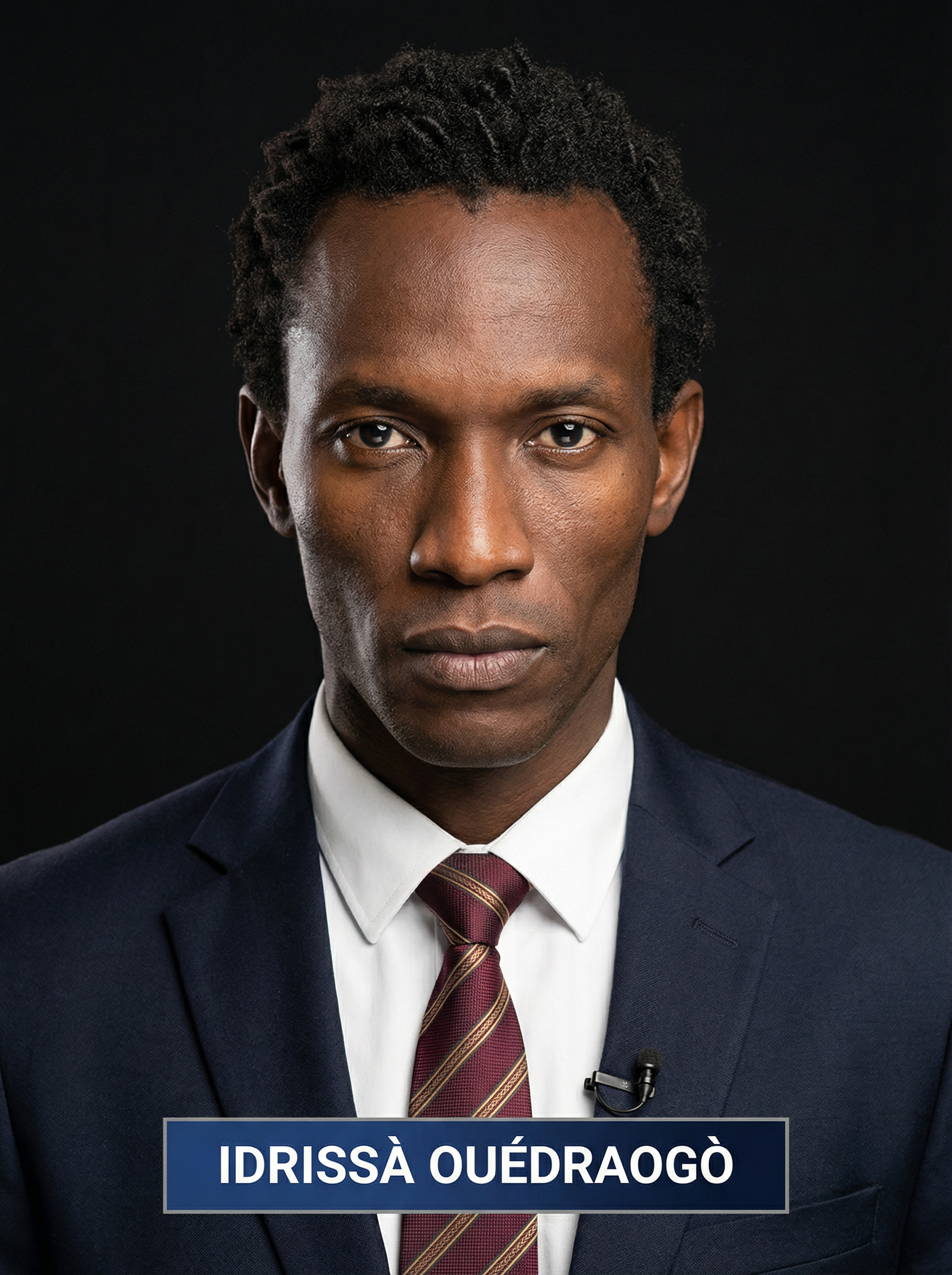
Perhaps the greatest impact of this decree will not be in its direct enforcement, but in its symbolic power and its educational value. It forces a conversation, both within Burkina Faso and potentially across the continent, about the ethical implications of generative AI. It highlights the need for global cooperation on AI governance, especially concerning cultural heritage and intellectual property. As I left Madame Diallo, she said something that stuck with me: 'We are not trying to stop progress, Idrissà. We are trying to guide it, to ensure it serves our people, not exploits them.' That, perhaps, is the true measure of its potential success, a guiding light in a rapidly changing digital landscape. For more insights into how different regions are approaching AI regulation, you can often find relevant discussions on MIT Technology Review or Reuters Technology. This is not just about laws, it is about shaping a future where our traditions can coexist with technology. It is about ensuring that the digital revolution does not erase the rich tapestry of our human creativity.