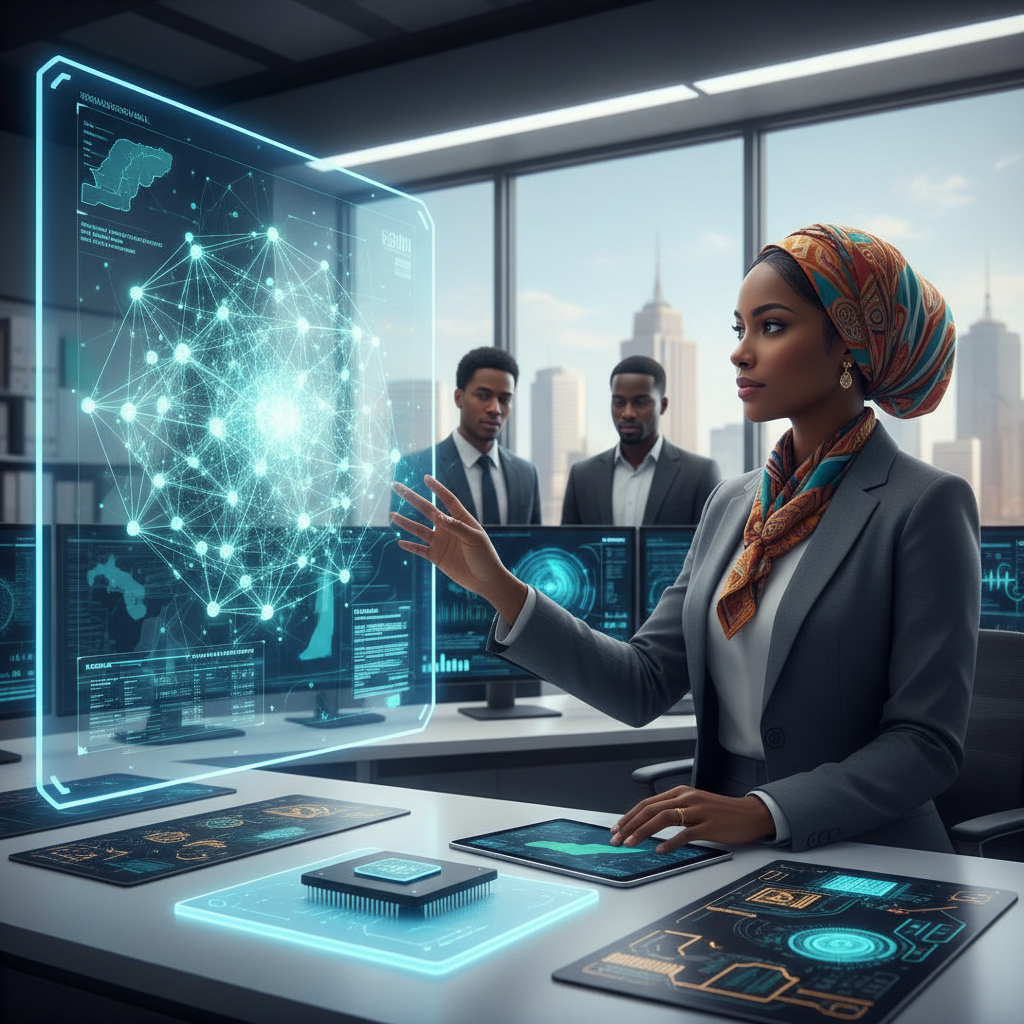
JOHANNESBURG – In the bustling heart of Mzansi's economic hub, a quiet revolution is taking root, driven by the ingenuity and resilience of Black South African women. As the global conversation around Artificial Intelligence intensifies, local entrepreneurs are not merely consumers of this transformative technology but are actively shaping its application to foster economic inclusion and uplift communities.
At the forefront of this movement is a new wave of tech startups, many founded and led by women, who are acutely aware of the socio-economic disparities that continue to plague our nation. They are deploying AI solutions not just for profit, but with a profound commitment to ubuntu – a philosophy that underscores our interconnectedness and shared humanity.
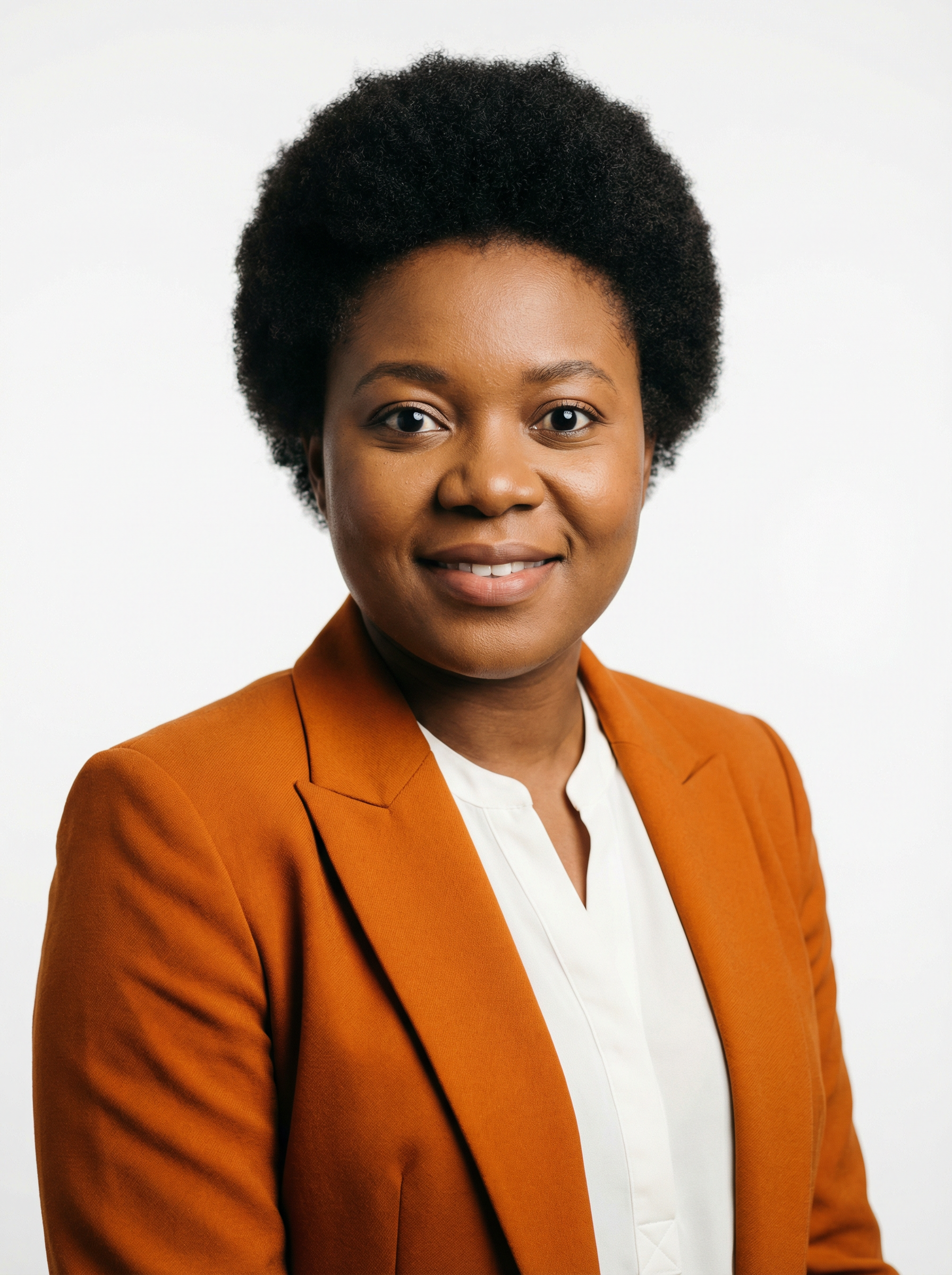
Take, for instance, 'Molo AI', a groundbreaking platform developed by Dr. Naledi Khumalo, a computer scientist and founder based in Soweto. Molo AI uses natural language processing (NLP) to provide financial literacy training and access to micro-loans for informal traders, predominantly women, who have historically been excluded from mainstream banking. "Our algorithms are trained on isiZulu and isiXhosa dialects, ensuring cultural relevance and accessibility," explains Dr. Khumalo, whose work has garnered attention from the Department of Women, Youth and Persons with Disabilities. "We're not just building tech; we're building bridges to financial freedom for our sisters in the spaza shops and street markets."
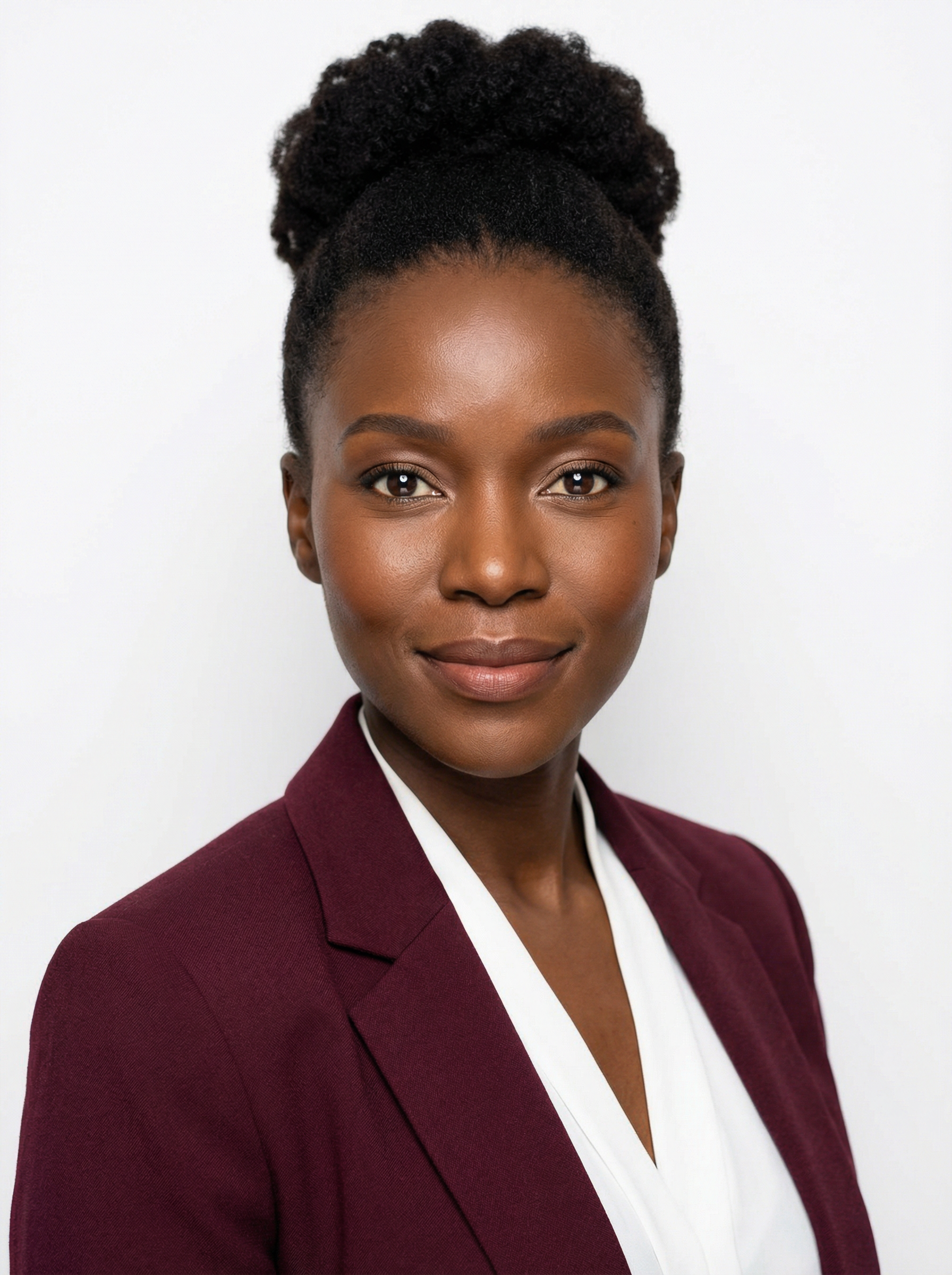
This sentiment is echoed by Ms. Thandiwe Dlamini, CEO of 'AfriConnect Data Solutions', a Johannesburg-based firm specializing in ethical AI for market research. "For too long, data about African consumers has been collected and analyzed through a Western lens, often missing the nuances of our lived experiences," Dlamini asserts. "Our AI models are designed with a decolonial approach, prioritizing data sovereignty and ensuring that insights derived truly reflect the aspirations and challenges of our people, particularly Black women consumers and producers."
The impact extends beyond finance. In healthcare, initiatives like 'Sizwe Health AI' are using machine learning to improve diagnostic accuracy in rural clinics, addressing the critical shortage of specialist doctors. Founded by a collective of medical professionals and data scientists, including Dr. Zola Mkhize from the University of Cape Town's Faculty of Health Sciences, Sizwe Health AI is a testament to the power of interdisciplinary collaboration.
However, the journey is not without its hurdles. Access to venture capital, mentorship, and robust digital infrastructure remain significant challenges. "While we celebrate these strides, we must also acknowledge the systemic barriers," states Ms. Lindiwe Nkosi, an analyst at the Black Business Council. "Investment in women-led tech ventures, especially those focused on social impact, needs to increase exponentially. Furthermore, policies must be crafted to ensure that the benefits of AI are equitably distributed, preventing the creation of new forms of digital exclusion."
As South Africa navigates the Fourth Industrial Revolution, the pioneering spirit of these Black women entrepreneurs offers a compelling vision. They are demonstrating that AI, when wielded with purpose and cultural sensitivity, can be a potent tool for economic empowerment, transforming not just businesses, but the very fabric of our society. Their work is a powerful reminder that the future of African innovation is not just digital; it is deeply human and profoundly inclusive.