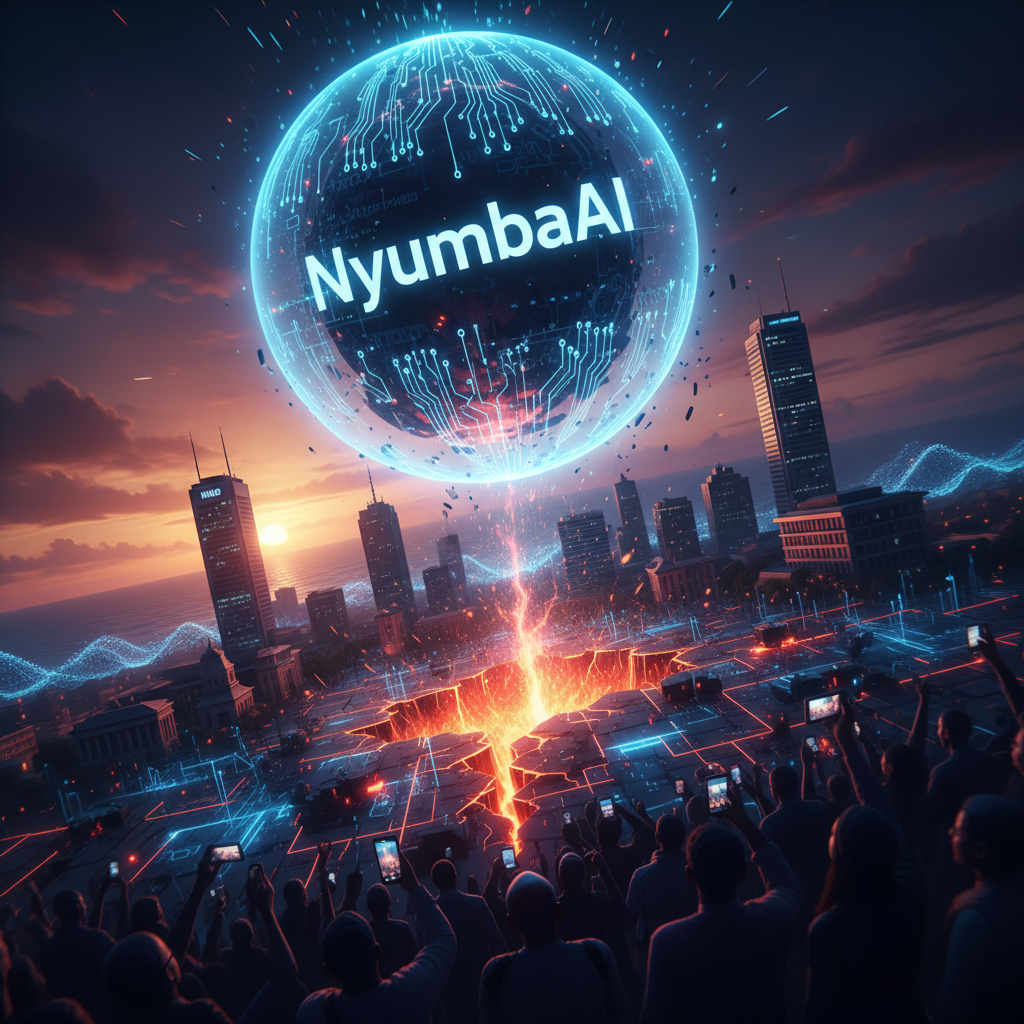

Dar es Salaam, Tanzania, If you thought the only thing moving fast in this city was a daladala during rush hour, you clearly haven't been paying attention to the real estate market. Just this morning, National Microfinance Bank (NMB) dropped a bombshell, unveiling 'NyumbaAI,' a groundbreaking artificial intelligence platform designed to revolutionize property valuation, offer immersive virtual tours, and predict market trends across Tanzania. It's a move so audacious, so distinctly twenty-first century, it almost makes you forget the usual bureaucratic dance of property acquisition here. You can't make this stuff up, folks. This is not just another app; this is NMB, a pillar of Tanzanian banking, throwing its weight behind a technology that promises to drag our traditionally analogue property sector kicking and screaming into the digital age.
The announcement, made at a rather swanky press conference at the Hyatt Regency, had all the hallmarks of a major tech launch. Bright lights, big screens, and a palpable sense of 'we're making history.' NyumbaAI, we are told, leverages advanced machine learning models, powered by none other than Google's Gemini API, to analyze vast datasets. We're talking historical sales records, geographical information system (GIS) data, infrastructure development plans, and even social media sentiment to give what NMB claims are 'unprecedentedly accurate' property valuations. Imagine, no more haggling with that one dalali who insists your three-bedroom in Tegeta is worth a fortune because it has a mango tree. The platform also features high-definition virtual tours, allowing potential buyers from as far as London or Lindi to 'walk through' properties without leaving their screens. And for investors, the market prediction tool promises to identify emerging hotspots and potential downturns with alarming precision. Welcome to the future, because it's weird, and it's happening right here.
"This is a pivotal moment for Tanzania's economy and for every Tanzanian dreaming of owning a home or making a smart investment," declared Ms. Ruth Mshana, NMB Bank's Chief Digital Officer, her voice echoing through the ballroom. "NyumbaAI will bring transparency, efficiency, and accessibility to a market often perceived as opaque and complex. We are democratizing property information, empowering our customers with data-driven insights, and fostering a more dynamic real estate ecosystem. Our partnership with Google's Gemini ensures we're building on the most robust AI infrastructure available." She spoke of reducing the time it takes to get a mortgage approval by 30 percent, and increasing market liquidity by 20 percent within the next two years. Ambitious, yes, but then again, so was putting a man on the moon, and we're talking about computers here, not rockets.
Government officials were quick to laud the initiative. Dr. Hamisi Kigwangalla, the Permanent Secretary in the Ministry of Lands, Housing, and Human Settlements Development, expressed his ministry's full support. "For too long, property valuation has been a subjective exercise, leading to disputes and hindering investment," Dr. Kigwangalla stated. "NyumbaAI, with its objective, AI-driven approach, aligns perfectly with our national agenda for digital transformation and good governance. It will streamline land administration processes, improve revenue collection, and ultimately, make homeownership a more attainable dream for our citizens." He even hinted at potential future collaborations to integrate NyumbaAI's data with the national land registry, which, if it happens, would be nothing short of a miracle.
However, not everyone is popping champagne corks. Local real estate agents, the madalali of Dar, are looking at this development with a mixture of skepticism and outright fear. "This AI, it will take our jobs, no?" asked Juma Said, a long-time agent operating out of Kariakoo, his face etched with worry. "People still need a human touch, someone to negotiate, to show them the real feeling of a home, not just a picture on a screen." His concerns are valid, of course. The human element in such a high-stakes transaction is not easily replaced. But then again, neither was the horse and buggy when the motorcar arrived, was it? For a deeper dive into how AI is reshaping industries globally, you might want to check out reports from TechCrunch.
Experts, meanwhile, are cautiously optimistic. Professor Aisha Bakari, a data scientist and lecturer at the University of Dar es Salaam, highlighted the potential for bias. "While the promise of objective valuation is enticing, the AI is only as good as the data it's trained on," she explained. "If historical data reflects existing biases, for instance, in certain neighborhoods or against specific demographics, the AI could perpetuate or even amplify those biases. NMB must be transparent about their data sources and implement robust auditing mechanisms to ensure fairness and equity." She raises a critical point. We've seen this movie before, where algorithms, meant to be impartial, end up reflecting the very human flaws they were supposed to transcend. It's a delicate balance, this dance between innovation and ethics, one that MIT Technology Review often explores.
What happens next? NMB plans a phased rollout, starting with Dar es Salaam and then expanding to other major urban centers like Arusha and Mwanza. They've also announced a series of workshops for real estate professionals, aiming to reskill agents and integrate them into the new digital ecosystem, rather than simply replacing them. The idea is to transform the dalali from a gatekeeper of information into a skilled facilitator, leveraging AI tools to serve clients better. It's a smart play, acknowledging the human element while pushing for technological advancement. Only in East Africa would you find such a pragmatic approach to a potential disruption, trying to bring everyone along for the ride.
For readers, especially those in Tanzania and the wider East African region, this is more than just a tech story. It's about access, transparency, and the potential for economic empowerment. Imagine a young couple, struggling to navigate the complexities of the property market, suddenly having access to accurate valuations and virtual tours at their fingertips. Or an investor, previously reliant on word-of-mouth, now armed with predictive analytics. This could lower barriers to entry, stimulate investment, and even help address the perennial housing deficit. However, the true test will be in its implementation: will it truly serve all Tanzanians, or will it create a new digital divide? The promise is immense, but so are the responsibilities that come with wielding such powerful technology. The property landscape in Tanzania, already a vibrant and sometimes chaotic tapestry, is about to get a very modern, very digital thread woven through it. It's going to be fascinating to watch, and perhaps, even participate in. For more on the broader implications of AI in business, Reuters has extensive coverage at https://www.reuters.com/technology/artificial-intelligence/.