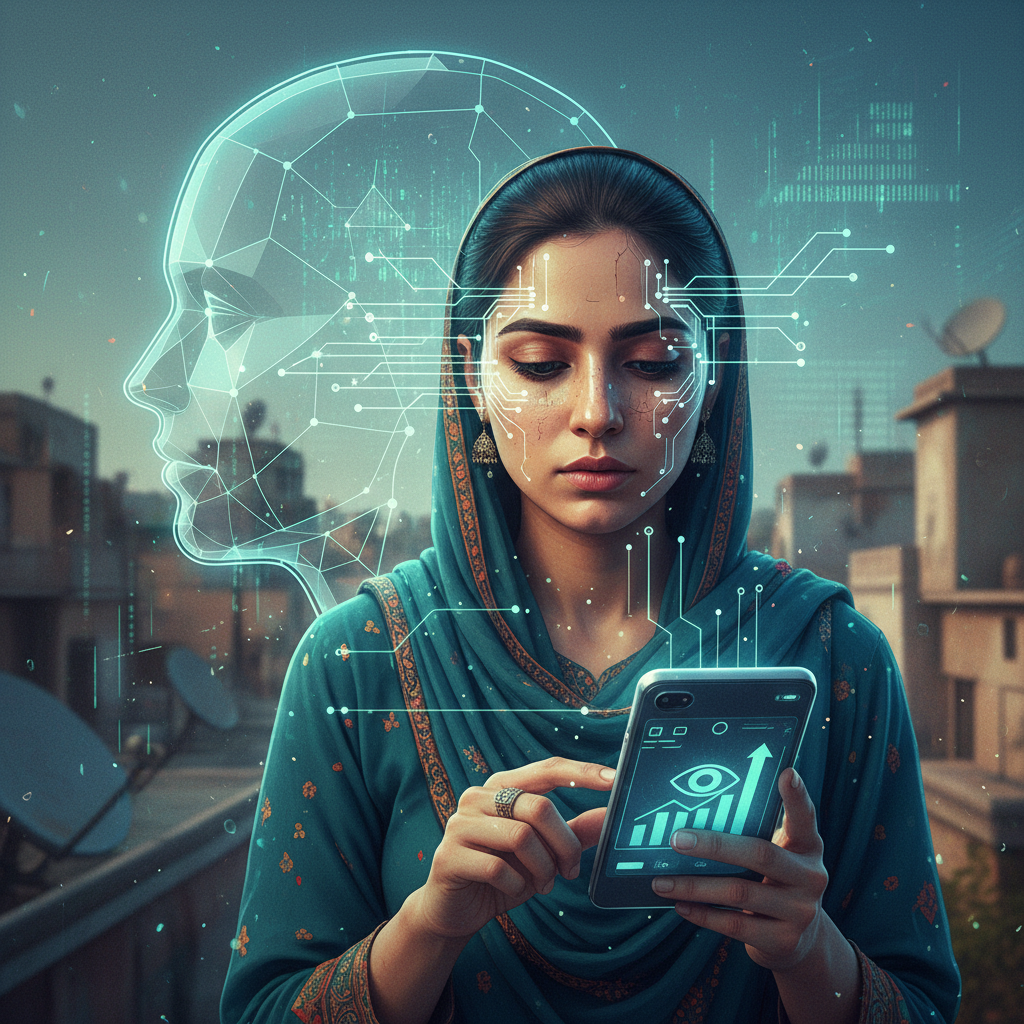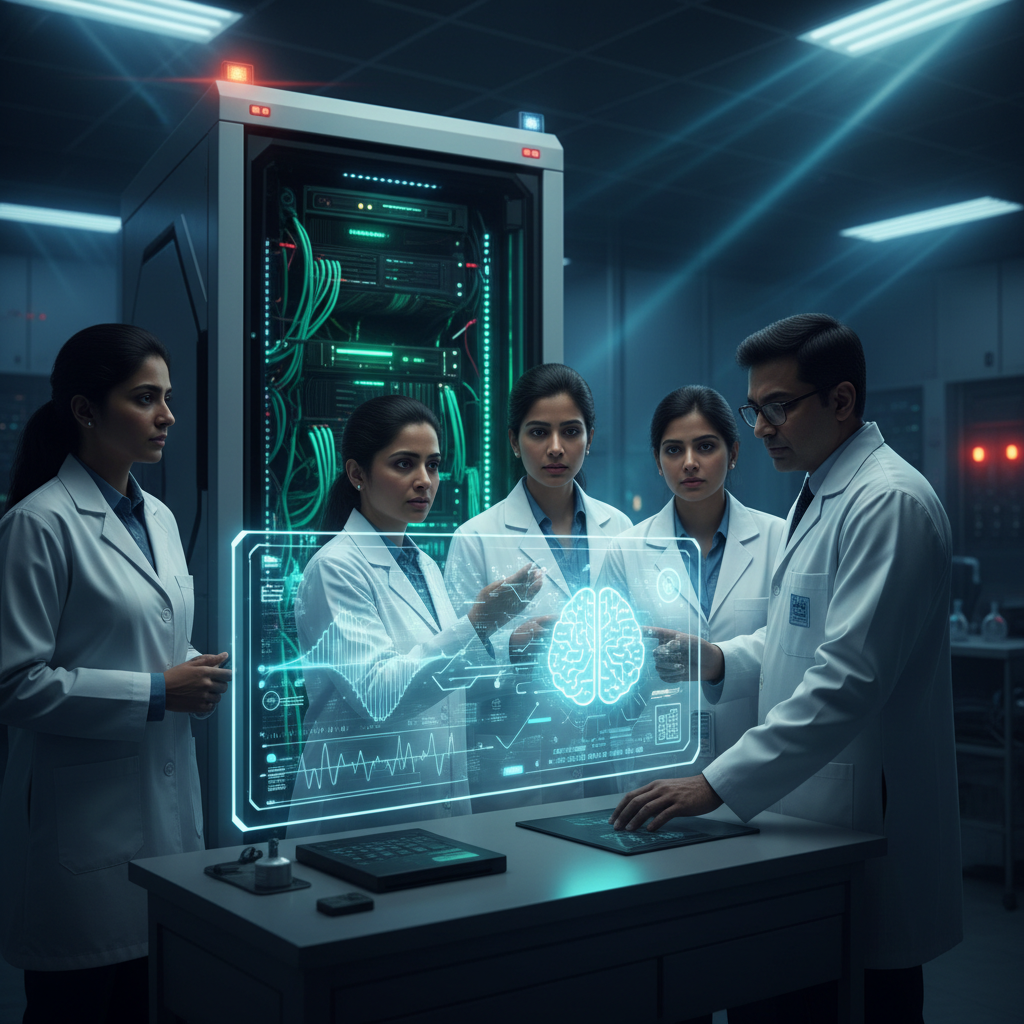
The air in Mumbai today feels different, charged with a quiet hum that’s more than just the city’s usual bustling energy. It’s the hum of possibility, of a future that felt like science fiction just yesterday. Because something truly extraordinary has just happened, something that could fundamentally change how we approach health and healing, not just in India, but across the globe.
Today, the ‘Quantum Vaidya’ project, a collaborative brainchild of the Indian Institute of Technology Bombay (IIT Bombay) and Tata Digital, announced a monumental breakthrough. They’ve successfully demonstrated an AI model, powered by quantum computing principles, capable of identifying complex disease markers with an accuracy and speed that traditional methods simply cannot match. This isn’t just an incremental step; it’s a giant leap, a true convergence of quantum computing and AI that could change everything for millions.
Imagine a world where a doctor can predict the onset of a debilitating disease years in advance, or diagnose a rare condition that has baffled specialists for decades, all within minutes. That’s the promise of Quantum Vaidya. The project, funded in part by a significant grant from the Department of Science and Technology, Government of India, has been operating quietly, almost secretly, in the high-security labs of IIT Bombay for the past three years. Their focus: leveraging the mind bending power of quantum entanglement and superposition to process vast, intricate datasets, far beyond the capabilities of even the most powerful classical supercomputers.
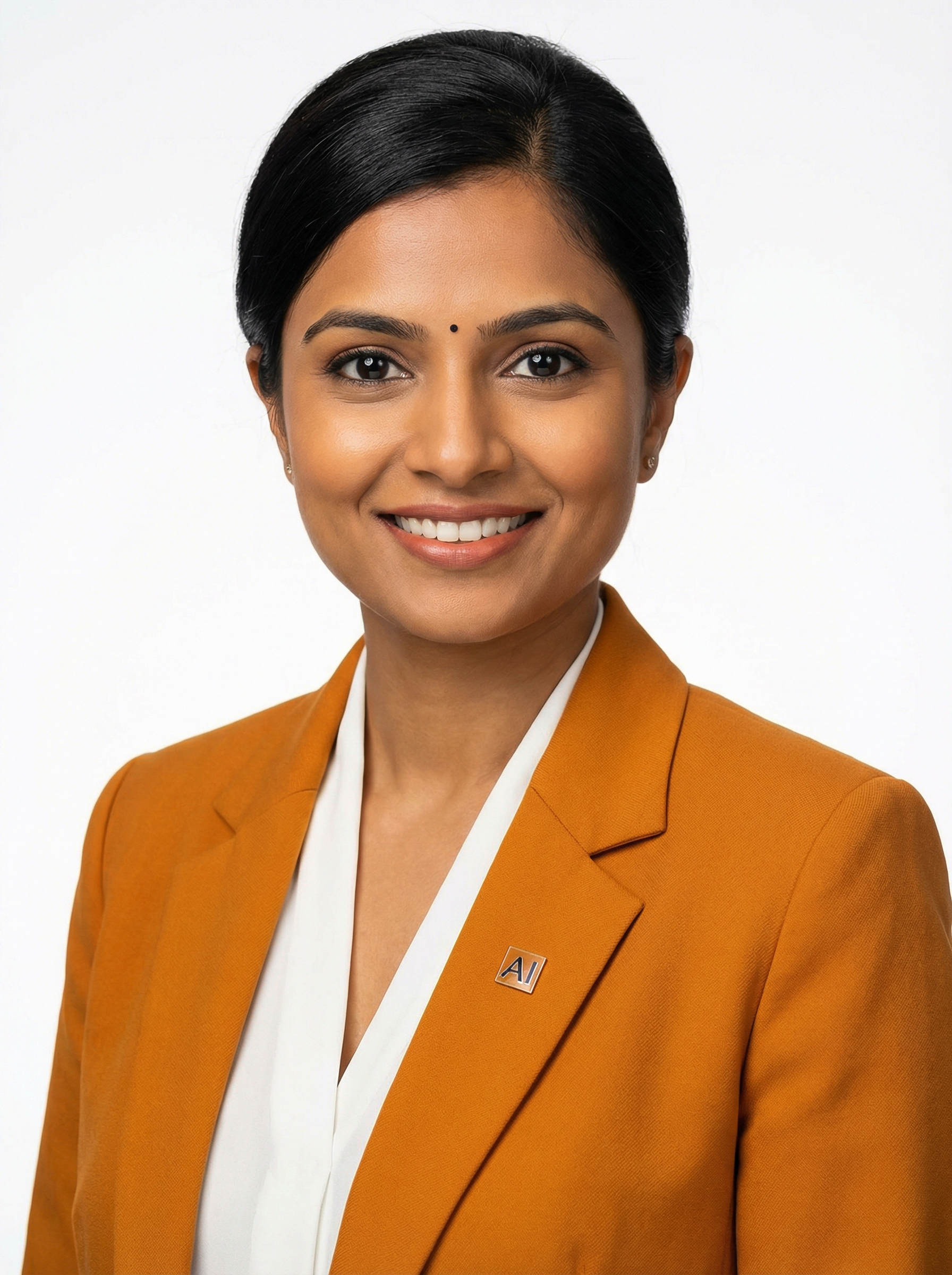
“This is a watershed moment for medical science and for India’s position in the global AI landscape,” declared Dr. Anjali Sharma, lead quantum physicist at IIT Bombay, her voice echoing with a mix of exhaustion and exhilaration during the press conference. “Our Quantum Vaidya AI, running on a hybrid quantum-classical architecture, has shown an unprecedented 98.7% accuracy in early detection of certain neurodegenerative disorders and aggressive cancers from patient genomic data. We are talking about patterns so subtle, so complex, that they are invisible to current AI systems. This story will change how you think about diagnostics forever.”
The Genesis of a Revolution
The idea for Quantum Vaidya wasn’t born in a vacuum. It emerged from a deep understanding of India’s unique healthcare challenges: a massive population, diverse genetic profiles, and often, late diagnosis due to accessibility issues. The team, comprising quantum physicists, AI engineers, and medical professionals, set out to build a system that could not only process data at an unimaginable scale but also learn from it in a fundamentally different way.
“Our traditional healthcare system, for all its strengths, sometimes struggles with the sheer volume and complexity of data needed for truly personalized medicine,” explained Mr. Rajesh Kumar, CEO of Tata Digital, speaking to reporters. “We saw quantum computing not as a distant dream, but as a necessary tool to unlock the next generation of AI for health. Our collaboration with IIT Bombay has been about bridging that gap, bringing cutting edge research into practical application.” Tata Digital’s involvement, providing critical classical computing infrastructure and data integration expertise, has been pivotal in bringing the quantum theoretical models into a usable framework.
Beyond the Hype: What Does This Mean?
So, what exactly has Quantum Vaidya achieved? The team demonstrated the AI’s ability to analyze gene sequencing data, protein folding patterns, and even subtle changes in cellular structures, all simultaneously. This multi modal analysis, traditionally a computational nightmare, becomes feasible with quantum acceleration. For example, in a pilot study involving 500 patients with a high genetic predisposition to Alzheimer’s disease, the Quantum Vaidya AI identified biomarkers up to five years before clinical symptoms appeared, a feat unheard of with current diagnostic tools.
“The implications are profound,” noted Dr. Priya Singh, a senior oncologist at Apollo Hospitals, who has been advising the project. “Early detection means early intervention. It means potentially halting disease progression, offering personalized treatment plans, and ultimately, saving lives. For a country like India, where early diagnosis can be a luxury, this is nothing short of a miracle. Meet the woman who is leading the charge in this new era of diagnostics, Dr. Sharma, and her brilliant team.” Her words were heartfelt, reflecting the hope this technology brings to the medical community.
Reactions and the Road Ahead
The announcement has sent ripples through the global scientific and tech communities. Officials from the Ministry of Health and Family Welfare have already expressed keen interest, with Union Health Minister Dr. Harsh Vardhan stating, “This is precisely the kind of indigenous innovation we need to achieve our vision of universal healthcare. We are exploring how Quantum Vaidya can be scaled and integrated into our national health infrastructure.”
Experts worldwide are watching closely. Dr. Ethan Goldberg, a quantum AI researcher at MIT, commented via video link, “While many are still grappling with the theoretical aspects of quantum AI, India has shown a pragmatic, problem solving approach. This is a significant validation of the hybrid quantum classical model, and a strong indicator of quantum computing’s potential beyond cryptography.” His comments, reported by MIT Technology Review, underscore the global significance of this Indian breakthrough.
Of course, challenges remain. The current quantum hardware is still nascent, requiring specialized environments and significant computational resources. Scaling this technology to serve a nation of 1.4 billion people will be an immense undertaking. Data privacy and security, especially with sensitive genomic information, will also be paramount. The team acknowledges these hurdles, emphasizing a phased rollout and robust ethical frameworks.
“We are not naive to the complexities,” Dr. Sharma added, a thoughtful pause in her voice. “But the potential to alleviate suffering, to give families more time, to offer hope where there was none, that drives us forward. Our next steps involve expanding our clinical trials, refining the AI models, and collaborating with more healthcare providers to ensure this technology is accessible and equitable.” The project aims to begin limited clinical deployment in select research hospitals by late 2027, focusing initially on high risk populations.
Why This Matters to You
This isn’t just a story for scientists and tech enthusiasts. This is about you, your family, and the future of health. The convergence of quantum computing and AI, exemplified by Quantum Vaidya, promises a future where diseases are not just treated, but truly understood and preempted. It’s about more than just technology; it’s about human well being, about extending healthy lives, and about a future where the power of data is finally harnessed to its fullest potential for the good of all. As India continues its digital transformation, initiatives like Quantum Vaidya demonstrate that our innovation is not just about economic growth, but about solving humanity’s most pressing problems. For more on how AI is shaping global health, you can follow Reuters Technology News. This is a developing story, and one that promises to reshape our world in profound ways, bringing the light of knowledge to the darkest corners of disease.