The whispers began months ago in the corridors of the National Health Commission, growing louder with each passing week. Now, the murmurs have coalesced into a clear directive, one that sends a powerful message across the global AI industry: China is making a calculated bet on AI safety, and Anthropic is emerging as a key player.
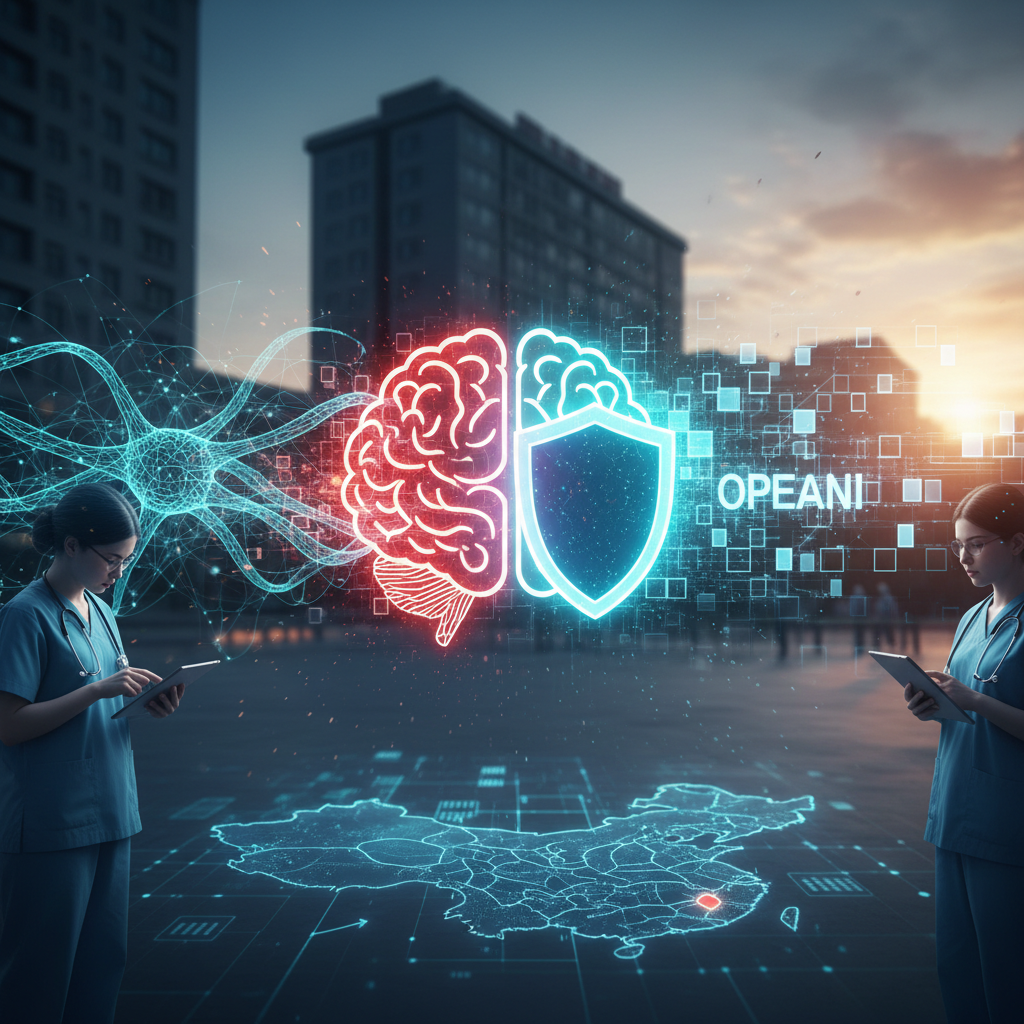
Just yesterday, a circular, not yet fully public but widely circulated among key state-owned enterprises and research institutions, outlined new guidelines for AI model procurement in sensitive sectors, particularly healthcare. While not explicitly naming companies, the language strongly emphasizes 'interpretability,' 'alignment with human values,' and 'robust safety protocols', hallmarks of Anthropic's 'Constitutional AI' approach. This is a significant shift, one that could profoundly impact the competitive dynamics between Anthropic and OpenAI, especially within China's vast and rapidly digitizing healthcare system.
For years, OpenAI, with its powerful GPT models, has captured global attention, including a substantial following in China's tech community. Its models have been seen as the gold standard for general purpose AI, driving innovation across various industries. However, Beijing isn't saying this publicly, but the underlying concern has always been about control, alignment, and the potential for unintended consequences, particularly when AI touches critical infrastructure like public health.
Anthropic, founded by former OpenAI researchers Dario and Daniela Amodei, has consistently positioned itself as the safety-first alternative. Their 'Constitutional AI' method, which trains models to adhere to a set of principles rather than relying solely on human feedback, resonates deeply with China's top-down regulatory philosophy. It offers a framework for embedding ethical guardrails directly into the AI's core, a concept that appeals to a government keen on stability and predictable outcomes.
"This isn't about blocking innovation, it's about responsible innovation," explained Dr. Li Wei, a senior researcher at the Chinese Academy of Sciences' Institute of Automation, in a private conversation. "When you're talking about diagnostics, drug discovery, or even patient management systems, the stakes are too high for unaligned AI. Anthropic's approach offers a pathway to build trust, which is paramount for public acceptance here."
The real story is in the supply chain, not just the software. While Chinese companies like Baidu and Alibaba have their own formidable AI research, the foundational models often draw inspiration, and sometimes even architectural elements, from leading Western labs. The decision to lean towards Anthropic's philosophy for health applications could influence how Chinese firms develop their own models, pushing them towards more explicit safety and alignment mechanisms.
Consider the implications for drug discovery. AI models can accelerate the identification of new compounds, but ensuring these models do not generate harmful or ineffective suggestions requires rigorous oversight. "The ability to audit and understand an AI's reasoning, even at a high level, is crucial for medical applications," stated Professor Chen Ling, head of AI Ethics at Tsinghua University. "OpenAI's models are incredibly powerful, but Anthropic's explicit focus on making their models less opaque through constitutional principles offers a compelling advantage in fields where transparency is non-negotiable. This isn't just about technical prowess, it's about philosophical compatibility."
The move is not entirely surprising. For months, Chinese regulators have been tightening their grip on data security and algorithmic transparency. The Cyberspace Administration of China, for example, has been increasingly vocal about the need for AI models to reflect 'socialist core values' and to be transparent in their operations. Anthropic's framework, with its emphasis on predefined principles, aligns well with these regulatory ambitions, offering a structured way to enforce such guidelines.
This isn't to say OpenAI is being completely shut out. Its models continue to be widely used in less sensitive commercial applications, from content generation to customer service. However, the healthcare sector, with its immense data sensitivity and direct impact on human life, is a different beast entirely. The government's preference for Anthropic's safety-first philosophy here could set a precedent for other critical sectors, including finance and critical infrastructure.
"This is a strategic play, a long game," commented Mr. Wang Jian, a tech analyst based in Shanghai. "China is signaling that it values safety and control above raw, unchecked capability, especially in areas vital to national stability. It's a clear differentiator in the global AI race, and it positions Anthropic as a preferred partner for countries that share similar regulatory priorities." You can read more about the broader AI landscape on TechCrunch.
What happens next? We can expect to see increased collaboration between Chinese healthcare institutions and Anthropic, possibly through localized versions of their Claude models or joint research initiatives focused on medical AI. This could also spur Chinese domestic AI companies to adopt similar constitutional or principle-based AI development methodologies, creating a distinct 'China model' for safe AI. The competition for talent and resources, particularly in AI safety research, will undoubtedly intensify.
The broader implications extend beyond China's borders. If China, a massive market and a leader in AI adoption, explicitly favors a safety-first approach, it could influence global standards and regulatory frameworks. Other nations grappling with AI governance might look to China's experience as a case study, potentially boosting Anthropic's global standing and putting pressure on OpenAI to further articulate its safety and alignment strategies. The philosophical debate between rapid capability scaling and deliberate safety integration is far from over, but in China's healthcare sector, one side is clearly gaining momentum.
Connect the dots: This isn't merely a commercial decision. It's a geopolitical one, reflecting China's unique approach to technological governance and its long-term vision for an AI-powered future that is both powerful and controllable. For more on AI's societal impact, MIT Technology Review offers valuable insights. The stakes are high, and the world is watching to see how this strategic pivot plays out in the lives of hundreds of millions of people. The future of AI, particularly in health, might just be written in the principles of a constitution, not just the lines of code. For a deeper dive into AI's ethical considerations, Wired often covers these complex topics. This development underscores the growing importance of AI governance, a topic we've explored previously regarding UAE's Digital Citadel [blocked]. The world is truly at a crossroads, and China's latest move is a signpost for what's to come.