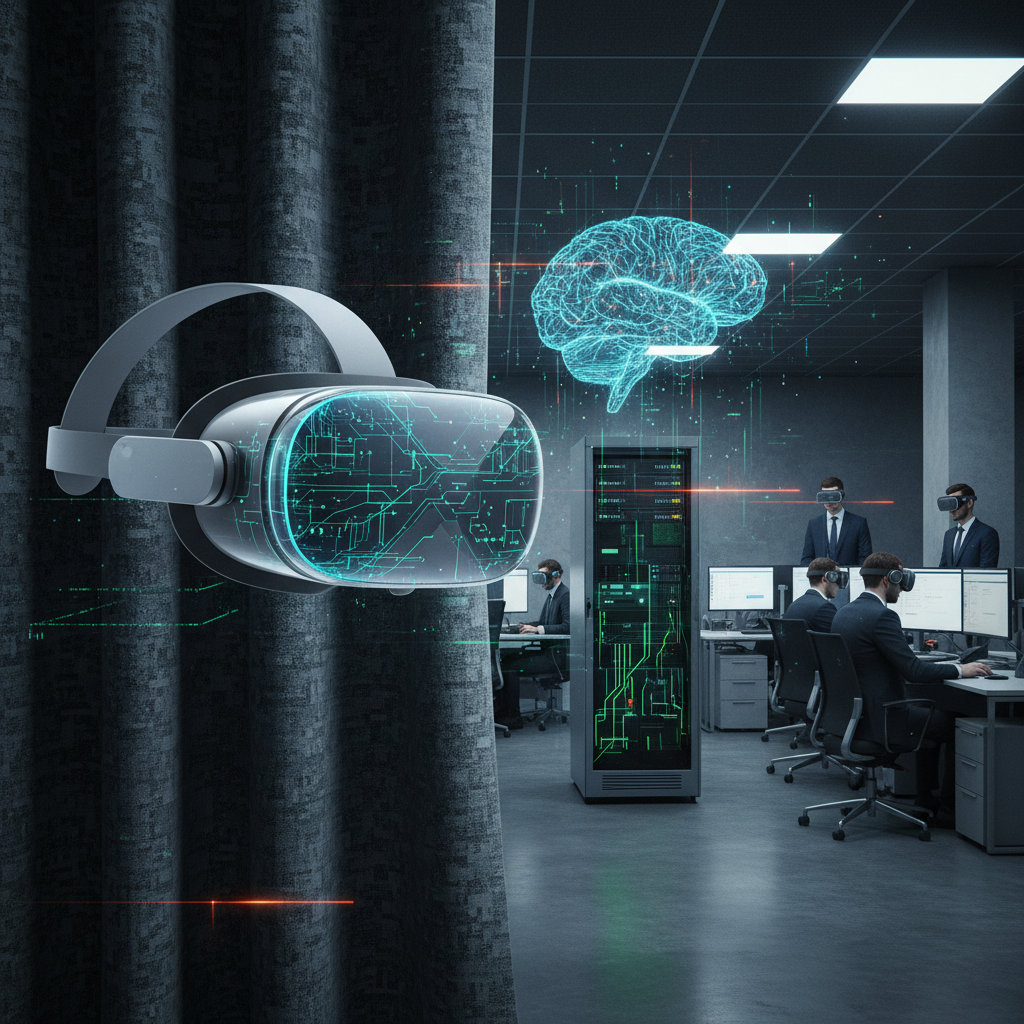

The hum of servers, the click of keyboards, and the quiet murmur of Russian engineers discussing algorithms. This is the backdrop against which a curious phenomenon unfolds: the stealthy integration of Apple Vision Pro into Russia's enterprise landscape. On the surface, the narrative is one of exclusion, of sanctions and technological blockade. Yet, beneath this official story, a different reality is taking shape, one where ingenuity, necessity, and a persistent hunger for cutting edge tools drive unexpected adoption.
I recently observed a demonstration at a Moscow-based engineering firm, 'Promyshlennyy Dizayn,' a company specializing in industrial simulations for heavy machinery. Here, amidst the familiar Soviet era architecture, a team of young designers, some barely out of university, were donning Apple Vision Pro headsets. They were not playing games; they were collaboratively reviewing a complex 3D model of a new gas turbine engine, manipulating virtual components with gestures, and receiving real time feedback on design flaws. The AI embedded within the Vision Pro, performing object recognition and spatial mapping, was not merely a novelty; it was a critical tool for precision and efficiency. "Before this," explained one engineer, a graduate of Bauman Moscow State Technical University, "we relied on 2D screens and cumbersome CAD software. This allows us to literally walk inside our designs. The efficiency gains are significant, perhaps 15 to 20 percent on complex assemblies." He spoke with a quiet pride, a testament to the Russian capacity for adaptation.
This scene, far from being an isolated incident, reflects a broader, albeit understated, trend. While official import channels for Apple products are severely restricted in Russia, a robust grey market, fueled by parallel imports from friendly nations and individual procurements, ensures a steady, if expensive, supply. Data on adoption rates within Russia is, predictably, scarce and anecdotal. However, conversations with IT procurement specialists and enterprise solution providers suggest that several hundred, possibly even over a thousand, Vision Pro units have entered the country since its initial release. These are not consumer devices for casual use; they are tools acquired for specific, high value enterprise applications in sectors like engineering, architecture, medicine, and defense related industries.
The initial cost, reportedly exceeding 400,000 rubles for a base model through unofficial channels, is a significant barrier. Yet, for companies where precision and collaborative visualization can translate into millions in savings or accelerated project timelines, the return on investment is becoming increasingly clear. One architectural bureau in St. Petersburg, 'Gorodskoy Proyekt,' reported reducing design review cycles by 30 percent after integrating Vision Pro into their workflow. Their chief architect, Irina Petrova, stated, "The ability to immerse clients and our own teams directly into a proposed building, to walk through it virtually before a single brick is laid, has been transformative. The AI's ability to render complex geometries seamlessly and allow for intuitive interaction is paramount." This reflects a pattern: where the immediate, tangible benefits outweigh the logistical and financial hurdles, Russian enterprises are finding ways to acquire and deploy this technology.
However, the story is not without its complexities. The reliance on foreign hardware and software, particularly from a company like Apple, presents a unique set of challenges. Security concerns are paramount, especially for entities involved in critical infrastructure or defense. Many Russian companies are reportedly developing their own secure software layers and applications to run on the Vision Pro, effectively creating a 'walled garden within a walled garden.' This highlights a persistent tension: the desire for cutting edge tools versus the imperative for digital sovereignty. As one cybersecurity expert from Kaspersky Lab, who preferred not to be named given the sensitivity of the topic, remarked, "The official story doesn't add up. We see these devices in use, but the data security protocols are often a patchwork. It is a calculated risk many are willing to take for the perceived productivity gains." This is the reality behind the sanctions curtain: a constant negotiation between innovation and isolation.
Winner companies are those with the financial muscle and the strategic foresight to navigate these complexities. Engineering firms, medical training institutions, and architectural design studios are leading the charge. They are benefiting from enhanced collaboration, reduced prototyping costs, and faster project completion. Losers, on the other hand, are smaller businesses or those in less critical sectors, unable to absorb the high costs or manage the logistical hurdles of parallel imports. They risk falling behind technologically, widening the gap between the digitally advanced and the digitally deprived within the Russian economy.
Worker perspectives are largely positive, albeit with a pragmatic understanding of the limitations. The novelty of spatial computing is undeniable. For many, it represents a significant upgrade from traditional workstations, offering a more intuitive and engaging way to interact with complex data. Yet, concerns about long term ergonomic impacts, the potential for digital surveillance, and the inherent fragility of relying on non officially supported hardware linger. "It's a powerful tool, no doubt," commented a software developer from Yandex, who had experimented with the device for internal projects. "But the ecosystem is closed, and we are always aware of the geopolitical context. We prefer open source solutions where possible, but sometimes, the best tool is simply the best tool, regardless of its origin." This sentiment underscores the enduring value Russian AI talent places on functionality and performance.
Expert analysis from institutions like the Skolkovo Institute of Science and Technology suggests that while the current adoption is niche, it provides invaluable experience for Russian developers in spatial computing and AI integration. "This unofficial pipeline, while problematic from a policy perspective, is inadvertently fostering a generation of engineers familiar with the paradigms of spatial AI," noted Professor Dmitry Ivanov, a specialist in human computer interaction at Skoltech. "When Russia eventually develops its own robust alternatives, this foundational experience will be critical." This perspective suggests that even unintended exposure to advanced foreign technology can catalyze local innovation, a recurring theme in Russia's technological history.
What is coming next is a complex interplay of forces. The demand for spatial computing, fueled by the demonstrated benefits of devices like the Vision Pro, will only grow. This will likely spur increased efforts within Russia to develop domestic alternatives, potentially leveraging existing strengths in computer vision and AI. Companies like Sber and Yandex, with their significant AI research capabilities, are well positioned to explore this space. The challenge will be to create hardware and software ecosystems that can compete with the polish and integration of Apple's offering, while adhering to national security and digital sovereignty mandates. The journey from unofficial import to indigenous innovation will be long and arduous, but the appetite for such advanced tools is undeniable. Russian AI talent deserves better than to be perpetually reliant on grey markets; the imperative is to build, and build better. The quiet infiltration of Apple Vision Pro serves as a potent, if ironic, catalyst for this future.
For further insights into the global landscape of AI and enterprise solutions, one might consult Reuters Technology for business news or MIT Technology Review for deeper analysis of technological trends. The intricate dance between global tech giants and national interests continues to unfold, often in unexpected ways. The story of Apple Vision Pro in Russia is merely one chapter in this evolving narrative.