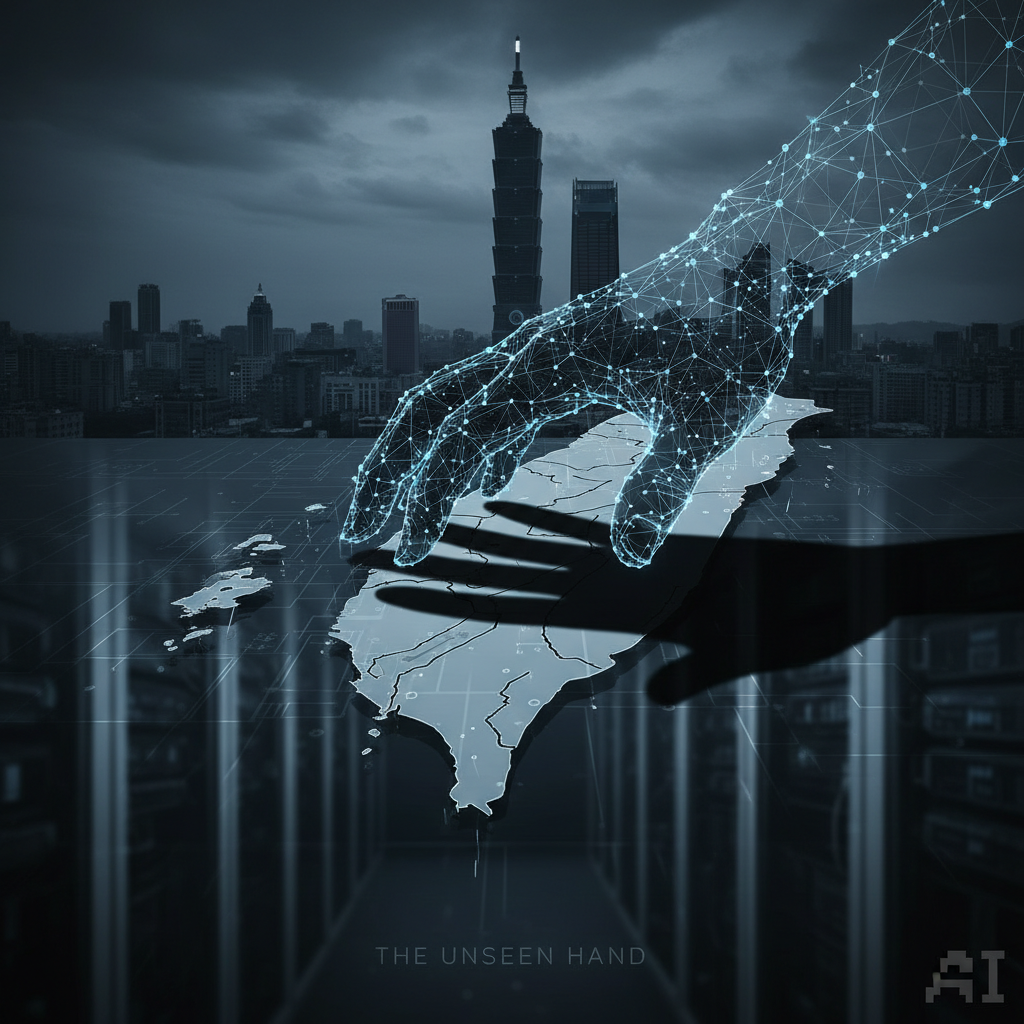

The digital landscape, much like the ancient trade routes that once crisscrossed our island, is undergoing a profound transformation. Today, however, the cargo is not spices or silks, but data, and the vessels are not dhows but algorithms. At the forefront of this new era, China's AI ambitions, spearheaded by giants like Baidu and its Ernie Bot, are challenging the established Western dominance, presenting both opportunities and significant risks for nations like Sri Lanka.
For months, I have been tracking the subtle but persistent expansion of Chinese AI influence across Asia. It is a narrative often framed as technological progress, a benevolent sharing of advanced tools. But as any seasoned observer of geopolitics will attest, nothing is truly free, especially when it comes to technology that underpins national infrastructure and public discourse. The promises don't match the reality when we consider the deeper implications for data governance, intellectual property, and even national sovereignty.
Consider Baidu's Ernie Bot, a large language model that has been positioned as a direct competitor to OpenAI's GPT series and Google's Gemini. While Western models have been under scrutiny for bias and hallucination, Ernie Bot operates within a different regulatory and ideological framework. Its rapid development and deployment, often supported by state-backed initiatives, signal a strategic push to establish a parallel, if not superior, AI ecosystem. For developing nations, the allure of readily available, powerful AI tools can be irresistible, particularly when offered with attractive financial incentives or as part of broader infrastructure projects.
Here in Sri Lanka, our digital infrastructure is still nascent in many respects. We are a nation eager for technological advancement, yet acutely aware of the historical precedents of external influence. The prospect of integrating powerful, opaque AI systems from any foreign power, be it American or Chinese, demands rigorous scrutiny. The risk scenario is clear: widespread adoption of foreign-developed AI, particularly in critical sectors like education, healthcare, and public administration, could lead to a dependency that compromises our data privacy, national security, and cultural integrity.
Technically, the concern revolves around several vectors. Firstly, data ingress and egress. When Sri Lankan institutions adopt cloud-based AI services, where does the data reside? What are the jurisdictional implications? Chinese cybersecurity laws, for instance, grant the state considerable access to data stored within its borders or by its companies, regardless of where that data originates. This is a stark contrast to the often more stringent data protection regulations emerging in Europe, such as the GDPR, or the evolving frameworks in the United States. Secondly, algorithmic bias and censorship. Large language models are trained on vast datasets that reflect the biases and perspectives of their creators. If Ernie Bot, or similar models, are deployed to generate educational content, assist in medical diagnostics, or even moderate online discourse in Sri Lanka, whose values will they reflect? Will they subtly or overtly promote certain narratives, or suppress others, in ways that align with Beijing's interests rather than Colombo's?
Expert debate on this issue is robust, though often polarized. Dr. James Lewis, a senior vice president at the Center for Strategic and International Studies, has frequently highlighted the dual-use nature of AI technologies. He once remarked,