The wind whips across the steppe, carrying with it the scent of distant dust and the faint hum of a satellite dish. Here in Mongolia, we understand that connection is not a given, it is an earned luxury. So when I look at China, our neighbor to the south, and its approach to artificial intelligence, I see a paradox: a nation striving for technological leadership through rigid state control. The question on everyone's mind, from Ulaanbaatar to Silicon Valley, is simple: Is China's AI governance model, this unique blend of innovation with state oversight, a blueprint for the future, or a fragile construct destined to crack under its own weight?
For decades, the prevailing wisdom in the West has been that innovation thrives in open, free environments, where ideas can clash and evolve without heavy-handed government intervention. Yet, China has consistently challenged this narrative, especially in the realm of AI. Their model is distinct: a top-down strategy that channels immense resources into strategic sectors, often leveraging national champions like Baidu, Alibaba, and Tencent, while simultaneously imposing strict censorship and data governance rules. It is a system built on the premise that collective national goals supersede individual freedoms, even in the pursuit of cutting-edge technology.
Historically, China's economic rise was fueled by manufacturing and infrastructure, often adopting and adapting foreign technologies. But with AI, the ambition is different: to lead. The State Council's 2017 'New Generation Artificial Intelligence Development Plan' laid out a clear roadmap, aiming for China to be the world's primary AI innovation center by 2030. This wasn't just rhetoric; it came with substantial funding, preferential policies, and a directive for both public and private sectors to align with national objectives. For instance, the government has invested billions in AI research parks and initiatives, reportedly allocating over $150 billion towards AI development by 2030.
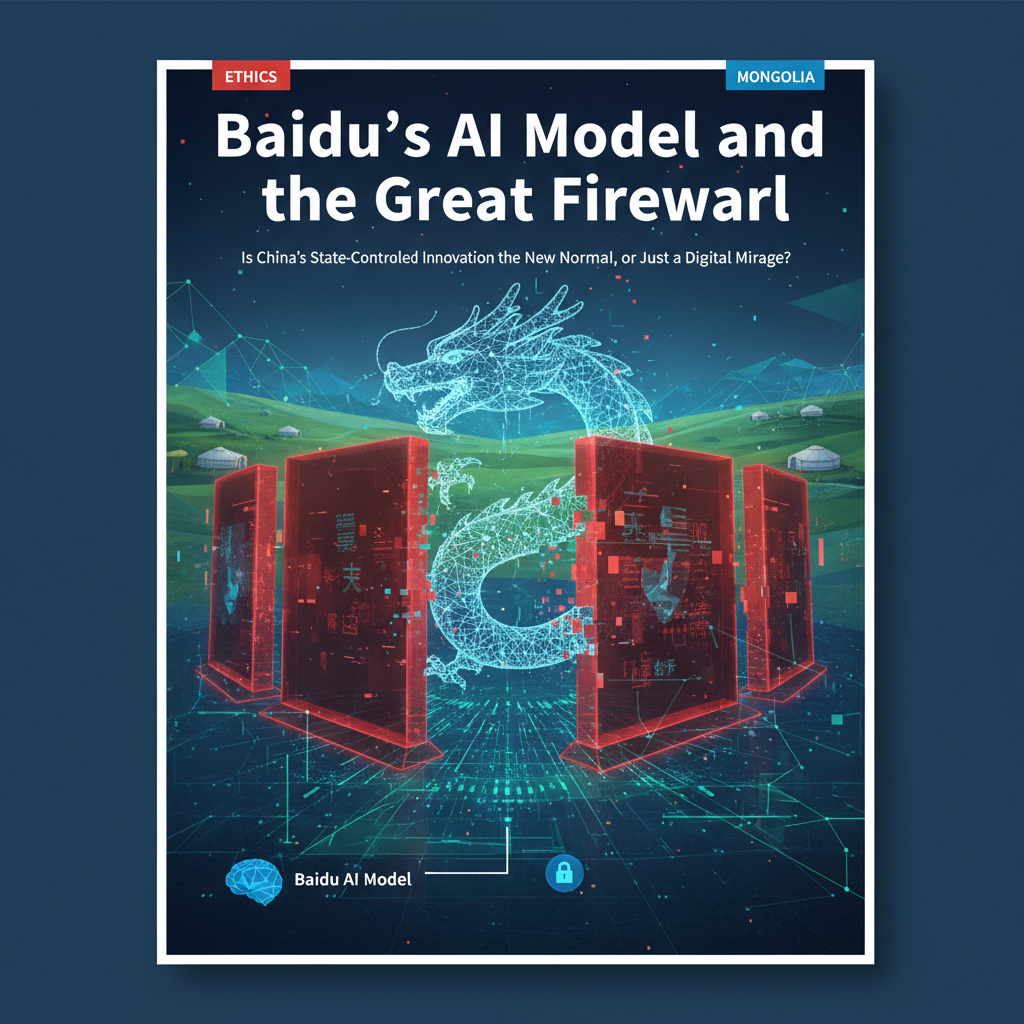
Today, the fruits of this strategy are visible. Companies like Baidu, often called China's Google, have made significant strides in large language models and autonomous driving. Baidu's Ernie Bot, their answer to OpenAI's GPT series, has seen rapid adoption within China, reportedly accumulating over 200 million users by late 2025. This rapid scaling is partly due to the sheer size of the domestic market and the state's implicit, and sometimes explicit, backing. Furthermore, China leads globally in AI patent applications, consistently outpacing the United States in recent years, according to data from the World Intellectual Property Organization (wipo).
However, this state-controlled innovation comes with a significant trade-off: censorship and surveillance. Every AI model, every data set, and every application must adhere to strict content regulations. This means that while Ernie Bot might be powerful, its responses are filtered, its knowledge curated. This raises questions about the true nature of innovation. Can truly groundbreaking, disruptive AI emerge when its creators are constantly looking over their shoulders, self-censoring to avoid crossing red lines? As MIT Technology Review has often highlighted, the tension between control and creativity is a persistent challenge in China's tech ecosystem.
Experts are divided on whether this model is sustainable in the long run. Dr. Kai-Fu Lee, a prominent AI investor and former Google China head, has often argued that China's data advantage and engineering talent, combined with government support, create a formidable force. He stated in a recent interview,