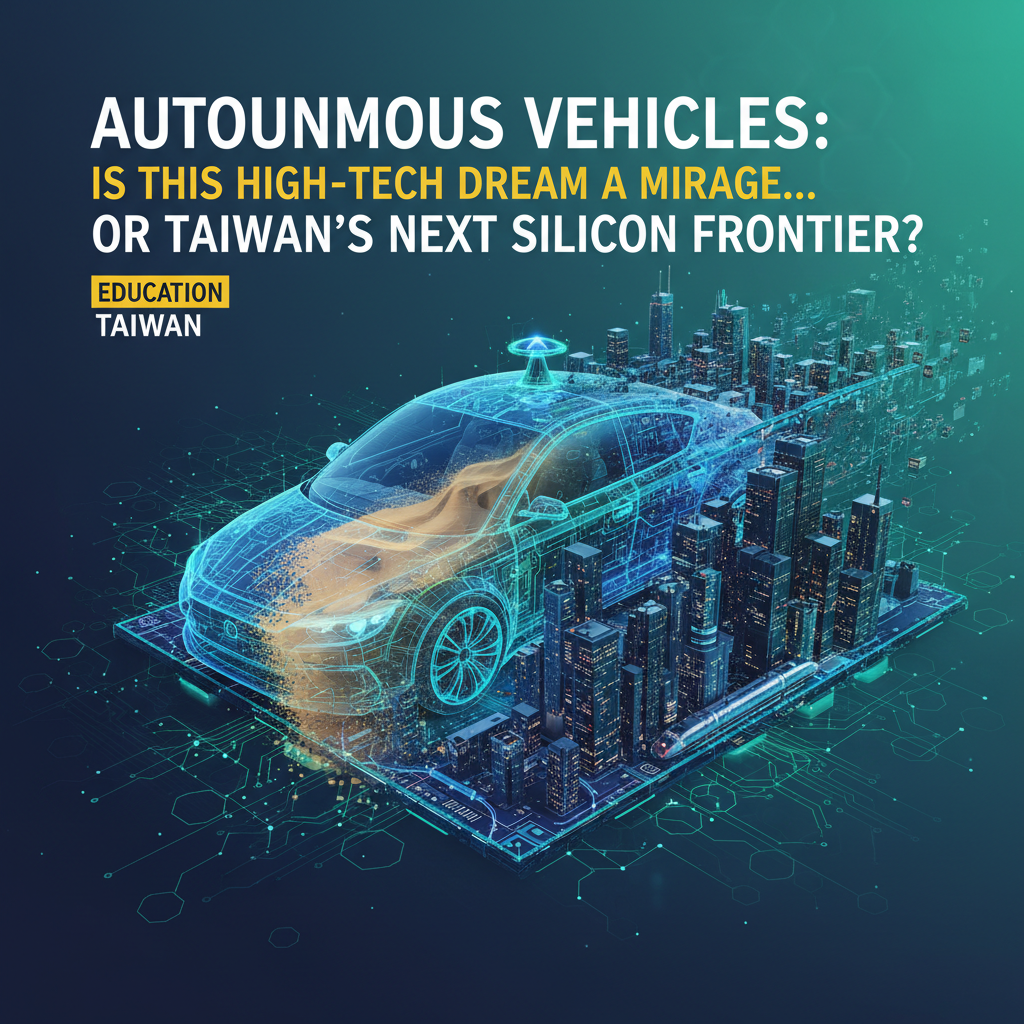

Will autonomous vehicles truly revolutionize our urban landscapes and supply chains, or are we witnessing another cycle of overhyped innovation destined to underperform its initial promises? This question looms large over the transportation sector, particularly as significant investments continue to pour into AI driven mobility solutions. From the bustling streets of Taipei to the sprawling logistics hubs of Taoyuan, the concept of self-driving cars and trucks presents both a tantalizing vision of efficiency and a complex web of technical, ethical, and economic challenges.
Historically, the dream of automated transport dates back to the mid 20th century, with various iterations of guided vehicles and smart highways. However, the advent of advanced AI, powerful sensors, and robust computing capabilities in the last decade has propelled autonomous vehicle development into a new era. Companies like Waymo, Cruise, and Mobileye have made significant strides, demonstrating Level 4 autonomy in controlled environments and specific geofenced areas. Yet, the leap to ubiquitous, all conditions Level 5 autonomy, where a vehicle can operate without human intervention under any circumstances, appears increasingly distant.
Consider the data. Despite billions of dollars invested globally, the number of fully autonomous vehicles operating commercially on public roads remains minuscule compared to the traditional fleet. In 2023, global sales of vehicles with Level 2+ advanced driver assistance systems, which still require human supervision, reached approximately 15 million units. In contrast, the total number of fully autonomous vehicles deployed for public service, primarily robotaxis, barely exceeded a few thousand worldwide. "The disparity between R&D spending and actual market penetration is stark," observes Dr. Chen-Li Wang, a senior analyst at the Industrial Technology Research Institute or Itri in Taiwan. "While technological progress is undeniable, the path to mass adoption is far more protracted than many initial forecasts suggested."
Taiwan's position in this evolving landscape is more complex than headlines suggest. As a global powerhouse in semiconductor manufacturing and a critical node in the automotive electronics supply chain, Taiwan is indispensable to autonomous vehicle development. Our foundries produce the advanced chips, from AI accelerators to sensor processing units, that power these sophisticated machines. Companies like Tsmc are at the heart of this technological revolution, fabricating the silicon brains for virtually every major player in the autonomous driving space. "Without Taiwan's advanced manufacturing capabilities, the very concept of Level 4 or Level 5 autonomy would remain purely theoretical," states Dr. Ming-Hui Kuo, Vice President of Advanced Automotive Solutions at a leading Taiwanese electronics firm. "Our contribution is foundational, yet the direct deployment of autonomous fleets on our own roads faces unique local challenges."
One significant hurdle is the urban environment itself. Taipei, with its dense traffic, unpredictable scooter movements, and intricate alleyways, presents an exceptionally difficult scenario for current autonomous systems. The sheer variability and often chaotic nature of Asian urban driving demand a level of AI perception and decision-making that is still beyond the current state of the art. While some pilot programs exist, such as autonomous shuttle services in specific industrial parks or university campuses, their scope is limited. The regulatory framework, too, is still catching up. While Taiwan's Ministry of Transportation and Communications has been proactive in drafting regulations for autonomous vehicle testing, a comprehensive legal framework for widespread commercial operation is still under development.
Moreover, the economic viability remains a question. The cost of the sensor suites, high performance computing platforms, and extensive software development required for autonomous vehicles is substantial. While proponents argue that these costs will decrease with scale, the current price point makes widespread personal ownership prohibitive for most consumers. The business model for robotaxis and autonomous logistics, while promising, faces intense competition from existing transportation services and the need for significant infrastructure investment.
Let's separate fact from narrative. The narrative often paints a picture of imminent, seamless integration of self-driving cars into daily life. The fact is that current autonomous systems, while impressive, are still brittle. They struggle with edge cases, adverse weather conditions, and the nuanced social cues that human drivers instinctively interpret. The recent incidents involving autonomous vehicles, such as those reported in the United States where robotaxis caused traffic disruptions or were involved in minor collisions, highlight these limitations. These events, though often minor, erode public trust and invite greater scrutiny from regulators and the public.
From a data-driven perspective, the trend of autonomous vehicles is less a sudden revolution and more a gradual, incremental evolution. We are likely to see continued expansion of Level 2+ systems, which enhance safety and convenience but still require human oversight. Fully autonomous solutions will likely find their initial commercial success in highly controlled environments: long haul trucking on specific highway routes, last mile delivery in designated zones, or public transport in pre mapped, less complex urban areas. The vision of every citizen owning a Level 5 autonomous car navigating freely through any environment, however, seems increasingly like a distant horizon, perhaps even a technological mirage.
My verdict, informed by Taiwan's deep involvement in the underlying technology and our unique urban realities, is that autonomous vehicles are indeed a new normal, but not in the way many futurists initially predicted. They represent a fundamental shift in how we conceive of transportation, pushing the boundaries of AI, sensor technology, and urban planning. However, the transition will be slower, more fragmented, and more specialized than the broad brushstrokes of early hype suggested. The data tells a more nuanced story: one of persistent innovation in specific niches, rather than an immediate, wholesale transformation of personal mobility. The silicon heart of this revolution beats strongly in Taiwan, but the road ahead for the autonomous vehicle itself remains long, winding, and filled with unexpected turns.