
Right, so you've heard the chatter about AI, haven't you? It's everywhere, like flies at a summer barbecue. But lately, the conversation has shifted from who's building the flashiest chatbot to who's building the nation's chatbot. We're talking about sovereign AI, folks, and it's got governments around the globe, including our own, scrambling faster than a startled kookaburra.
The idea is simple enough on the surface: instead of relying on models trained by American tech giants or, heaven forbid, Chinese state-backed entities, countries want their own AI. Their own data, their own values, their own digital destiny, as it were. It's a bit like deciding to brew your own beer instead of importing it, only with far higher stakes than a dodgy hangover. Mate, this AI thing is getting interesting.
Now, for a country like Australia, this isn't just about national pride, though there's a fair bit of that floating around. It's about security, economic independence, and ensuring our unique cultural nuances aren't lost in translation by an algorithm trained primarily on Californian Reddit threads. Imagine an AI meant to help with bushfire predictions or agricultural yields in the outback, but it only understands data from temperate zones. It's a bit like asking a penguin to herd sheep, bless its cotton socks, it just won't work.
“The push for sovereign AI isn't just a political whim, it’s a strategic imperative,” explains Dr. Eleanor Vance, head of AI policy at the Australian Institute of Digital Futures. “We’re talking about foundational models that will underpin everything from healthcare to defence. Can we truly trust systems whose core programming, whose very ‘worldview,’ is shaped by external priorities and data sets? The answer, increasingly, is no.” Dr. Vance made these remarks at a recent digital economy summit in Canberra, where the air was thick with talk of data sovereignty and national security.
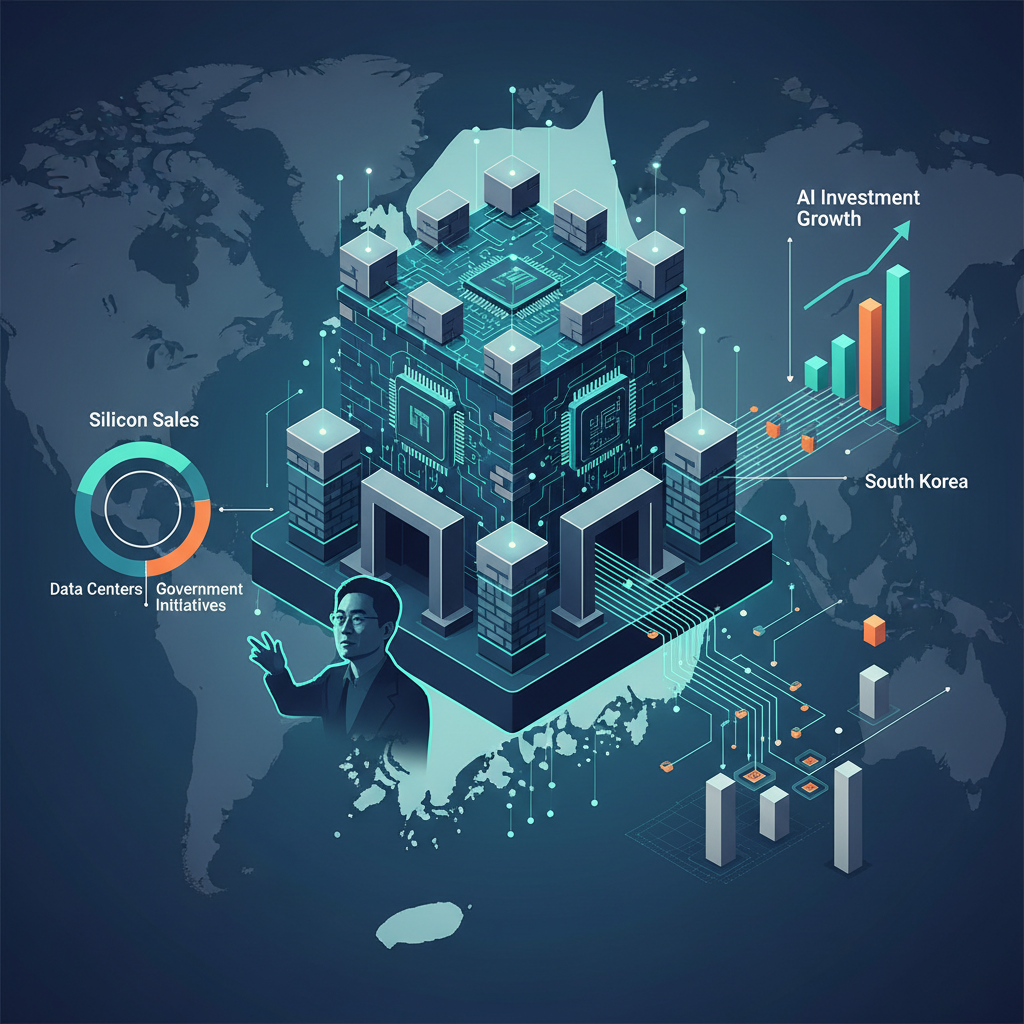
The numbers tell a compelling story, too. Globally, investments in sovereign AI initiatives have skyrocketed, with some estimates placing the figure at over $30 billion in the last 18 months alone. Countries like France, Germany, and India have already announced significant public-private partnerships, pouring billions into developing their own large language models and foundational AI architectures. The European Union, for instance, is backing projects like the 'Gaia-X' initiative, aiming to create a secure data infrastructure that could host sovereign AI models, as reported by Reuters Technology. It's a digital arms race, but instead of missiles, everyone's building neural networks.
So, where does Australia fit into all this? Well, we're not exactly known for being first out of the gate on every global tech trend, but when we get going, we often punch above our weight. Australia's tech scene is like a good flat white, better than you'd expect. There's a growing recognition that we can't afford to be mere consumers of global AI. We need to be creators, contributors, and custodians of our own digital future. The government has earmarked a substantial, though undisclosed, sum in the upcoming budget for AI research and infrastructure, with a clear directive to prioritise projects that enhance national capabilities.
“Our goal isn't to replicate OpenAI or Google DeepMind dollar for dollar,” says Professor Liam O'Connell, lead researcher at the Australian National University’s AI Centre, speaking from his lab in Acton. “That would be a fool's errand. Our focus is on building niche, high-impact models tailored to Australia’s unique challenges: climate resilience, resource management, and indigenous language preservation. We're looking at smaller, more efficient models that can run on less compute, making them more sustainable and accessible.” He highlights projects exploring AI for early detection of agricultural diseases, a critical area for our food security.
One of the most promising, if still nascent, initiatives is a consortium of universities and private sector players, tentatively dubbed 'OzAI', working on a foundational model trained predominantly on Australian data. This includes everything from government records, public domain research, historical archives, and even regional dialects. The idea is to create an AI that understands the nuances of Australian English, our slang, our history, and our unique regulatory environment. Imagine an AI that knows what a 'ute' is without needing a Wikipedia lookup, or understands the cultural significance of Uluru. It's a big ask, but the potential is enormous.
Of course, it's not all sunshine and lamingtons. There are significant hurdles. Talent acquisition is a big one. The global competition for top AI engineers is fierce, and while Australia has excellent universities, retaining that talent against the lure of Silicon Valley salaries and equity packages is a constant battle. Then there's the sheer computational power required. Training a state-of-the-art large language model costs hundreds of millions, if not billions, of dollars in compute alone. We're talking about server farms that could power a small city, and that's not cheap, nor is it environmentally trivial.
“We’re seeing a significant brain drain in AI, with many of our brightest minds heading overseas,” admits Sarah Chen, CEO of a prominent Australian AI startup focused on natural language processing. “The government needs to do more than just fund research, it needs to create an ecosystem that incentivises talent to stay and build here. That means competitive salaries, access to cutting-edge hardware, and a clear pathway for commercialisation. Otherwise, we’re just training people for other countries.” Her company, which recently secured a Series B funding round, is exploring partnerships with local universities to develop specialised AI models for the legal sector, ensuring legal jargon is correctly interpreted, a task notoriously difficult for generic models.
Another challenge is data. While Australia has a wealth of unique data, particularly in areas like environmental science and mining, consolidating and curating it in a way that's privacy-compliant and useful for AI training is a monumental task. There are also ethical considerations. Building a national AI means embedding national values, but whose values? Australia is a multicultural nation, and ensuring an AI reflects that diversity, rather than reinforcing existing biases, is paramount. This is a conversation we've been having for a while, as highlighted in our previous piece, Fair Go or Flawed Code? Australia's Bold Battle Against AI Bias [blocked].
Despite the challenges, the consensus seems to be that the journey towards sovereign AI is one we simply must embark on. The alternative, becoming entirely reliant on foreign-controlled AI, carries risks that are too great to ignore. It’s not just about what an AI can do for us, but what it might do to us if its creators' interests diverge from our own. Down Under, we do things differently, and that includes how we approach our digital future.
The next few years will be critical. Will Australia manage to carve out its own unique path in the global AI landscape, developing models that truly serve our national interest and reflect our diverse society? Or will we find ourselves perpetually playing catch-up, relying on the digital crumbs from the tables of global tech behemoths? My money's on us giving it a fair dinkum crack, but it's going to take more than just good intentions; it's going to take serious investment, smart policy, and a whole lot of Aussie ingenuity. For more on the global AI race, you can always check out Wired's AI section. It's a wild ride, folks, and we're just getting started.```