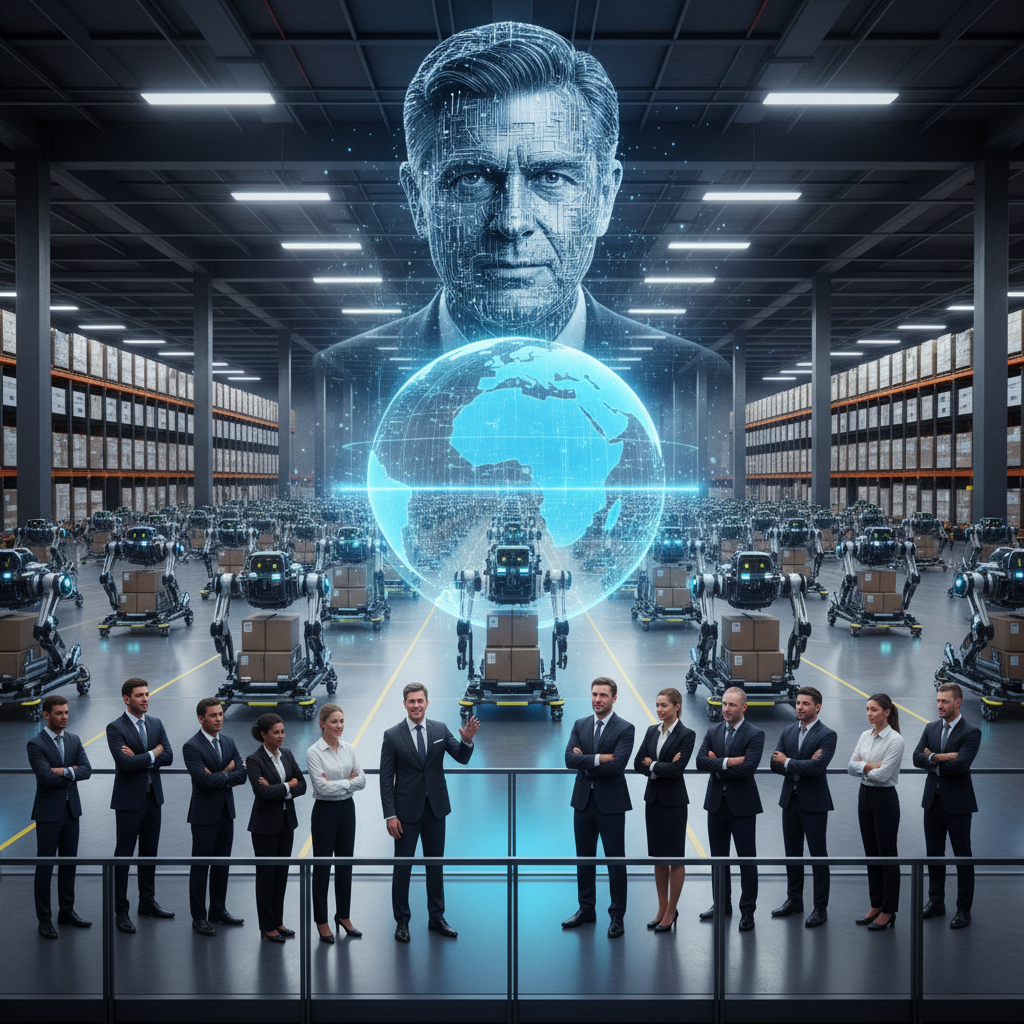

The air inside the vast Amazon fulfillment centre on the outskirts of Melbourne hums with a symphony of efficiency. It's not the frantic human bustle you might expect, but a mesmerising dance of autonomous mobile robots, whirring conveyors, and robotic arms meticulously sorting, packing, and dispatching. Standing there, watching the ballet of steel and silicon, I felt a familiar tingle of excitement. This isn't just a warehouse, it's a living, breathing organism powered by artificial intelligence, and it’s reshaping how Australia does business.
My Irish roots taught me to question, my Australian home taught me to build, and right now, I'm questioning everything I thought I knew about logistics. The sheer scale of Amazon's AI investment, particularly in its robotics division, is breathtaking. We're talking about a global enterprise, led by Andy Jassy, that has poured billions into making its supply chain an unparalleled marvel of automation. And now, that marvel is firmly planted on Australian soil, from Perth to Brisbane, affecting everything from local retailers to the hardworking folks who keep our goods moving.
Let's dive into the numbers, because they tell a powerful story. A recent report from the Australian Logistics Council indicated that AI and robotics adoption in the logistics sector has surged by an astounding 65 percent across the country in the last two years alone. Much of this growth is directly attributable to Amazon's aggressive expansion and the subsequent competitive pressure it places on other players. For businesses integrating Amazon's fulfillment services, the return on investment is often immediate and dramatic. One study by Accenture, focusing on Australian SMEs using Amazon's FBA, found an average 28 percent reduction in shipping costs and a 40 percent increase in delivery speed to customers in metropolitan areas. That's not just a marginal improvement, that's a game changer for profitability and customer satisfaction.
Consider 'Outback Outfitters', a fictional but oh so realistic Australian outdoor gear company based in regional Queensland. For years, they struggled with the tyranny of distance, making it tough to compete with city-based rivals. Their founder, Sarah Chen, told me, 'Before Amazon's AI logistics, getting our unique, locally made hiking boots to customers in Sydney or Melbourne was a two week ordeal. Now, with their fulfillment centres, it's often next day. We've seen our online sales jump 35 percent in the last year, and we can finally think about expanding internationally.' This isn't just about faster deliveries, it's about democratising access to markets for businesses that were once geographically disadvantaged.
However, it's not all sunshine and AI-powered rainbows. For every Outback Outfitters, there's a traditional logistics company or a smaller retailer struggling to keep pace. 'Trans-Tasman Freight', a family-owned trucking and warehousing business operating for three generations, is feeling the squeeze. Their CEO, Marcus O'Malley, shared his concerns with me. 'We've always prided ourselves on our personal service, but how do you compete with AI that can optimise routes in real time and robots that work 24/7 without a smoko break? We're investing in automation too, but it's a massive capital outlay, and the talent to manage these systems is scarce.' Marcus's sentiment echoes a broader unease. The adoption rate for AI in logistics is high, but the capital required to implement it is creating a clear divide between the 'haves' and 'have-nots' in the Australian business landscape.
And what about the workers, the backbone of our supply chain? This is where the story gets really interesting, and a bit more complex. The narrative isn't simply one of job displacement, but rather job transformation. At the Amazon facility, I spoke with David 'Davo' Jones, a former forklift operator who now supervises a fleet of robotic pickers. 'Yeah, my old job's gone,' Davo admitted with a shrug, 'but I got retrained. Now I'm monitoring screens, troubleshooting robot glitches, and making sure the whole system runs smoothly. It's different, definitely less physical, more brain work. I miss the banter with the blokes sometimes, but the pay's better, and I'm learning new skills.'
This sentiment is backed up by data. While some roles, particularly those involving repetitive manual labour, are indeed being automated, new roles are emerging. A recent report from the Commonwealth Scientific and Industrial Research Organisation, Csiro, predicts that for every 10 jobs displaced by AI in logistics, 7 new roles requiring different skill sets will be created in areas like robot maintenance, data analytics, and AI system management. The challenge, as Davo highlighted, is ensuring that Australian workers have access to the training and reskilling opportunities needed to transition into these new roles. Initiatives like TAFE's new 'Robotics and Automation Technician' courses are a brilliant start, but the scale of the transition demands a national effort.
Dr. Anya Sharma, a leading expert in supply chain AI from the University of Sydney, offered her perspective. 'What Amazon, and companies like them, are doing is not just optimising existing processes, they're fundamentally redesigning them. This isn't just about efficiency, it's about resilience. Think about the disruptions we've seen with global events. An AI-driven, highly automated logistics network can adapt and reroute with incredible speed, something human-centric systems struggle with.' She emphasised the need for Australian businesses to embrace this transformation proactively. 'Those who see this as merely a threat will be left behind. Those who see it as an opportunity to innovate, to integrate, and to upskill their workforce, they're the ones who will thrive.' Her insights are always so spot on, making you feel like you're peering into the future with her. You can find more of her work on the future of supply chains at MIT Technology Review.
So, what's coming next for Australia in this AI-powered logistics revolution? I reckon we're just scratching the surface. We'll see further integration of predictive AI, not just for route optimisation, but for demand forecasting that can anticipate consumer needs with uncanny accuracy, reducing waste and improving inventory management. Imagine AI that can predict a surge in demand for sunscreen in Perth based on weather patterns and social media sentiment, then automatically adjust stock levels across the continent. That's the kind of magic we're talking about.
We'll also see more sophisticated human-robot collaboration, with robots handling the heavy lifting and repetitive tasks, while humans focus on problem solving, quality control, and customer interaction. The 'cobot' a collaborative robot is becoming a common sight, working side by side with people, not replacing them entirely. This blend of human ingenuity and AI precision is where the real competitive edge lies. For Australian businesses, this means a future where agility, efficiency, and a highly skilled workforce are paramount. There's something happening in the Southern Hemisphere that Silicon Valley hasn't noticed yet, and it's the uniquely Australian way we're adapting to this technological wave, blending our pragmatism with a willingness to innovate.
This isn't just a story about Amazon, it's a story about Australia's place in a rapidly evolving global economy. It's about how we adapt, how we innovate, and how we ensure that our workers and businesses are not just participants, but leaders in this incredible new era. The future of logistics, powered by AI and robotics, is here, and it's as exciting as a perfect Sydney summer's day. For more on how AI is transforming industries globally, check out Reuters Technology.