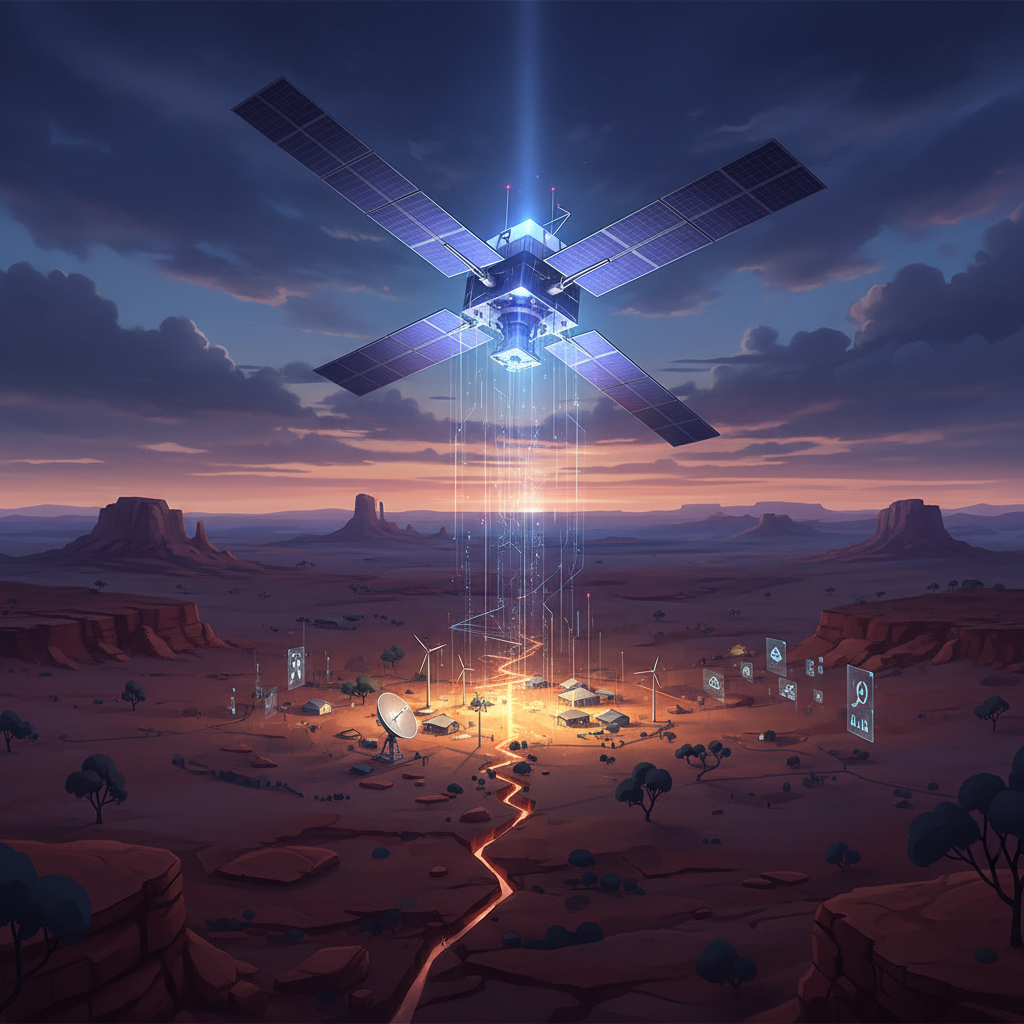

Let's be honest, for us Aussies, the internet has always been a bit of a mixed bag. You're either living in a capital city, drowning in fibre optics and 5G, or you're out past the black stump, wrestling with satellite connections that feel like dial-up's grumpy older cousin. It's a tale as old as time, or at least as old as the NBN rollout, and it's left a fair few of us feeling like second-class digital citizens. But now, Amazon's Project Kuiper is swooping in, promising to beam high-speed internet from low Earth orbit, and with it, a whole new era of AI-powered connectivity. The question on everyone's lips, especially mine, is whether this is the silver bullet we've been waiting for, or just another shiny object that misses the mark for our sprawling, sunburnt country. My gut feeling, mate, this AI thing is getting interesting, but the devil, as always, is in the details, and the satellite dishes.
Imagine this: it's April 2031. You're on a cattle station in the Kimberley, hundreds of kilometres from the nearest town. Your kid is doing their schoolwork, not from a dusty textbook, but from a holographic projection in their living room, powered by a seamless, low-latency internet connection from Kuiper. A drone, guided by AI, is monitoring the herd, sending real-time health data and location tracking directly to a cloud platform, accessible from your tablet. Farmers are using predictive analytics, fed by satellite imagery and local weather sensors, to optimise irrigation and crop yields with unprecedented precision. Remote medical consultations are not just video calls, they're immersive diagnostic sessions, with AI assisting doctors in real-time, pulling up patient histories and suggesting treatment plans. This isn't science fiction anymore, it's the future Amazon is selling, and for a country like Australia, with its vast distances and sparse populations, it sounds like a dream come true.
So, how do we get from today's patchy reality to that vibrant future? It's a multi-pronged approach, really. First, Kuiper needs to scale its constellation. Amazon has already launched a fair few prototypes, and the plan is to deploy thousands of satellites over the next few years. We're talking about a massive undertaking, a celestial dance of hardware and software. Once those birds are in orbit, the ground infrastructure needs to be in place. Think compact, affordable user terminals, easily installed on any homestead or remote mining site. This isn't just about providing bandwidth, it's about making it accessible and robust enough to withstand our harsh conditions, from cyclonic winds to scorching heat.
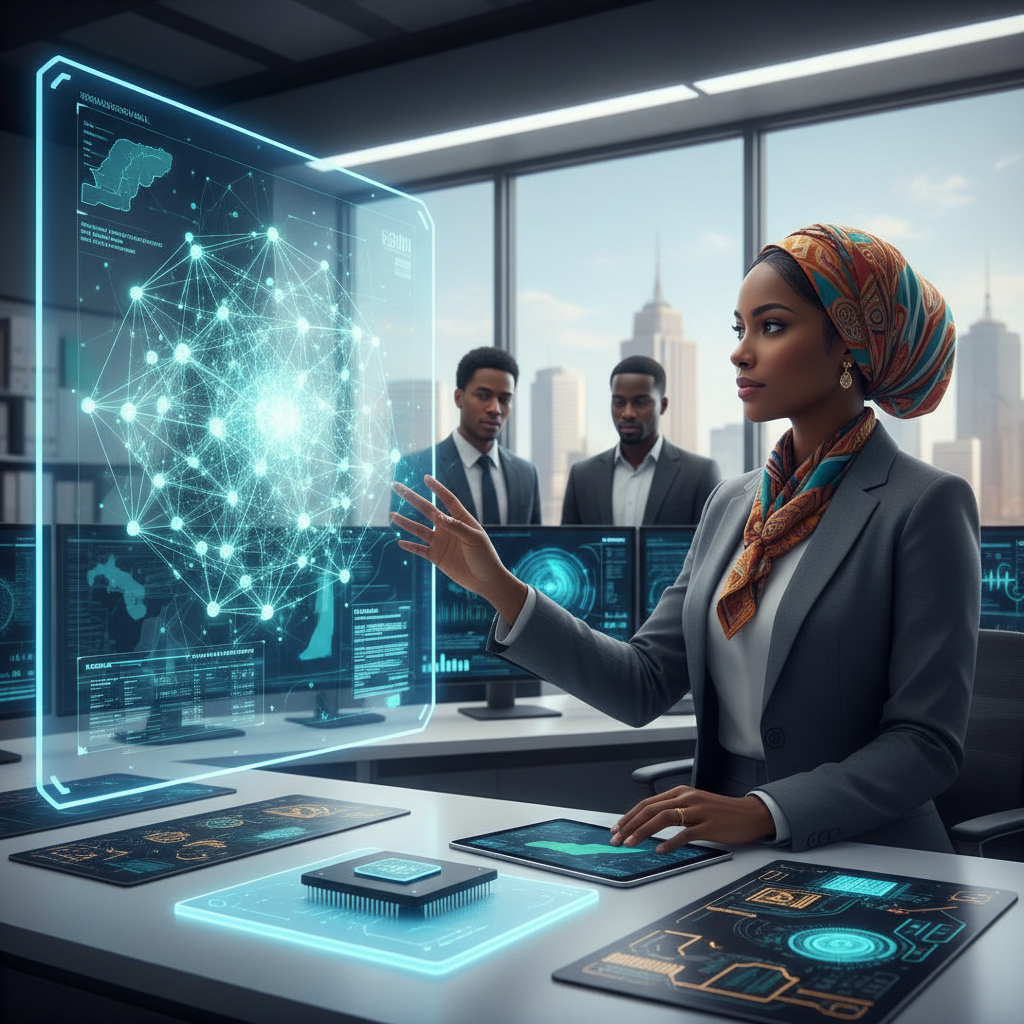
Then comes the AI layer, the real game-changer. It's not just about getting online, it's about what you do once you're there. Amazon Web Services (AWS), with its formidable AI capabilities, will be the backbone. We're looking at edge computing, where AI processing happens closer to the data source, reducing latency and making real-time applications viable even in the remotest locations. Think AI models trained on Australian agricultural data, mining operations, or environmental monitoring, deployed directly onto local devices or small, rugged data centres. This allows for truly intelligent applications that can adapt to our unique challenges. According to TechCrunch, the convergence of satellite internet and edge AI is one of the most significant trends reshaping global infrastructure.
Key milestones for this transformation will include the full deployment of Kuiper's initial constellation, expected by late 2027 or early 2028, followed by widespread availability of user terminals across regional and remote Australia. We'll see the emergence of specialised AI applications tailored for Australian industries, perhaps even a dedicated 'AWS Outback' service, offering bespoke solutions for agriculture, mining, and remote healthcare. By 2029, I predict we'll see a significant uptick in remote work opportunities for regional Australians, driven by reliable connectivity. By 2031, the digital divide, at least in terms of basic access, should be largely a thing of the past.
Now, who wins and who loses in this brave new world? The obvious winners are the millions of Australians who have been left behind by traditional infrastructure. Farmers, remote communities, Indigenous populations, and regional businesses stand to gain immensely. Imagine the boost to education, healthcare, and economic development when every corner of the continent is connected. "This isn't just about internet access, it's about equity and opportunity," says Dr. Anya Sharma, a leading expert in digital inclusion at the Australian National University. "For too long, geographical isolation has meant digital isolation. Kuiper has the potential to fundamentally alter that equation."
Our mining sector, already a global leader, will see unprecedented levels of automation and efficiency, with AI-powered sensors and autonomous vehicles operating seamlessly across vast sites. "We're talking about optimising resource extraction, improving safety, and reducing environmental impact," explains Mark Thompson, CEO of Pilbara Iron, a fictional but plausible mining giant. "The real-time data flow enabled by Kuiper and edge AI will be transformative for our operations."
But let's not be completely starry-eyed. There are always losers, or at least those who need to adapt quickly. Existing terrestrial internet providers, particularly those reliant on older satellite technologies, will face stiff competition. The NBN, our national broadband network, might find its remote offerings becoming less attractive if Kuiper delivers on its promises of lower latency and higher speeds. There's also the question of data sovereignty and privacy. With so much data flowing through Amazon's ecosystem, how do we ensure it's protected and used ethically, especially when it involves sensitive agricultural or health information? "The regulatory frameworks need to keep pace with the technological advancements," warns Professor Eleanor Vance, a digital ethics specialist at the University of Melbourne. "We can't allow innovation to outrun our ability to safeguard our citizens' data."
And what about the cultural impact? Will increased connectivity lead to a further homogenisation of culture, or will it empower unique regional voices to reach a global audience? I'm hoping for the latter. Down Under, we do things differently, and I reckon a properly connected Australia will just amplify that. For more on the societal implications of pervasive AI, you might find this article on AI ethics and bias insightful.
So, what should you, the discerning reader, be doing now? If you're a business in regional Australia, start thinking about how reliable, high-speed internet and advanced AI tools could revolutionise your operations. Explore AWS's offerings, look into AI-driven analytics, and consider how automation could streamline your processes. If you're in government, it's time to engage with Amazon and other satellite providers to ensure fair access, competitive pricing, and robust regulatory oversight. We need to make sure the benefits are distributed equitably, not just to those who can afford the latest tech. "The future isn't just about building the infrastructure, it's about building the human capacity to leverage it," says Sarah Jenkins, head of the Australian Digital Inclusion Alliance. "Investment in digital literacy and skills training in regional areas is paramount."
Project Kuiper, coupled with the relentless march of AI, represents a monumental shift for Australia. It's an opportunity to finally level the playing field for our remote communities, to unlock new economic potential, and to truly connect a continent that has always battled its own vastness. But it's not a done deal. We need to be vigilant, ask the tough questions, and ensure that this technological leap serves all Australians, not just a select few. The promise is huge, the potential is boundless, but the execution, as always, will determine whether we get a fair go, or just another false dawn. I'm cautiously optimistic, but I'll be watching, just like a kookaburra on a fence post, ready to squawk if things go pear-shaped.