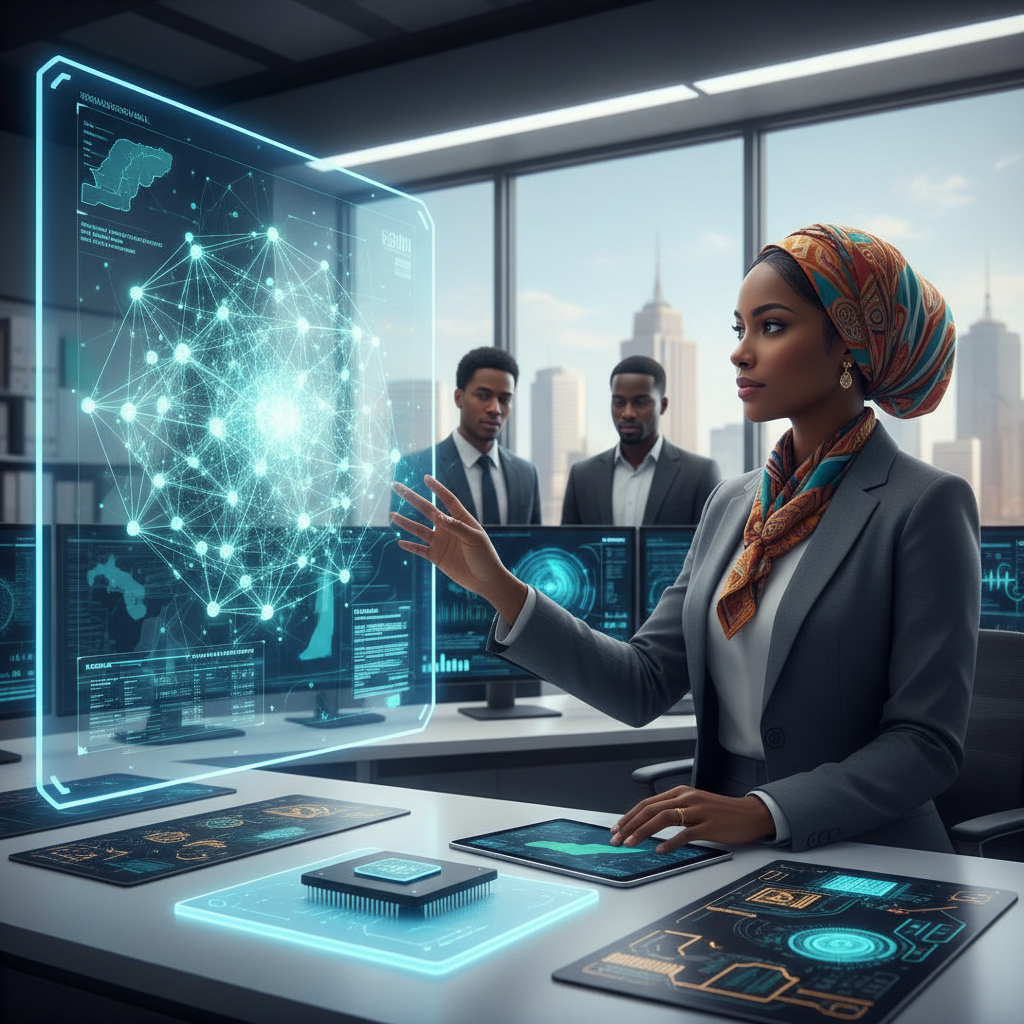

The drumbeat of innovation echoes across the digital savannah, and Amazon Web Services, AWS, is certainly playing a loud tune with its Bedrock offering. Everywhere you turn, from Accra to London, the conversation is about how enterprises are scrambling to integrate generative AI. AWS, with its deep pockets and sprawling infrastructure, sees an opportunity not just to participate, but to dominate. But as a Ghanaian journalist, I have to ask: at what cost to our burgeoning African tech ecosystem? Will this be a partnership of equals, or another chapter in the story of technological dependency?
Amazon’s strategy with Bedrock is clear: provide a fully managed service that allows businesses to build and scale generative AI applications using a choice of foundation models, FMs, from Amazon itself and other leading AI companies like Anthropic, AI21 Labs, and Stability AI. It is a one-stop shop, promising ease of use, security, and scalability. For many global enterprises, this is a godsend, simplifying the complex world of AI model deployment. Andy Jassy, Amazon’s CEO, has been vocal about the company’s commitment, stating in a recent investor call that AWS is positioned to be “the most profitable and highest growth part of Amazon for the foreseeable future,” largely driven by AI services. This is not just about selling cloud space anymore; it is about selling the very intelligence that will power the next generation of businesses.
Here in Ghana, our tech landscape is vibrant, bursting with youthful energy and innovative spirit. Startups are emerging, tackling local challenges with local solutions, from fintech to agri-tech. The promise of AI is immense for us, offering pathways to leapfrog traditional development hurdles. Imagine AI models trained on Ghanaian languages, helping our farmers optimize yields, or improving healthcare diagnostics in remote villages. This is the future we envision, one where technology serves our people, rooted in our cultural heritage. But when giants like Amazon step in, offering powerful, pre-packaged solutions, it forces us to confront a critical question: will we be merely consumers of these tools, or will we be empowered to be creators?
“The allure of readily available, powerful AI infrastructure like Bedrock is undeniable for businesses looking to quickly integrate AI,” explains Dr. Ama Nkrumah, a senior lecturer in Computer Science at the University of Ghana. “However, we must be cautious. If we do not actively develop our own capabilities and infrastructure, we risk becoming perpetual renters of innovation, rather than owners. Our data, our unique challenges, and our cultural nuances demand bespoke solutions, not just off-the-shelf imports.” Her words echo a sentiment I hear often in our local tech hubs: a desire for genuine technological sovereignty.
The data certainly points to a massive market. Reports suggest the global generative AI market could reach over 1 trillion dollars by 2030. AWS, with its estimated 31 percent share of the global cloud infrastructure market, is perfectly positioned to capture a significant portion of this. They are investing billions, not just in hardware, but in talent and research. This kind of investment is hard for any single African nation, let alone Ghana, to match. So, the question is not whether we use these platforms, but how we use them. Are we building on top of them in a way that creates lasting value and intellectual property for Ghana, or are we simply feeding the beast?
Consider the implications for language. Ghana boasts over 80 indigenous languages, each a repository of unique knowledge and culture. AI has the potential to revitalize these languages, creating educational tools, preserving oral histories, and fostering digital inclusion. But if the foundation models offered on platforms like Bedrock are predominantly trained on English and other major global languages, what happens to our linguistic heritage? We saw a similar challenge with early internet development, where English dominated, marginalizing other languages. We cannot afford to repeat that mistake with AI.
“The real power lies in the data and the models trained on that data,” states Mr. Kwesi Osei, CEO of 'Adinkra AI', a Ghanaian startup focused on culturally relevant AI solutions. “If we are always relying on external models, we are implicitly accepting their biases, their worldviews, and their limitations. We need to invest in training our own models, using our own datasets, to ensure AI serves our specific needs. Bedrock can be a tool, but it must not be the only tool. We need to cultivate our digital farms, not just buy produce from someone else’s.” His company, for instance, is exploring ways to build language models for Twi and Ga, a monumental task that requires significant computational resources, something AWS could provide, but with the caveat that the intellectual property remains local.
This is where the concept of Sankofa comes into play, an Akan philosophy that teaches us to retrieve what is valuable from the past, even as we move forward. We can embrace the power of global platforms like AWS Bedrock, but we must do so with a clear understanding of our own heritage and future. We must demand transparency, interoperability, and the ability to contribute to and customize these foundational technologies, not just consume them. Silence is complicity when it comes to shaping our digital future. If we do not advocate for our place at the table, we risk being left off the menu entirely.
The Ghanaian government, through initiatives like the National Digital Transformation Agenda, is making strides in fostering a local tech ecosystem. Partnerships with global tech giants are inevitable, and in many ways, beneficial. They bring expertise, infrastructure, and investment. However, these partnerships must be structured to empower local capacity building, technology transfer, and data sovereignty. We need to ensure that the skills developed are not just for operating foreign systems, but for innovating within our own context. Reuters has reported extensively on how various nations are grappling with this balance, trying to leverage global AI while protecting national interests.
Ultimately, Amazon’s push with Bedrock is a formidable move in the global AI chess game. It offers powerful capabilities that could accelerate AI adoption across industries, including here in Ghana. But for us, the conversation must extend beyond mere adoption. It must be about empowerment, equity, and ensuring that the AI future we build is one that truly reflects our aspirations, our languages, and our values. We must not allow the convenience of powerful platforms to overshadow our long-term goal of building a robust, self-reliant, and culturally resonant AI ecosystem. The choice is ours: to be architects of our digital destiny, or merely tenants in someone else’s digital mansion. The future of our digital sovereignty, our very adinkra of innovation, depends on the choices we make today. For more on how other African nations are navigating this complex landscape, you might find this article on Eswatini's 'Umphakatsi Connect' Fights Back [blocked] insightful.