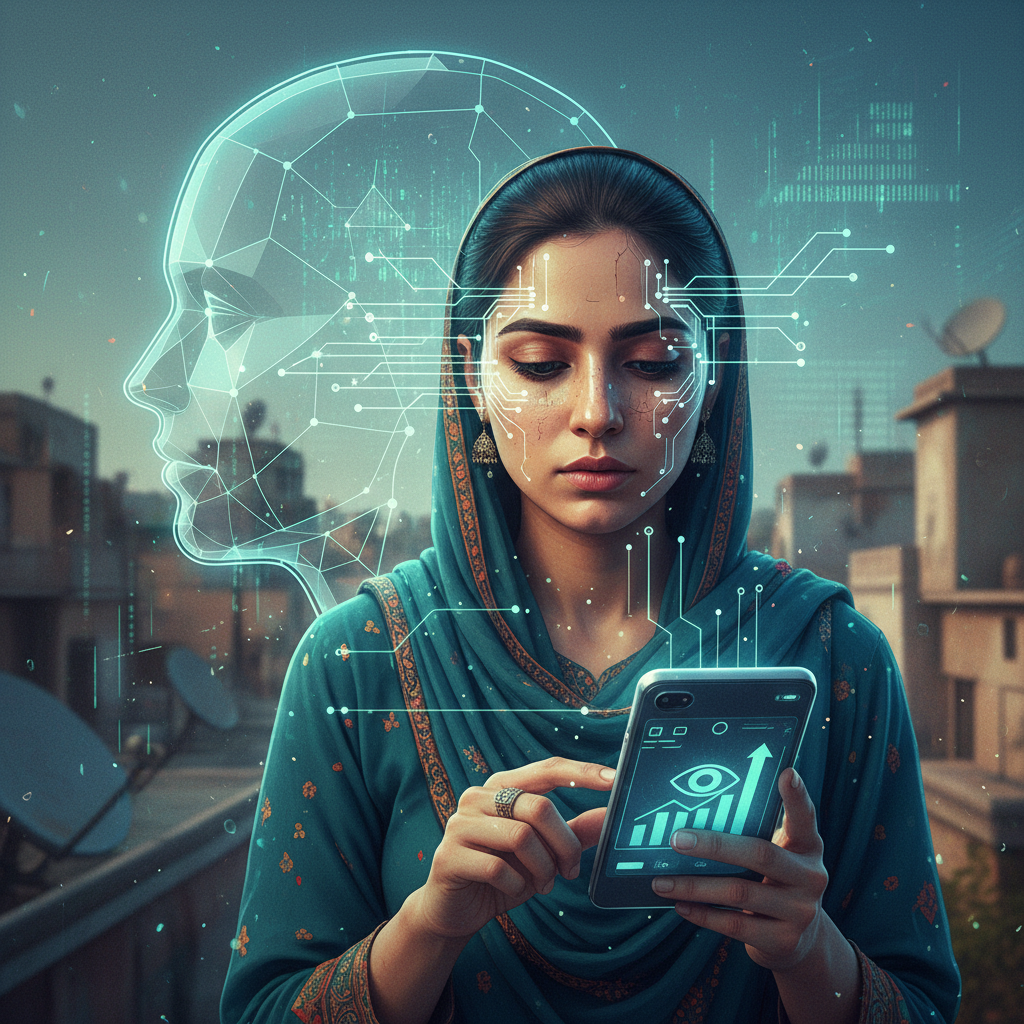

Let us be honest, the smart home has always felt a bit like a solution in search of a problem, particularly here in India. For years, we have had Amazon's Alexa, Google Assistant, and Apple's Siri chirping away from various corners of our homes, promising to make life easier. Easier for whom, I often wonder, as I watch my aunt negotiate a better price for fresh fish at the local market, a transaction no algorithm could ever replicate. Now, Amazon is throwing a reported 15 billion dollars into an Alexa AI overhaul, hoping to inject some much-needed intelligence into its digital assistant. My initial reaction, as always, is a raised eyebrow and a quiet, "Oh, the irony."
Amazon CEO Andy Jassy is banking on this next-generation Alexa to transform our living spaces. The vision is grand: a proactive assistant that does not just respond to commands but anticipates needs, manages complex routines, and perhaps even offers comforting words when your cricket team loses. This sounds lovely on paper, like a scene from a futuristic sci-fi film where everything is seamless and shiny. But here in India, where the rhythm of life is often a beautiful, chaotic symphony of human interaction, haggling, and improvisation, the idea of a perfectly automated home feels a little sterile, a little too neat. It is like trying to replace the vibrant, spicy flavours of a Kerala sadya with a bland, nutritionally complete meal replacement shake. Technically efficient, perhaps, but utterly devoid of soul.
My primary contention is this: the smart home, as envisioned by Western tech giants, often fails to account for the nuances of diverse cultures and economies. In a country where domestic help is still common, where multi-generational families live under one roof, and where the concept of 'smart' often means 'resourceful' rather than 'automated', these devices often feel superfluous. We have always had our own brand of smart home management. My grandmother, for instance, could tell you the exact time by the quality of light filtering through the mango tree, predict the monsoon with uncanny accuracy, and manage an entire household with an efficiency that would make any AI blush. Silicon Valley discovered what Kerala knew all along: true intelligence is often organic, adaptive, and deeply human.
Consider the energy consumption, for instance. These always-on devices, with their cloud-connected brains, are not exactly paragons of environmental virtue. We are talking about billions of devices globally, each sipping power, each contributing to the digital exhaust. While Amazon touts its sustainability efforts, the sheer scale of the smart home ecosystem raises legitimate questions about its environmental footprint. "Every device adds up," noted Dr. Anjali Sharma, an environmental policy expert at the Indian Institute of Technology Delhi, during a recent panel discussion. "We cannot ignore the cumulative energy demand and the e-waste generated by these rapidly obsolescing gadgets. The 'convenience' often comes at an ecological cost that is not properly factored into the consumer price." It is a valid point, one that often gets lost in the glitzy marketing campaigns.
Then there is the privacy aspect, a perennial thorn in the side of anyone who values their personal space. An AI that anticipates your needs must first know your needs, and then some. It listens, it learns, it connects dots. Amazon assures us of robust privacy protections, but the track record of tech giants is hardly spotless. How much data is too much data? When does helpful anticipation cross the line into intrusive surveillance? For many, especially in societies where community and collective living are paramount, the idea of a digital ear constantly tuned into every conversation, every routine, every personal habit, is deeply unsettling. It is not just about individual privacy, it is about the privacy of the household, the family unit, the very fabric of our social lives. File this under 'things that make you go hmm' indeed.
Of course, the tech evangelists will argue that I am being a Luddite, clinging to outdated notions. They will say that the new Alexa will be a game-changer, seamlessly integrating with our lives, making everything from ordering groceries to managing energy grids more efficient. They will point to the potential for elderly care, for assisting those with disabilities, for creating truly responsive environments. And yes, there is undeniable potential in these areas. For instance, a voice assistant that can help an elderly person living alone manage their medication schedule, or one that can control home appliances for someone with limited mobility, is genuinely valuable. I am not entirely cynical, just realistically skeptical.
"The smart home is evolving beyond simple commands," explained Rohan Gupta, a principal AI architect at a Bangalore-based startup specializing in localized AI solutions. "The next iteration, driven by large language models, aims for contextual understanding and proactive assistance. Imagine Alexa not just turning on the lights, but understanding your mood based on your speech patterns and suggesting a specific playlist, or ordering your favourite chai when it senses you are about to start your evening work. The challenge is making it culturally relevant and genuinely useful, not just a gimmick." He has a point. The promise of true contextual understanding is enticing, but the execution is where the rubber meets the road, or rather, where the digital assistant meets the often-unpredictable reality of an Indian household.
My rebuttal is simple: the current trajectory of the smart home wars, exemplified by Amazon's massive investment, seems to be a top-down imposition of a Western ideal of convenience. It prioritizes automation over human interaction, data collection over privacy, and often, novelty over genuine necessity. We already have incredibly efficient, deeply human systems for managing our homes and lives. We have our extended families, our domestic workers, our local vendors, and our innate resourcefulness. These are systems built on trust, community, and centuries of accumulated wisdom, not algorithms.
What we need is not necessarily more sophisticated digital assistants dictating our lives, but rather technology that augments our existing strengths, respects our cultural practices, and empowers us on our own terms. Perhaps Amazon should invest some of those billions into understanding the diverse needs of global consumers, rather than just pushing a one-size-fits-all solution. Imagine an Alexa that truly understands the nuances of Indian languages, not just as a translation tool, but as a cultural interpreter. An Alexa that knows the difference between a 'chai' request for a guest and a 'chai' request for a quick pick-me-up. An Alexa that can negotiate with the local vegetable vendor for you, now that would be truly revolutionary. Until then, it feels like a very expensive gamble on a convenience that many of us simply do not need, or perhaps, do not even want.
The smart home, in its current form, is a testament to the tech industry's unwavering belief that every problem has a technological solution, and that every aspect of life can be optimized and automated. But sometimes, the most intelligent thing we can do is to step back, appreciate the beautiful imperfections of human life, and question whether the relentless pursuit of digital convenience is truly making our lives richer, or just more complicated. Perhaps it is time for these tech giants to listen more, and dictate less. For more insights into the evolving landscape of AI and its societal impact, you can always check out Wired's AI section or MIT Technology Review. The conversation is far from over, and I suspect, will only get more interesting. For a different perspective on AI's impact on global markets, you might find this article on Reuters Technology insightful. What do you think, is your home truly smarter with Alexa, or just noisier?