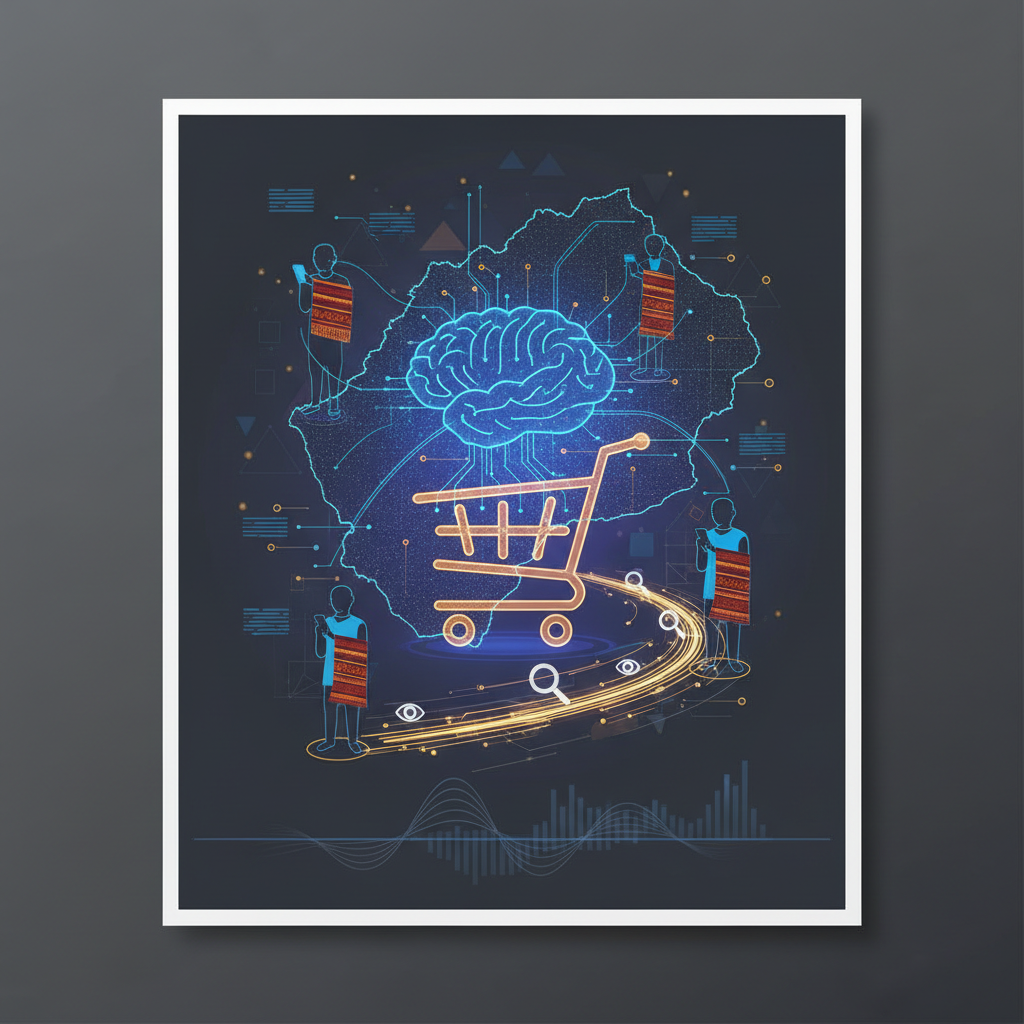

Is the promise of a perfectly personalized shopping experience merely a sophisticated veneer for unprecedented data extraction and market control? Amazon's recent unveiling of its advanced AI shopping assistant has ignited a global conversation, positioning itself as the vanguard of e-commerce personalization. Yet, beneath the polished demonstrations and seamless user interfaces, a more unsettling narrative unfolds, one that demands the scrutiny of an investigative lens. For those of us in Lesotho, accustomed to community-driven commerce and the nuanced negotiations of the local lipotokisi market, the implications of such technology are not merely theoretical, they are deeply personal and potentially transformative.
The concept of a digital assistant guiding purchasing decisions is not new. From the early days of rule-based recommendation engines to the collaborative filtering algorithms that powered Amazon's initial rise, e-commerce has always strived for relevance. However, the current generation of AI assistants, powered by large language models and sophisticated predictive analytics, represents a quantum leap. These systems are designed to understand not just past purchases, but also browsing habits, search queries, social media interactions, and even biometric data, painting an incredibly detailed portrait of the consumer. This level of intimacy, while marketed as convenience, raises profound questions about autonomy, data ownership, and the insidious creep of corporate influence.
Historically, personalization was a blunt instrument. Early attempts often resulted in awkward recommendations, a digital equivalent of a shopkeeper trying to sell you a blanket after you just bought one. But today's AI is different. It learns, adapts, and anticipates. Amazon's new assistant, reportedly integrated across its vast ecosystem from Alexa devices to its e-commerce platform, leverages years of proprietary data. This data, amassed from billions of transactions and interactions, is its most potent weapon. Sources close to the matter confirm that the assistant's real power lies not just in recommending products, but in subtly influencing preferences, guiding users towards specific brands or categories that maximize Amazon's profit margins or those of its preferred partners. What they're not telling you is the extent to which these systems are engineered to optimize for Amazon's bottom line, not necessarily the consumer's best interest.
According to a recent report by Reuters, the global e-commerce personalization market is projected to reach hundreds of billions of dollars within the next few years, with AI-driven solutions being the primary growth driver. Amazon, with its estimated 38% share of the US e-commerce market and significant presence globally, stands to gain immensely. "The sheer volume of data Amazon possesses gives them an almost insurmountable advantage," states Dr. Lerato Molebatsi, a data ethics researcher at the National University of Lesotho. "When an AI assistant can predict your needs before you even articulate them, it shifts the power dynamic entirely. It moves from a service to a subtle form of digital puppetry." This sentiment echoes concerns voiced by consumer advocates worldwide, who fear that hyper-personalization could lead to filter bubbles, price discrimination, and reduced consumer choice.
The implications for developing economies, particularly in Africa, are even more acute. In Lesotho, where digital literacy varies and access to diverse online marketplaces can be limited, Amazon's entry or expansion with such sophisticated tools could reshape local commerce irrevocably. Imagine a scenario where a Mosotho small business owner, struggling to compete with global giants, finds their potential customers subtly steered away by an AI assistant designed to prioritize larger, often foreign, retailers. The traditional morero, a community meeting where collective decisions are made, finds no digital equivalent when individual choices are subtly manipulated by unseen algorithms.
Leading voices in the tech world have also weighed in. Sundar Pichai, CEO of Google, has often spoken about the ethical development of AI, emphasizing fairness and transparency. Yet, the commercial imperatives of companies like Amazon often clash with these ideals. "The challenge is not just building powerful AI, but ensuring it serves humanity, not just corporate interests," Pichai stated in a recent address, a sentiment that resonates deeply when examining the opaque workings of personalization algorithms. Meanwhile, critics like Professor Shoshana Zuboff, author of 'The Age of Surveillance Capitalism,' argue that these systems are fundamentally extractive, converting human experience into behavioral data for profit. Her work provides a crucial framework for understanding how seemingly innocuous shopping assistants contribute to a larger architecture of control.
My investigation into the financial flows surrounding these AI initiatives reveals a clear pattern: investment is heavily concentrated on data acquisition and algorithmic refinement. The money follows the data. Companies are pouring billions into building the most comprehensive profiles of their users. This is not just about selling more products; it is about predicting future demand, influencing supply chains, and ultimately, controlling market narratives. The question then becomes: who truly benefits from this hyper-personalized future? Is it the consumer, who receives tailored recommendations, or the corporation, which gains unparalleled insight and influence over purchasing behavior?
Consider the economic impact in a country like Lesotho. While increased access to goods might seem beneficial, the erosion of local markets and traditional retail could have devastating consequences. Our vibrant textile industry, for example, relies on direct consumer engagement and nuanced understanding of local tastes. An AI assistant, however sophisticated, trained predominantly on Western consumption patterns, might inadvertently sideline local products, pushing generic alternatives that dilute cultural distinctiveness. This is not merely a hypothetical concern; it is a pattern observed in other sectors where global digital platforms have dominated local economies.
This trend is not a fad; it is the new normal, albeit one fraught with peril. The sheer scale of data collection and the sophistication of AI models mean that personalization will only become more pervasive. The question for consumers, especially in regions like Lesotho, is how to navigate this landscape without becoming mere data points in a global corporate ledger. We must demand transparency in how these assistants operate, advocate for stronger data privacy regulations, and support local digital initiatives that prioritize community needs over corporate profit. The digital morero of the future must be one where the collective voice of the people, not the algorithms of distant corporations, shapes our economic destiny. We must scrutinize these digital advancements with the same rigor we apply to any powerful entity, asking always: who holds the power, and who pays the price? The future of e-commerce personalization, while promising convenience, also carries the very real risk of digital colonization, a subtle yet potent force that demands our unwavering attention. The battle for digital sovereignty, and indeed economic autonomy, is being fought not just in boardrooms, but in the algorithms that shape our everyday choices. It's time to truly follow the money and understand its ultimate destination. We cannot allow our digital future to be written by algorithms alone, especially when those algorithms are optimized for profit over people. The time for critical engagement is now, before the digital 'morero' becomes an inescapable reality. The stakes are too high for complacency, particularly for nations striving to build their own digital economies and preserve their unique cultural identities. For more on the broader implications of AI governance, one might consider the ongoing debates surrounding regulatory frameworks globally, as discussed by experts at MIT Technology Review.