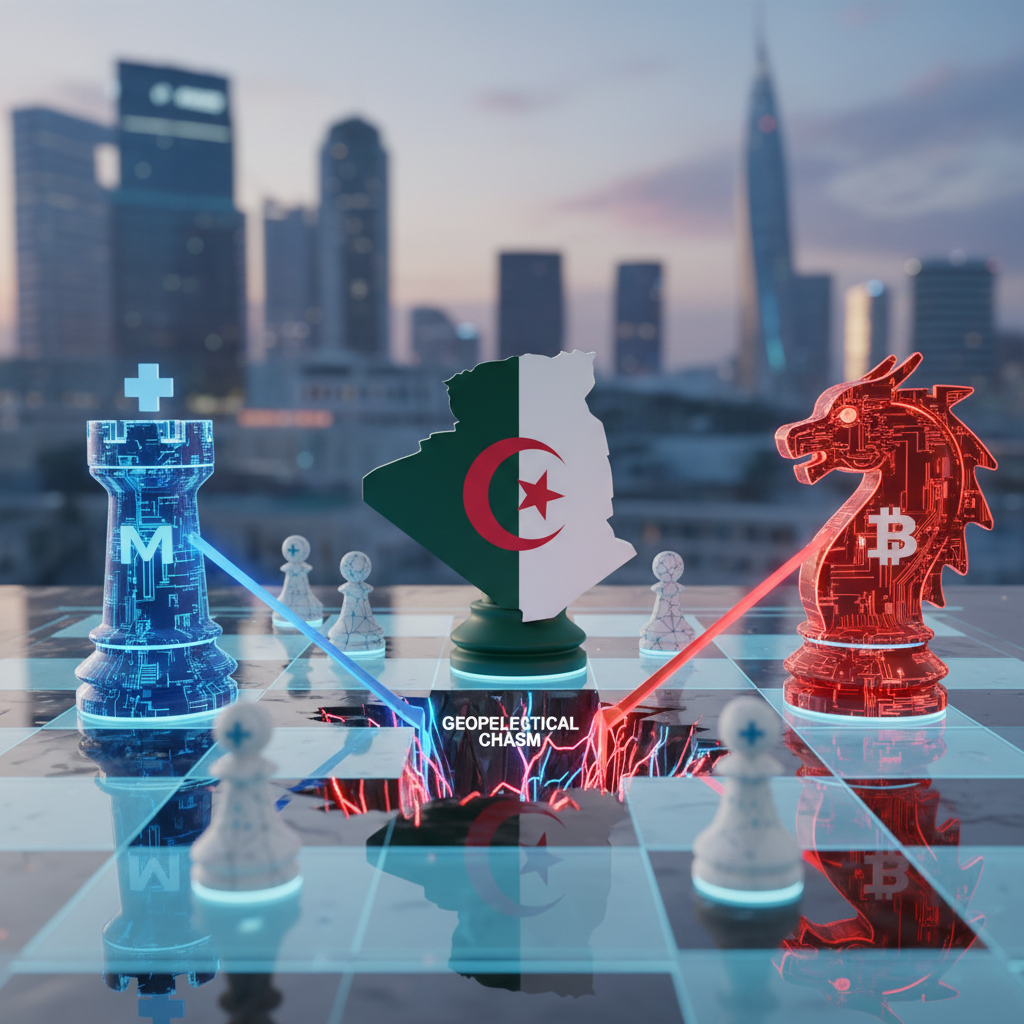
The geopolitical currents shaping our digital future are as palpable as the sirocco winds sweeping across the Sahara, and nowhere are their effects more acutely felt than in the burgeoning field of artificial intelligence. For nations like Algeria, perched at the crossroads of continents and ideologies, the so-called AI cold war between global superpowers presents both unprecedented opportunities and profound strategic dilemmas. Specifically, in the critical sector of healthcare AI, Algeria finds itself charting a course between competing technological ecosystems, each carrying its own political and economic baggage. This is not merely a choice of software vendors; it is a decision that will echo through our hospitals, our research institutions, and ultimately, the health outcomes of our citizens.
The Strategic Move: Microsoft's Azure for Algerian Healthcare
Recently, the Algerian Ministry of Health, in conjunction with the Ministry of Digitalization and Statistics, announced a strategic partnership framework with Microsoft. The core of this initiative, dubbed 'HealthNet AI,' aims to leverage Microsoft Azure's cloud infrastructure and AI services to modernize Algeria's healthcare data management, diagnostic support systems, and epidemiological surveillance. The initial phase, reportedly a pilot program in three major university hospitals in Algiers, Oran, and Constantine, focuses on deploying AI-powered tools for early disease detection and optimizing resource allocation. The projected investment from the Algerian side is significant, estimated at 300 million USD over five years, with Microsoft providing technical expertise and training programs for Algerian engineers and medical professionals.
Context and Motivation: A Nation's Health and Digital Sovereignty
Algeria's motivation for this ambitious undertaking is multifaceted. Firstly, the nation faces considerable challenges in healthcare provision, including a growing population, an increasing burden of chronic diseases, and a persistent need for improved access to specialized medical expertise, particularly in remote areas. AI, with its promise of predictive analytics and diagnostic augmentation, offers a compelling solution. Secondly, there is a clear imperative for digital transformation across all sectors of the Algerian economy, articulated in the 'Algeria Vision 2030' plan. Integrating advanced cloud and AI capabilities into healthcare aligns perfectly with this national strategy. As Dr. Fatima Zahra Bouzid, Director General of Digital Health at the Ministry of Health, stated in a recent press briefing, “Our goal is to leapfrog decades of technological disparity, ensuring that every Algerian has access to cutting-edge medical support. This partnership is a cornerstone of that vision, but it must also safeguard our data sovereignty.”
However, the choice of a Western technology giant like Microsoft is not without its intricate geopolitical considerations. For years, Algeria has maintained a policy of non-alignment, balancing its relationships with various global powers. The increasing intensity of the AI technology cold war, characterized by export controls, data localization demands, and a race for technological supremacy, complicates this stance. The United States, through companies like Microsoft, Google, and NVIDIA, represents a formidable bloc of AI innovation. Simultaneously, China, with its own tech titans like Baidu and Huawei, has been aggressively expanding its digital footprint across Africa, often offering more flexible financing and infrastructure development packages. This creates a delicate balancing act for nations like Algeria, which seek the best technology without becoming entangled in superpower rivalries.
Competitive Analysis: Azure Versus the Alternatives
From a technical standpoint, Microsoft Azure offers a robust and mature ecosystem. Its AI services, including Azure Machine Learning, Azure Cognitive Services, and its partnership with OpenAI for advanced large language models like GPT-4, are among the industry's most sophisticated. The company's global presence and established enterprise solutions provide a degree of reliability and scalability that is attractive. For instance, the integration of AI for medical imaging analysis, a critical component of HealthNet AI, can leverage Azure's extensive computational resources and pre-trained models, potentially accelerating diagnostic workflows. The mathematics behind this is elegant, allowing for complex pattern recognition in vast datasets, a task impossible for human clinicians alone.
Yet, the competitive landscape is rich with alternatives. Chinese firms, particularly Baidu, have made significant strides in healthcare AI. Baidu Brain, their comprehensive AI platform, includes capabilities for medical image analysis, intelligent consultation systems, and drug discovery. Their approach often emphasizes localized data centers and bespoke solutions tailored to developing economies. Furthermore, open-source initiatives, championed by entities like Hugging Face, offer a pathway to build AI capabilities without deep reliance on a single vendor, potentially enhancing digital sovereignty. TechCrunch frequently reports on the diverse strategies emerging in the global AI market, highlighting the competitive pressures on all players.
“The real challenge for Algeria is not just acquiring technology, but ensuring its long-term control and adaptability,” explains Dr. Youssef Kherbouche, a senior researcher at the National Center for Scientific and Technical Research Development in Algiers. “While Microsoft offers unparalleled tools, we must critically assess the implications for data ownership, interoperability with future systems, and the potential for vendor lock-in. We cannot afford to trade one form of dependency for another.”
Strengths and Weaknesses of the HealthNet AI Strategy
Strengths:
- Cutting-Edge Technology: Access to Microsoft's advanced AI and cloud infrastructure immediately elevates Algeria's healthcare technology capabilities. This includes state-of-the-art machine learning models and secure cloud storage, crucial for handling sensitive patient data.
- Scalability and Reliability: Azure's global network provides a highly scalable and reliable platform, essential for a national healthcare system. This means the system can grow with demand and maintain high uptime.
- Training and Capacity Building: Microsoft's commitment to training Algerian personnel is vital for fostering local expertise and reducing reliance on foreign consultants in the long run.
Weaknesses:
- Digital Sovereignty Concerns: Relying on a foreign cloud provider, particularly one based in a superpower nation, raises questions about data privacy, access, and potential extraterritorial legal obligations. Where will Algerian patient data reside, and under whose jurisdiction will it ultimately fall? This is a point of contention that must be meticulously addressed.
- Vendor Lock-in: Deep integration with a proprietary ecosystem like Azure can make it difficult and costly to switch providers in the future, limiting Algeria's strategic flexibility. This is a common pitfall in large-scale IT procurements.
- Cost Implications: While the initial investment is substantial, the long-term operational costs, including licensing fees, data transfer charges, and specialized support, could be significant and potentially unsustainable without careful financial planning.
- Geopolitical Entanglement: This partnership could be perceived by competing powers as an alignment, potentially inviting pressure or limiting future options for collaboration with other AI ecosystems. The global AI landscape is increasingly fragmented, and neutrality is becoming a luxury.
Verdict and Predictions: A Tightrope Walk
Algeria's HealthNet AI strategy with Microsoft is a bold, yet precarious, step. It represents a pragmatic choice for immediate technological uplift, leveraging established Western innovation. However, its success hinges on Algeria's ability to negotiate and enforce robust clauses regarding data sovereignty, intellectual property, and technology transfer. The nation must ensure that this partnership is not a mere consumption of foreign technology, but a genuine transfer of knowledge and capability that empowers local innovation.
Let me walk you through the architecture of a truly sovereign AI strategy. It would involve not just using cloud services, but actively developing local data centers, fostering indigenous AI research, and investing heavily in open-source alternatives where feasible. This would create a hybrid model, leveraging global expertise while building local resilience. The current strategy leans heavily on the former, which is a calculated risk.
My prediction is that while HealthNet AI will deliver tangible improvements in healthcare efficiency and access in the short to medium term, Algeria will simultaneously intensify its efforts to diversify its AI partnerships and strengthen its domestic AI capabilities. We will likely see increased engagement with Chinese firms for infrastructure projects and perhaps even a push towards developing a national AI cloud framework, perhaps in partnership with regional players. The goal, ultimately, is not just to adopt AI, but to master it, to bend its immense power to serve the unique needs and aspirations of the Algerian people, free from external pressures. The path forward is not a straight line, but a complex, multi-vectored journey, much like the ancient trade routes that once crisscrossed our land. The stakes are too high to simply follow one path without considering all the others. The future of our nation's health, and indeed its digital destiny, depends on this delicate balance. For further insights into the broader implications of AI in global governance, one might consult analyses from MIT Technology Review. The decisions made today will shape our landscape for generations. This is not merely about technology; it is about strategic autonomy in an increasingly interconnected, yet fractured, world. We must not forget the lessons of history, where technological dependency often preceded other forms of influence. The Algerian people deserve nothing less than a strategy that prioritizes their long-term well-being and sovereignty above all else.