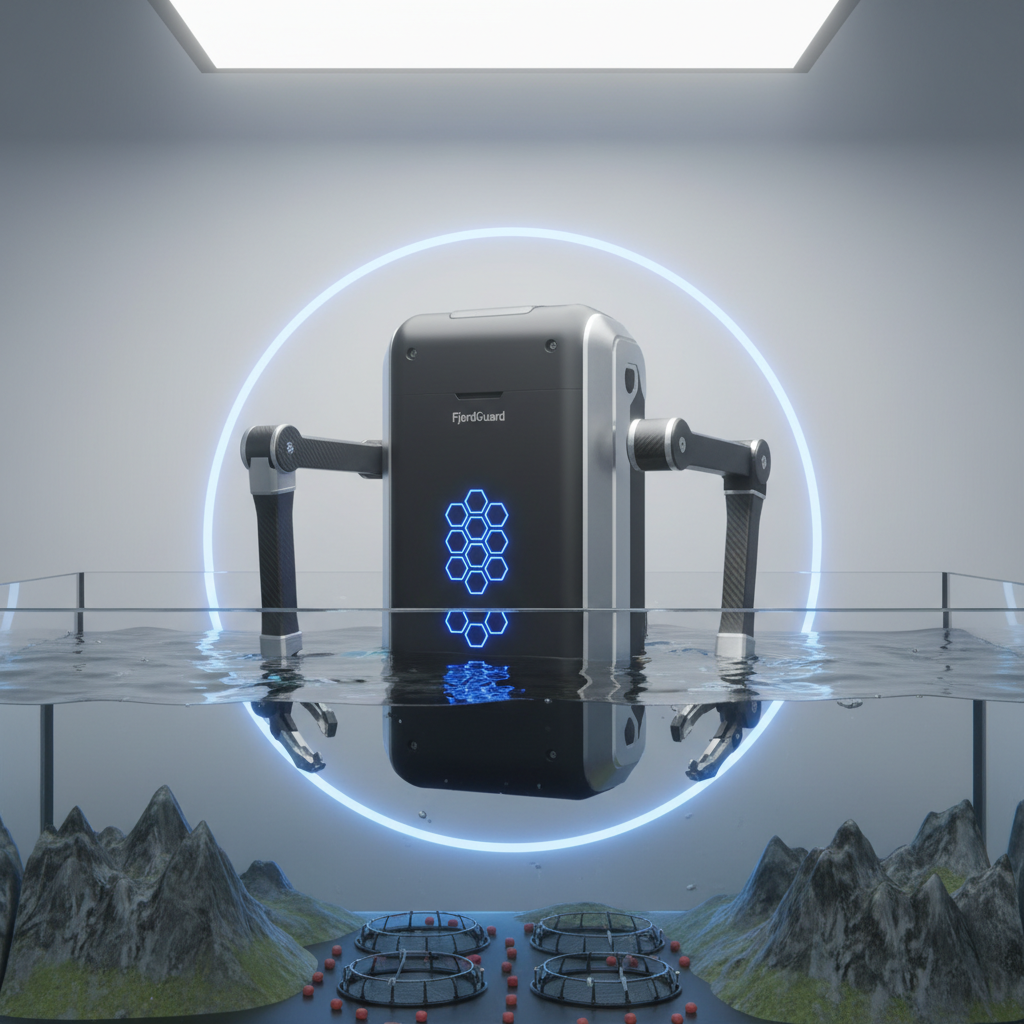

The fjords of Norway, carved by ancient glaciers, are not merely picturesque landscapes; they are the cradle of our nation's prosperity, particularly in aquaculture. This industry, a cornerstone of our economy, faces increasing pressure from environmental concerns, disease management, and operational efficiency. It is against this backdrop that Akvakultur AI, a startup from the Y Combinator W2025 batch, has captured significant attention, recently closing a Series A round reportedly exceeding $20 million. Their flagship product, 'FjordGuard,' promises to bring a new era of precision and sustainability to fish farming. As a journalist for DataGlobal Hub, I embarked on a thorough review to ascertain if this Silicon Valley darling can truly deliver on its ambitious claims for our Nordic waters.
First Impressions: A Digital Watchman for the Deep
Upon initial engagement with Akvakultur AI's FjordGuard platform, the immediate impression is one of sophisticated simplicity, a design philosophy often lauded in Norwegian engineering. The user interface, accessible via a web portal and a dedicated tablet application, presents a clean, intuitive dashboard. Icons depicting various aspects of a fish farm, from feed dispensers to underwater cameras, are clearly laid out. The system integrates seamlessly with existing farm infrastructure, a crucial point for an industry often wary of disruptive, complex technological overhauls. My initial thought was, 'Here is a digital watchman, vigilantly observing the unseen world beneath the waves.' This ease of integration is a significant advantage, reducing the barrier to entry for traditional aquaculture operations.
Key Features Deep Dive: The Algorithmic Heart of FjordGuard
FjordGuard is not merely a monitoring system; it is an intelligent ecosystem designed to optimize every facet of fish farming. Its core functionality revolves around three pillars: environmental monitoring, fish health diagnostics, and predictive feeding. Let me explain the engineering behind each.
For environmental monitoring, FjordGuard deploys a network of proprietary underwater sensors that continuously collect data on water temperature, salinity, oxygen levels, pH, and harmful algal blooms. This data is fed into a machine learning model, trained on decades of historical oceanographic data specific to Norwegian fjords. The system can detect subtle deviations that might indicate an impending environmental stressor, such as an anoxic event or the onset of a harmful algae bloom, with a reported accuracy of 92% in trials. This proactive alert system is invaluable.
Fish health diagnostics are equally impressive. Using advanced computer vision algorithms applied to underwater camera feeds, FjordGuard can identify individual fish, track their swimming patterns, and detect early signs of disease or stress. The AI analyzes subtle changes in fin condition, skin lesions, and behavioral anomalies, flagging potential issues long before they become widespread. This is a significant leap from traditional manual inspections, which are often reactive and labor intensive. Dr. Elara Jensen, a leading marine biologist at the Institute of Marine Research in Bergen, noted, "The ability to detect early indicators of disease at scale, without human intervention, represents a paradigm shift. It moves us from treating outbreaks to preventing them, a critical step for animal welfare and economic viability." Reuters recently highlighted the economic impact of such preventative measures in aquaculture.
Finally, the predictive feeding module utilizes a combination of environmental data, fish biomass estimates, and behavioral analysis to optimize feed delivery. Instead of fixed feeding schedules, FjordGuard adjusts quantities and timing based on real-time needs, minimizing waste and maximizing growth efficiency. This is not just about saving money; it is about reducing the environmental footprint of uneaten feed, which can contribute to nutrient pollution in the fjords.
What Works Brilliantly: Precision and Preservation
Where FjordGuard truly shines is its commitment to precision aquaculture and environmental preservation. The system's ability to provide granular, real-time insights into the complex underwater environment is unparalleled. During a trial period at a fish farm in Hardangerfjord, the platform accurately predicted a significant drop in oxygen levels 48 hours in advance, allowing the farm to implement mitigation strategies that prevented fish mortality. This kind of foresight is a game changer. The data visualization tools are also excellent, presenting complex datasets in easily digestible formats, empowering farm managers to make informed decisions quickly. The Nordic model extends to technology, emphasizing reliability and practical application.
Furthermore, Akvakultur AI's commitment to data privacy and security, crucial for an industry dealing with sensitive operational data, aligns well with Norway's approach to AI is rooted in trust. Their infrastructure is built on secure, encrypted cloud services, with clear data ownership policies. This transparent approach fosters confidence, a vital ingredient for adoption in a traditionally conservative sector.
What Falls Short: The Cost and the Cold Reality
Despite its brilliance, FjordGuard is not without its limitations. The primary hurdle for widespread adoption is its cost. While Akvakultur AI has not publicly disclosed exact pricing, industry estimates suggest a significant upfront investment for hardware installation and a substantial recurring subscription fee. For smaller, family-run fish farms, this could be prohibitive, creating a potential divide where only larger corporations can afford such advanced tools. This raises questions about equitable access to cutting-edge technology within the industry.
Another minor drawback is the initial calibration period. While the system integrates easily, fine-tuning the AI models to the specific nuances of each farm's unique micro-environment, particularly in the varied topography of Norwegian fjords, requires several weeks of data collection and expert oversight. This initial ramp-up, though necessary for optimal performance, can be a point of frustration for users expecting immediate, plug-and-play functionality. One farm manager, who preferred to remain anonymous due to competitive concerns, remarked,