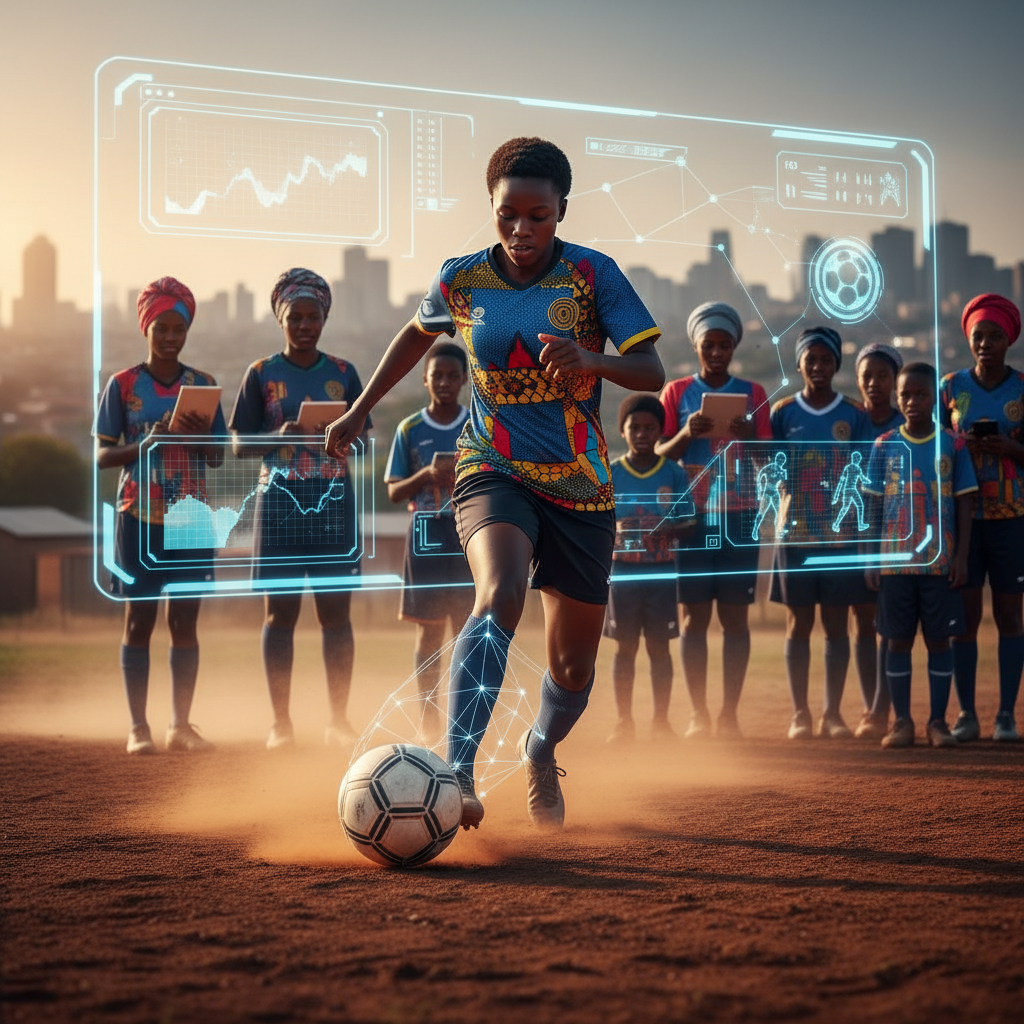

JOHANNESBURG – In a continent where sporting talent often struggles to translate into global recognition, artificial intelligence (AI) is emerging as a powerful equalizer, particularly for Black South African women athletes. From performance analytics to fan engagement, AI is not just changing the game; it's reshaping the narrative and creating new pathways for success.
The South African Sports Confederation and Olympic Committee (SASCOC) recently highlighted the transformative potential of AI in their 'Vision 2030' strategy. "We are seeing incredible strides," stated Dr. Naledi Mokoena, Head of Digital Innovation at SASCOC, during a recent press briefing in Pretoria. "AI-driven analytics are providing our coaches with granular data on athlete performance, injury prevention, and personalized training regimes. This is especially crucial for our women's teams, who historically have had fewer resources." Dr. Mokoena, a prominent voice in sports technology, emphasized how this data-driven approach is helping identify and nurture talent from grassroots levels, ensuring that potential is not overlooked due to geographical or socio-economic barriers.
One groundbreaking initiative is the 'Ubuntu AI Sports Development Programme,' launched by the Department of Sport, Arts and Culture in partnership with local tech firm, Mzansi Data Labs. This programme uses computer vision and machine learning to analyze game footage from community leagues across provinces like Limpopo and the Eastern Cape. "Before, a scout might only see a handful of games," explains Thandiwe Sibanda, a former Banyana Banyana player and now a lead analyst for the programme. "Now, AI can process thousands of hours of footage, flagging players with exceptional agility, tactical understanding, or endurance – qualities that might otherwise go unnoticed in less formal settings. This is about democratizing access to opportunity, especially for young Black women in rural areas who dream of playing for their country."
The impact extends beyond performance. AI is also enhancing fan engagement, creating new revenue streams, and boosting visibility for women's sports. Platforms like 'Kasi Sports Connect' are leveraging AI to personalize content delivery, offering fans tailored highlights, athlete interviews, and behind-the-scenes access. This targeted approach is proving vital in building dedicated fan bases for women's football, netball, and rugby, which traditionally receive less media attention than their male counterparts.
"The digital divide is still a reality, but AI is helping us bridge it," noted Professor Zola Nkosi, a leading AI ethicist at the University of Cape Town. "We must ensure these technologies are developed and deployed equitably, with a strong focus on data privacy and algorithmic fairness. The goal is empowerment, not exploitation. For Black South African women, who have often been marginalized in sports, AI offers a chance to redefine their place, to be seen, heard, and celebrated on their own terms."
As South Africa gears up for future international competitions, the strategic integration of AI is not merely an optional upgrade; it's a fundamental shift, promising to unlock a new era of sporting excellence and equitable opportunity for its most deserving athletes.