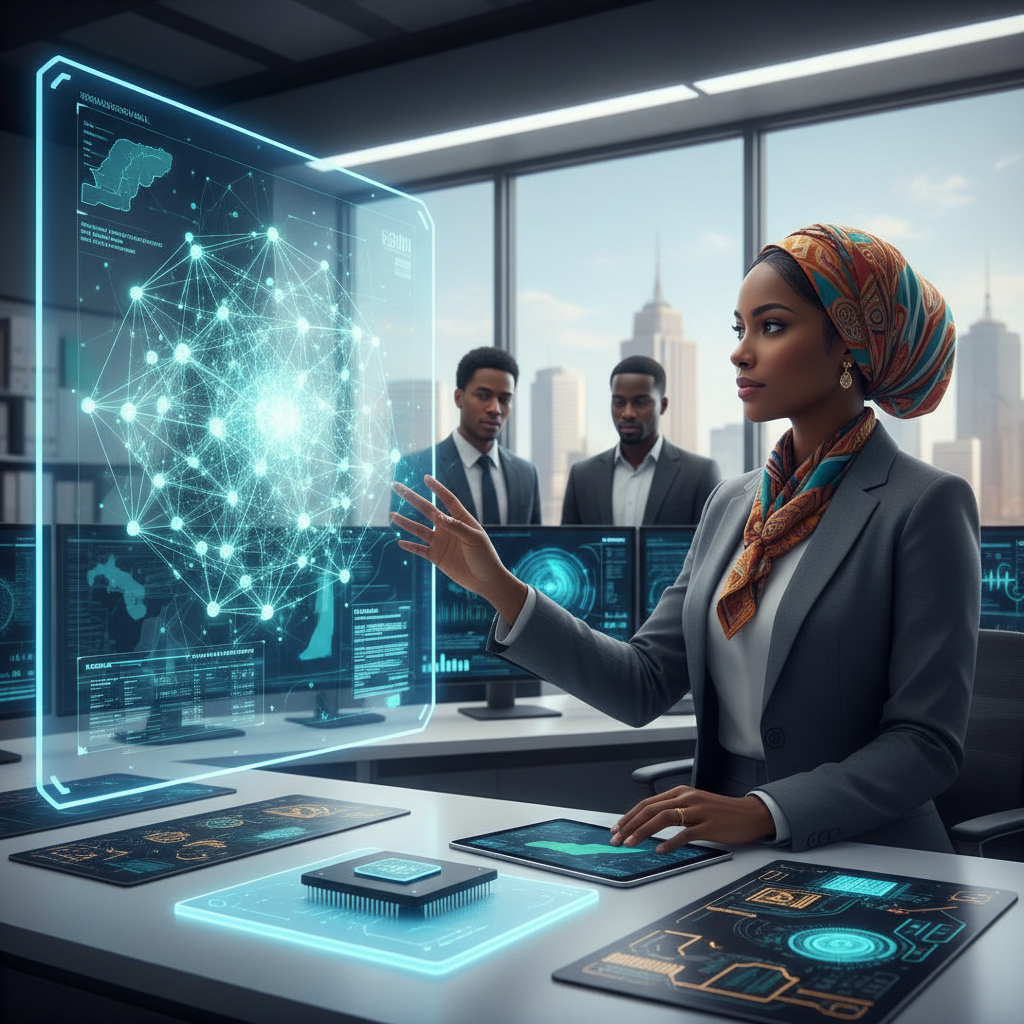

The air in the bustling call center of Airtel Nigeria's Lagos headquarters used to hum with a predictable rhythm. Operators, their voices a symphony of local dialects and English, navigated customer queries, their fingers flying across keyboards. That was before 'SmartConnect' arrived. Now, a different kind of hum fills the space, a quieter, more unsettling one. A large screen displays real-time network analytics, powered by Google's Gemini AI, predicting congestion before it happens, rerouting traffic with an invisible hand. The human operators, fewer in number now, mostly monitor the AI's decisions, their roles shifting from problem-solvers to overseers.
I was there last week, watching a young woman, Chinelo, her eyes glued to a dashboard, nodding as the system automatically resolved a service interruption in Ikoyi. She told me, 'It's faster, no doubt. Before, this would take an hour, now it's minutes. But sometimes, I feel like a ghost in the machine. My skills, my intuition, they are less needed.' Chinelo's sentiment, I believe, echoes across boardrooms and call centers throughout Nigeria, as telecommunication giants embrace AI with the fervor of a new convert.
Let's talk about what nobody wants to discuss: the true cost of this digital transformation. The narrative pushed by companies like MTN, Glo, and Airtel is one of unparalleled efficiency, seamless connectivity, and a leap into the 5G and 6G future. They trumpet statistics, like Airtel Nigeria's recent announcement that their AI-driven network optimization has reduced latency by 15% and increased network availability by 8% in urban centers. MTN Nigeria boasts a 20% reduction in customer service resolution times since implementing their AI chatbot, 'Miya,' powered by a custom large language model built on Microsoft Azure. These numbers are impressive, no doubt, but they tell only half the story.
According to a recent report by the Nigerian Communications Commission, AI adoption in the telecom sector has surged by 45% in the last two years alone. This rapid embrace is driven by the promise of massive returns on investment, with projections suggesting a 30% increase in operational efficiency within five years for early adopters. But who truly benefits from this efficiency? Is it the average Nigerian subscriber, who still grapples with inconsistent service in rural areas, or the multinational corporations and their shareholders?
Unpopular opinion: while the big players are parading their AI prowess, the real impact on the ground is far more nuanced, and frankly, more concerning. Consider the case of Globacom, a Nigerian-owned telecom giant. They have been slower to adopt the full suite of AI tools, focusing instead on a hybrid approach that integrates AI for predictive maintenance while retaining a larger human workforce for customer interaction. Their CEO, Dr. Ifeanyi Okoro, a man known for his pragmatic approach, told me, 'We cannot sacrifice the human touch for the sake of pure automation. Our customers in places like Kano and Port Harcourt value speaking to a person, someone who understands their local context, not just an algorithm. We use AI to empower our staff, not replace them.' This strategy, while perhaps less 'cutting-edge' on paper, has resulted in a 10% higher customer satisfaction rate compared to competitors, according to independent surveys.
On the other hand, companies like Airtel and MTN, with their aggressive AI deployment, are seeing a different kind of organizational change. Employee reactions range from cautious optimism to outright fear. A recent internal survey at MTN Nigeria revealed that 60% of customer service representatives expressed anxiety about job security due to AI automation, despite company assurances of reskilling programs. These programs, while well-intentioned, often fall short of providing a clear path for displaced workers, especially those in lower-skilled roles. The digital divide within the workforce is widening, creating a new class of 'AI-enabled' employees and those left behind.
Dr. Ngozi Adebayo, a Senior Economist at the University of Lagos, offered a critical perspective. 'This isn't just about efficiency, it's about power dynamics. When Google's Gemini or Microsoft's Copilot become the brains of our telecom infrastructure, what happens to our digital sovereignty? We're importing solutions, not necessarily building our own. This creates a dependency that could be exploited.' She raises a crucial point: are we merely becoming consumers of foreign AI, or are we fostering local innovation that truly serves our unique needs?
And what of 5G and 6G planning? The promise is transformative: smart cities, IoT, hyper-connectivity. AI is indispensable for managing the complexity of these next-generation networks. Companies are using AI to identify optimal tower locations, predict traffic patterns, and dynamically allocate bandwidth. For instance, a partnership between Huawei and a major Nigerian telco is leveraging AI to plan their 5G rollout, promising unprecedented speeds in urban centers. But again, I ask, at what cost? Who owns the data generated by these smart cities? Who controls the algorithms that will dictate our urban lives?
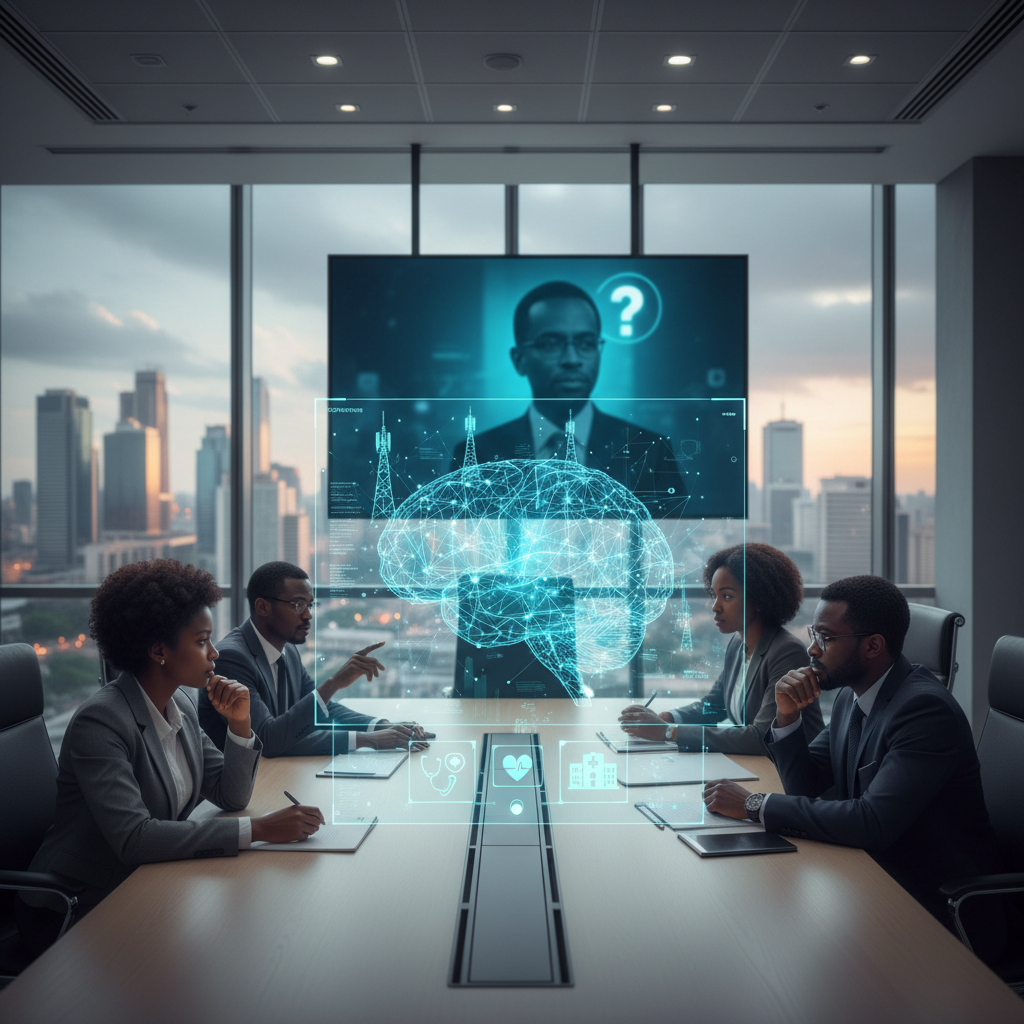
The conversation around AI in telecommunications needs to move beyond mere celebration of technological advancement. We must ask tougher questions. Are we building systems that are truly resilient and equitable, or are we simply replicating existing biases and power imbalances at a faster, more efficient pace? The rush to automate customer service, for example, often overlooks the cultural nuances of communication in a diverse nation like Nigeria. A chatbot, no matter how sophisticated, might struggle with the subtle inflections of a Yoruba speaker or the specific needs of a customer in a remote village with limited literacy.
Everyone's celebrating, but I have questions about the long-term implications for our workforce and our data. Are we creating a future where our networks are optimized to perfection, but our people are left feeling disconnected and undervalued? The promise of AI is immense, but its implementation in Africa must be guided by a deep understanding of our local context, our cultural values, and a commitment to inclusive growth, not just corporate bottom lines. The digital future of Nigeria, and indeed Africa, depends on it. For more on the broader implications of AI, you might find this article on AI ethics and bias insightful. We need to ensure our local voices are heard and our data protected, a concept often discussed in depth by MIT Technology Review. The path forward demands vigilance and a willingness to challenge the prevailing narrative, even when it is uncomfortable. The future of our telecommunications infrastructure should be built for all Nigerians, not just the algorithms.