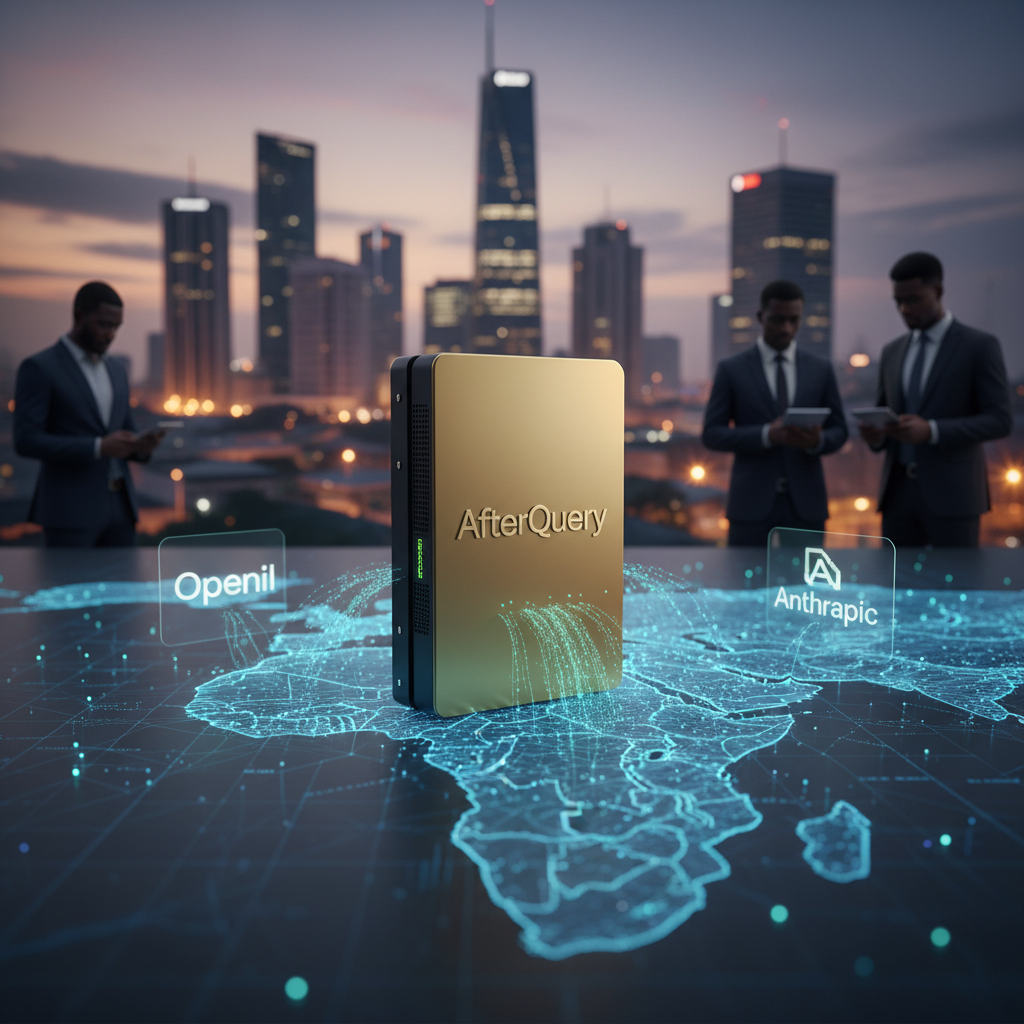
The news hit the tech wires like a Lagos street hawker's cry on a busy afternoon: AfterQuery, founded by two 23-year-olds, has reportedly raked in over $100 million in revenue, primarily from selling AI training data to behemoths like Anthropic and OpenAI. A hundred million dollars. From data. For many, this is a heartwarming tale of youthful ingenuity, a testament to the boundless opportunities in the AI gold rush. Everyone's celebrating, but I have questions, especially from my vantage point here in Nigeria.
Let's be clear: I am not diminishing the achievement of these young founders. To build a company that quickly scales to nine figures in revenue is nothing short of phenomenal. It speaks to a deep understanding of a critical market need: high-quality, diverse data to feed the insatiable appetites of large language models. These models, the GPTs and Claudes of the world, are only as good as the data they are trained on. And that data, increasingly, is sourced from every corner of the globe, often through networks of human annotators and labelers.
This is where my Nigerian skepticism kicks in. When I hear about massive revenues being generated from data, particularly data that often originates from or is processed by people in developing economies, I immediately think of the historical parallels. We have seen this script before, haven't we? Raw materials extracted, processed elsewhere, and then sold back to us as finished goods at a premium. Is AI training data the new crude oil, and are we, in Africa, merely the wellheads?
Unpopular opinion perhaps, but the narrative often glosses over the fundamental power dynamics at play. The companies like AfterQuery, and by extension their clients like OpenAI and Anthropic, are building trillion-dollar industries on the back of vast datasets. Who collects this data? Who labels it? Often, it is a global workforce, frequently in countries where labor costs are lower. These workers are essential, yet their contribution is often commoditized, their faces hidden behind the gleaming facade of AI innovation.
Consider the sheer volume of data required. Training a model like OpenAI's GPT-4 reportedly involved trillions of tokens, a unit of text. Much of this data comes from the internet, but a significant portion, especially for fine-tuning and safety alignment, requires human annotation. This is where companies like AfterQuery step in, organizing vast armies of human annotators to categorize, label, and refine data. These tasks, while seemingly mundane, are crucial for making AI models less biased, more accurate, and safer. Yet, the economic benefits rarely flow equitably to the source of the human intelligence.
Dr. Moustapha Cissé, head of Google AI's research center in Accra, Ghana, has often spoken about the need for Africa to be more than just a consumer or a data source. He stated in a recent interview,