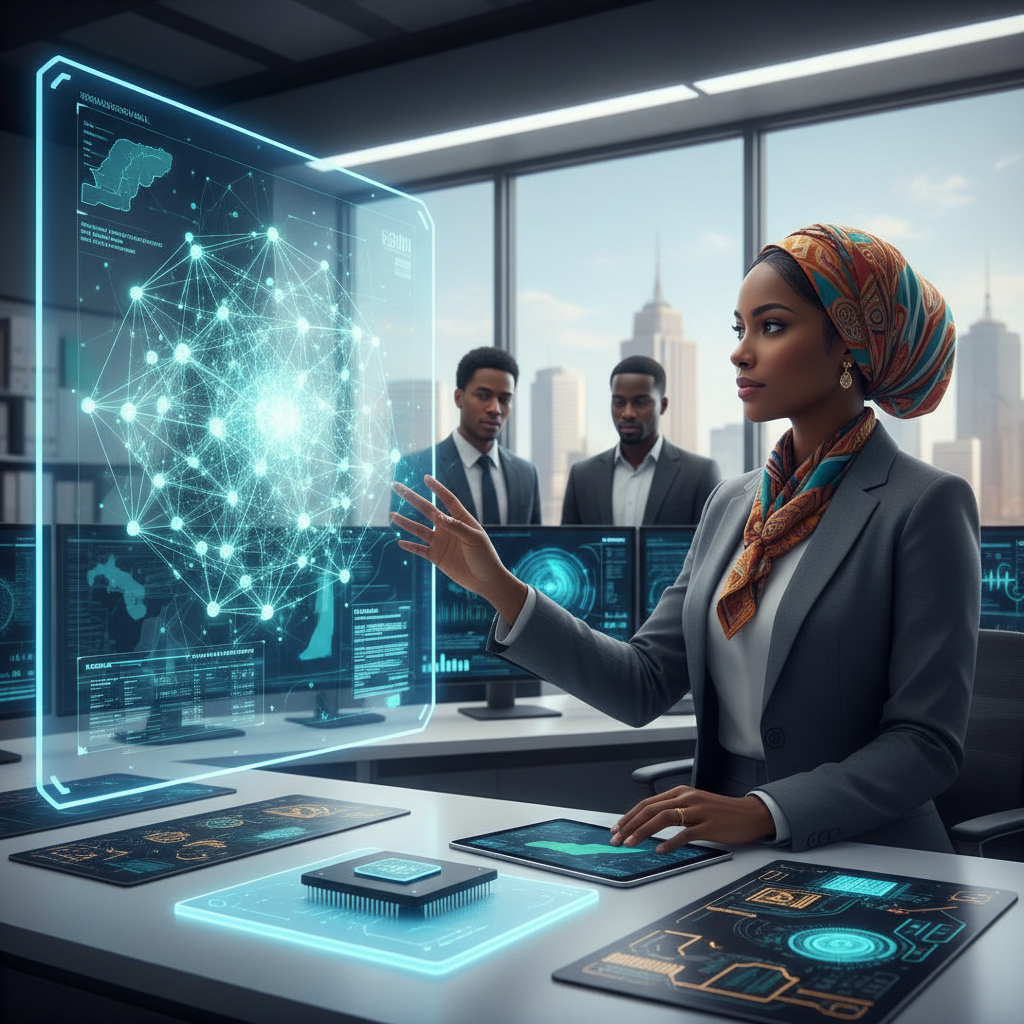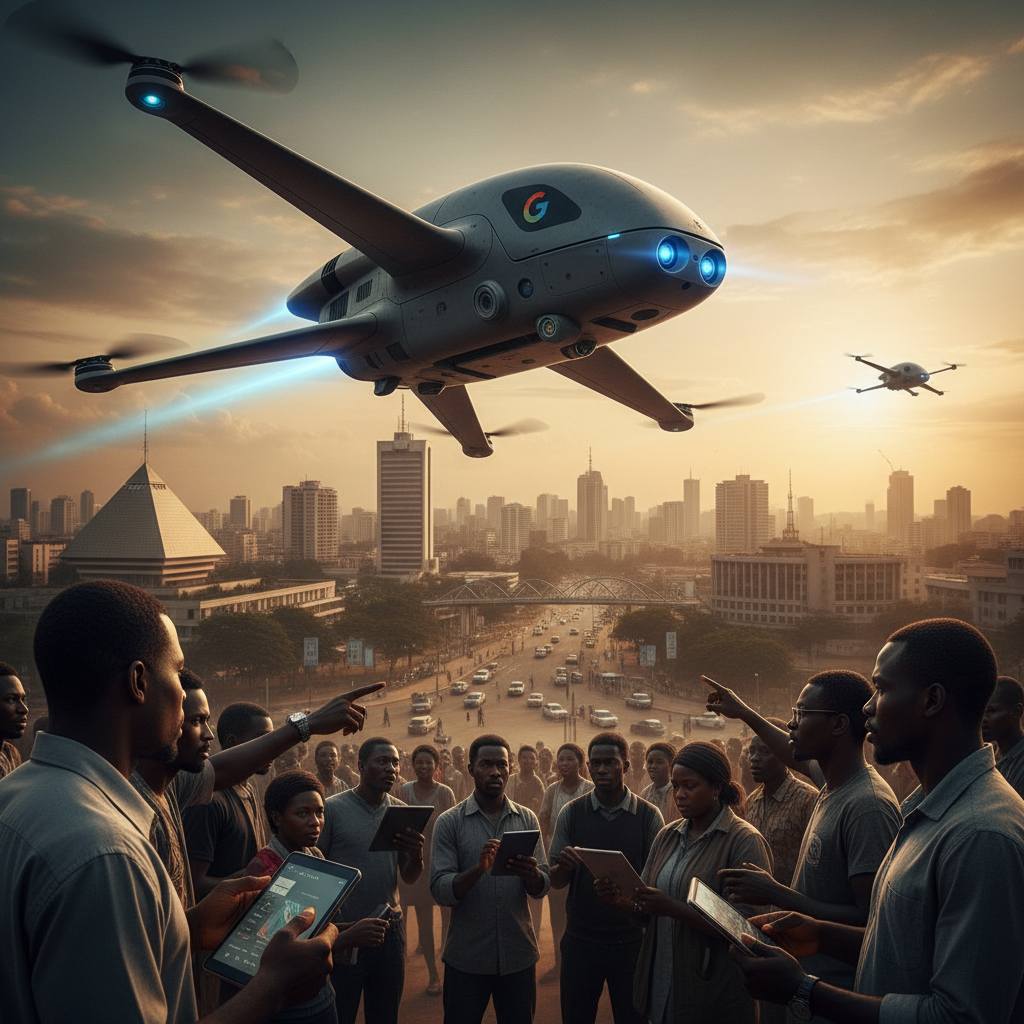
The morning sun, usually a comforting presence over the bustling markets of Treichville, felt different today. A chill, not of weather but of apprehension, settled over Abidjan as news broke of a landmark agreement between the Ivorian government and Google DeepMind. This isn't about new search algorithms or smarter phones, no. This is about the skies above us, about defense, and about the very definition of human control in conflict. We are talking about AI-powered drone defense systems, a development that promises to reshape our security landscape, but at what human cost?
Picture this: a fleet of autonomous drones, guided by Google's cutting-edge AI, patrolling our borders, identifying threats, and, potentially, neutralizing them with minimal human intervention. This is the future that President Alassane Ouattara's administration is embracing, a future unveiled just hours ago in a press conference that left many of us, including myself, grappling with profound questions. The details are still emerging, but what we know is that the 'Project Guardian Skies' initiative aims to deploy an advanced AI system, developed by Google DeepMind, to enhance Côte d'Ivoire's aerial surveillance and defense capabilities against cross-border incursions and illicit activities. The initial phase, reportedly costing upwards of 75 billion CFA francs, will focus on surveillance and threat identification, with a projected 60% reduction in response times for identified threats.
This isn't just a technological upgrade; it's a paradigm shift. For a nation like Côte d'Ivoire, which has known its share of instability, the allure of an impenetrable, algorithm-driven shield is understandable. Yet, the implications stretch far beyond our immediate security concerns, touching upon ethics, sovereignty, and the very soul of our humanity.
Official reactions have been, predictably, mixed. Speaking from the Presidential Palace, Madame Henriette Konan Bédié, the Minister of Defense, emphasized the urgent need for innovation. "Our nation deserves the most advanced protection available," she declared, her voice firm. "This partnership with Google DeepMind allows us to leapfrog decades of conventional defense limitations, safeguarding our people and our prosperity. We are not just adopting technology; we are securing our future against evolving threats that respect no borders, no traditions." She highlighted that the system, in its current iteration, will operate under strict human oversight, with final authorization for any defensive action remaining firmly in human hands. However, the roadmap for future autonomy remains a whispered concern among many.
But not everyone shares this optimism. Dr. Amara Diallo, a prominent Ivorian ethicist and professor at Félix Houphouët-Boigny University, voiced his deep reservations. "While the promise of enhanced security is tempting, we must ask ourselves: at what point does human judgment cede to algorithmic efficiency?" he pondered, his brow furrowed with concern. "The idea of autonomous weapons systems, even in a defensive capacity, raises a chilling question: can a machine truly understand the nuances of conflict, the value of a human life, or the unintended consequences of its actions? This is the story they don't want you to hear, the story of potential dehumanization of warfare." He stressed the importance of robust ethical frameworks and international dialogue, particularly for African nations, to avoid becoming testing grounds for technologies whose long-term impacts are still largely unknown. MIT Technology Review has extensively covered the global debate on autonomous weapons, and Côte d'Ivoire now finds itself at the heart of it.
Internationally, the announcement has sent ripples. Human rights organizations are already calling for greater transparency and a moratorium on the development of fully autonomous weapons. "The line between defensive and offensive capabilities, especially with AI, can blur rapidly," stated Ms. Lena Karlsson, a spokesperson for Amnesty International, in an online briefing. "We urge the Ivorian government to engage with civil society and international bodies to establish clear red lines and ensure accountability remains with human actors, not algorithms." The concern is that what starts as a defensive shield could, with a few lines of code, become something far more aggressive.
My mind keeps returning to the people, the ordinary citizens whose lives these decisions will ultimately touch. I spoke with Adjoa Kouamé, a market vendor in Cocody, her hands busy arranging vibrant fabrics. She told me something I'll never forget. "We want peace, Aïssatà, we want to feel safe," she said, her eyes earnest. "But if our safety comes from machines that decide who lives and who dies, what kind of peace is that? Will they understand our songs, our prayers, our children's laughter?" Her words, simple yet profound, cut through the technical jargon and political rhetoric, reminding us of the human heart of this debate.
What happens next? The government assures us that 'Project Guardian Skies' will be implemented in phases, with extensive training for Ivorian defense personnel and a commitment to international ethical guidelines. Google DeepMind, through a brief statement, reiterated its dedication to "responsible AI development" and its belief that "AI can be a force for good in global security." However, the devil, as they say, is in the details, and those details are still largely opaque to the public. There's a pressing need for public education and engagement, for a national conversation that involves not just experts and officials, but also the market vendors, the teachers, the elders, and the youth who will inherit this new reality. The global conversation on AI ethics in defense is intensifying, as seen in reports from Reuters Technology.
This development places Côte d'Ivoire at the forefront of a global ethical dilemma. While the promise of enhanced security is undeniably attractive, particularly in a region grappling with complex security challenges, the implications of entrusting critical defense decisions to AI are monumental. We must scrutinize every step, demand transparency, and ensure that the pursuit of technological advancement does not come at the expense of our fundamental values and human agency. The question is not just whether AI can protect us, but how it will change us, and whether we are ready for that transformation. This is a moment for deep reflection, for courageous conversations, and for ensuring that the people of Côte d'Ivoire remain at the center of their own destiny, even as algorithms begin to patrol their skies. For more on the broader implications of AI in defense, you can explore articles on Wired's AI section.
This breaking news story will undoubtedly continue to unfold, and DataGlobal Hub will be here, following every twist and turn, always with an eye on the human stories behind the headlines.