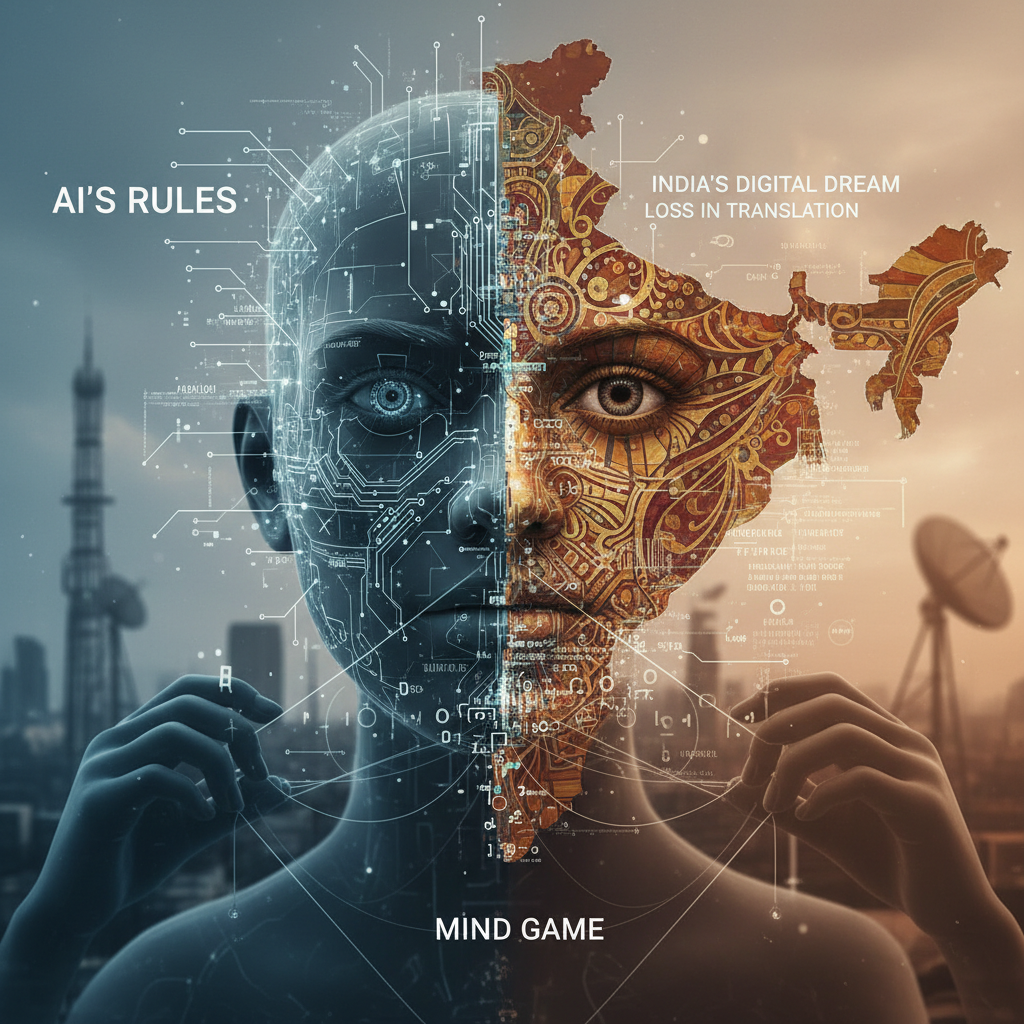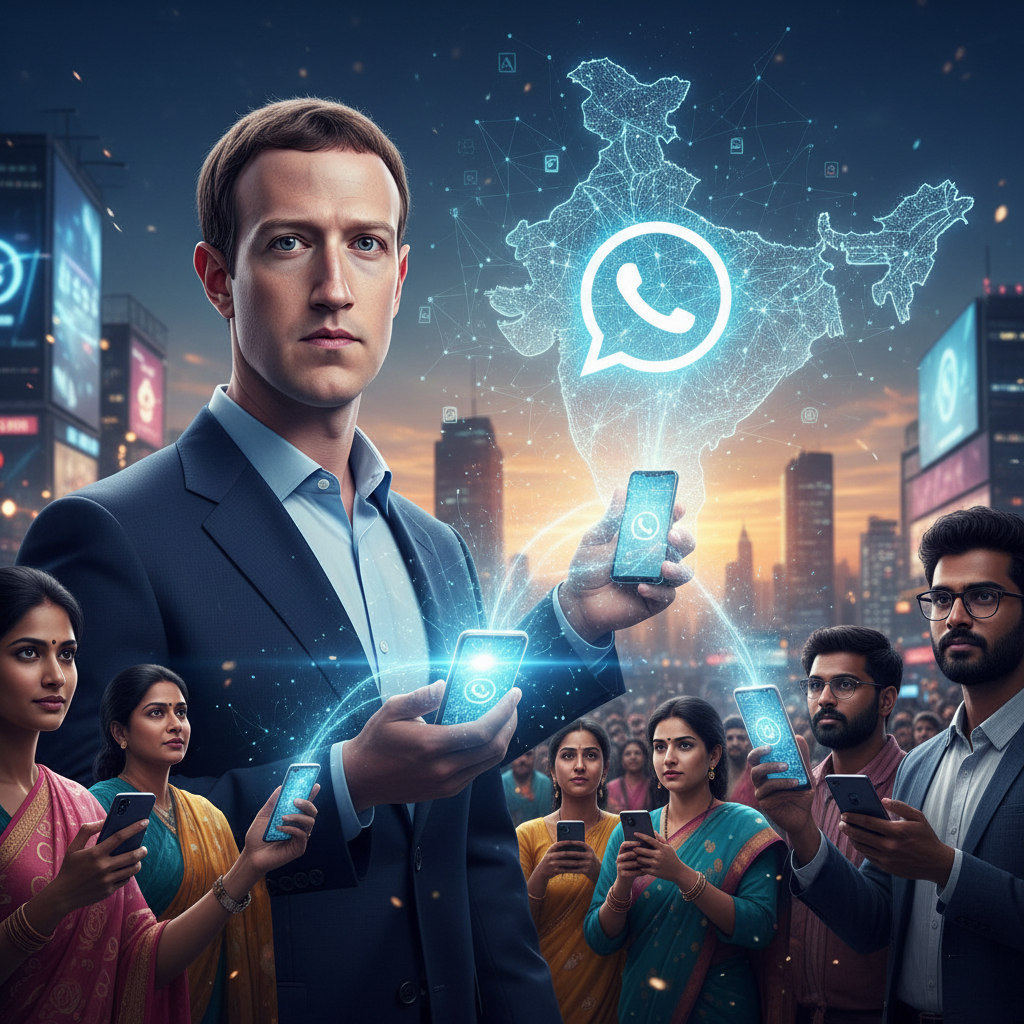

The digital landscape in India, already a vibrant, chaotic, and utterly essential part of daily life, just got a jolt from Menlo Park that will reverberate for decades. Mark Zuckerberg, a man who clearly thinks in terms of global scale, has unleashed a new wave of AI capabilities directly into WhatsApp and Instagram, platforms that are practically breathing organs for over half a billion Indians. This is not just an upgrade; it is a fundamental re-architecture of how we interact, how we consume information, and frankly, how we think. Forget Silicon Valley, look at Hyderabad, look at Bengaluru, because the real impact, the true revolution, is happening right here, right now.
For years, we have seen snippets, whispers of AI integration. But what Meta just pushed out is a full-frontal assault on the old ways. Imagine this: your WhatsApp chats, your Instagram DMs, now powered by an AI that can summarize lengthy group discussions, draft replies in your style, generate images from text descriptions, and even act as a real-time language translator. It is like having a digital personal assistant embedded directly into your most intimate communication channels. For a country like India, where WhatsApp is not just a messaging app but often the primary mode of business, education, and even governance, the implications are staggering.
Let us break down what just happened. Meta has integrated its latest generation of Llama powered AI models directly into the user experience. On Instagram, the AI can now generate entire image captions, suggest trending hashtags, and even create short video scripts based on your content. Think about the small business owner in Jaipur trying to reach a wider audience, or the young artist in Mumbai showcasing their work. This AI levels the playing field, offering sophisticated marketing tools to anyone with a smartphone. On WhatsApp, the changes are even more profound. The AI assistant can now field customer service queries for businesses, provide instant summaries of long voice notes, and even help users draft complex messages in multiple Indian languages. It is a game changer for digital literacy and accessibility, bridging gaps that have persisted for years.
Reactions, as you can imagine, have been swift and varied. From government corridors to tech startups, everyone is scrambling to understand the full scope. "This is a pivotal moment for digital inclusion in India," stated Dr. K. VijayRaghavan, former Principal Scientific Adviser to the Government of India, in a recent interview. "While we must carefully consider data privacy and ethical implications, the potential for empowering millions who are not fluent in English or struggle with digital tools is immense. It could accelerate our digital economy in ways we have only dreamed of." His words echo a cautious optimism that many share.
However, not everyone is celebrating. Privacy advocates are raising red flags, and rightly so. The sheer volume of personal data that Meta will now be processing through these AI models is unprecedented. "We are handing over the keys to our most personal conversations to an algorithm," warned Apar Gupta, Executive Director of the Internet Freedom Foundation, speaking from Delhi. "The transparency around how this data is used, how it is secured, and what safeguards are in place against misuse is absolutely critical. We cannot afford to trade convenience for fundamental rights." This concern is not to be dismissed lightly. The digital trust deficit is real, and Meta has a long history of navigating these choppy waters.
Experts in the AI field are looking at the technical prowess behind this rollout. "Meta's Llama models have been advancing at an incredible pace," noted Dr. Rohini Sridharan, a leading AI researcher at the Indian Institute of Science, Bangalore. "The ability to run these complex models efficiently on mobile devices, and to integrate them so seamlessly into existing applications, speaks volumes about their engineering capabilities. This is not just about raw compute power; it is about intelligent design and optimization for real-world usage at scale." Indeed, the seamlessness of the integration is what makes it so powerful, and perhaps, so unsettling for some.
What happens next? Well, for starters, expect a massive acceleration in AI adoption across India. Small businesses, content creators, educators, and even everyday users will begin to leverage these tools in ways we cannot fully predict. The demand for AI literacy will skyrocket. Companies will need to adapt their strategies, understanding that their customers now have an AI assistant in their pocket, ready to summarize, translate, and even generate content on their behalf. This is not just about Meta; it is about the entire digital ecosystem shifting. Competitors will be forced to respond, leading to an AI arms race that will benefit consumers, but also demand greater scrutiny from regulators.
We will also see new ethical dilemmas emerge. How do we ensure these AIs do not perpetuate biases present in their training data? What happens when an AI assistant starts influencing opinions or making decisions based on incomplete information? These are not theoretical questions; they are immediate challenges that will require robust policy frameworks and continuous public discourse. India, with its diverse languages, cultures, and social dynamics, will be a crucial testing ground for these global AI deployments.
This is the inflection point. India will own the next decade of AI, not just as consumers, but as innovators who will adapt, refine, and perhaps even redefine these technologies for a truly global audience. The sheer scale of adoption here ensures that any AI feature Meta rolls out will be tested, pushed to its limits, and ultimately shaped by the unique demands of the Indian user base. Our digital future just got rewritten, and the pen is now, more than ever, in the hands of algorithms. It is up to us, as citizens, as policymakers, and as technologists, to ensure that this story has a happy ending for all.
For more on how AI is shaping global communication, you can visit The Verge or TechCrunch. The conversation around AI ethics and its societal impact is also gaining traction, with valuable insights often found on MIT Technology Review.