The world of technology, for all its digital marvels, still relies on very physical things: rare earth minerals, silicon wafers, and the intricate dance of manufacturing. For years, we took this global supply chain for granted, a seamless flow of components from one corner of the planet to another. Then, the trade winds shifted. Geopolitical tensions, trade disputes, and even a global pandemic exposed the fragility of this interconnected system, forcing nations, big and small, to rethink how they get their hands on essential tech. Here in Costa Rica, a small country known more for its rainforests than its microchips, this global reordering presents both a challenge and a unique opportunity.
We are not Silicon Valley, nor do we pretend to be. Our approach is different, rooted in our values of sustainability and practical innovation. But when you talk about global economic shifts and trade wars reshaping the technology supply chain, especially concerning high-tech components like semiconductors, Costa Rica suddenly finds itself in a fascinating position. We have a long history with Intel, for example, a relationship that has evolved over decades. Understanding how a nation like ours can navigate this new landscape, and even thrive, requires a closer look at the mechanisms at play.
The Big Picture: A World of Fragmented Production
At its core, the global technology supply chain is a massive, distributed manufacturing network. Think of it like a giant, invisible river system, where raw materials flow from mines, get processed into components in one country, assembled into sub-systems in another, and finally become a finished product somewhere else entirely. For decades, efficiency and cost reduction were the primary drivers, leading to highly specialized production hubs. Taiwan, for instance, became the undisputed leader in advanced semiconductor manufacturing, with companies like Tsmc producing over 90 percent of the world's most advanced chips. China became the assembly powerhouse. This hyper-specialization made the system incredibly efficient, but also incredibly vulnerable.
When trade disputes began, particularly between the United States and China, and then the pandemic hit, this vulnerability became painfully obvious. Factories shut down, shipping lanes jammed, and suddenly, everyone realized how dependent they were on a few key players. Nations started prioritizing 'resilience' and 'security' over pure 'efficiency.' This means bringing critical manufacturing closer to home, diversifying suppliers, and investing in domestic capabilities. It is a fundamental re-architecting of how the world builds its technology, and it is happening right now.
The Building Blocks: What Makes a Tech Supply Chain Tick?
To understand the shifts, we need to break down the key components of this complex system. Imagine a typical smartphone or a server chip. It is not just one thing, but thousands of parts, each with its own journey.
- Raw Materials: This is where it all begins. Think silicon, rare earth elements, copper, gold, and various chemicals. These are mined and processed, often in specific regions like China, Australia, or South America.
- Component Manufacturing: These are the specialized factories that turn raw materials into usable parts. For semiconductors, this involves highly complex fabrication plants, known as 'fabs,' where silicon wafers are etched with billions of transistors. This is where companies like Tsmc, Samsung, and Intel operate.
- Assembly, Test, and Packaging (ATP): Once chips are fabricated, they need to be cut, packaged into their final forms, and rigorously tested. This is a labor-intensive but critical step. This is where Costa Rica has historically played a significant role with Intel.
- Sub-assembly and Integration: These components then go into larger modules, like circuit boards, memory sticks, or display panels, often manufactured by different companies.
- Final Product Assembly: All these sub-assemblies come together to create the finished product, whether it is a laptop, a car, or a server rack. This is often done in large-scale factories, predominantly in Asia.
- Logistics and Distribution: The entire process is underpinned by a global network of shipping, trucking, and air freight, moving components and finished goods around the world.
Step by Step: How a Chip Moves Through the New Landscape
Let us trace the journey of a hypothetical AI accelerator chip, from concept to deployment, through this reshaped supply chain, focusing on how countries like Costa Rica fit in.
Step 1: Design and Intellectual Property (IP): A company, perhaps NVIDIA or Google, designs a new AI chip. This is a highly intellectual process, often done in the United States or Europe. The blueprints are digital.
Step 2: Frontend Manufacturing (Fabrication): The digital design is sent to a specialized foundry, likely in Taiwan or perhaps increasingly in the US or Europe, where it is 'printed' onto silicon wafers. This step requires immense capital investment and highly skilled engineers. This is the most sensitive part of the chain, where geopolitical risks are highest.
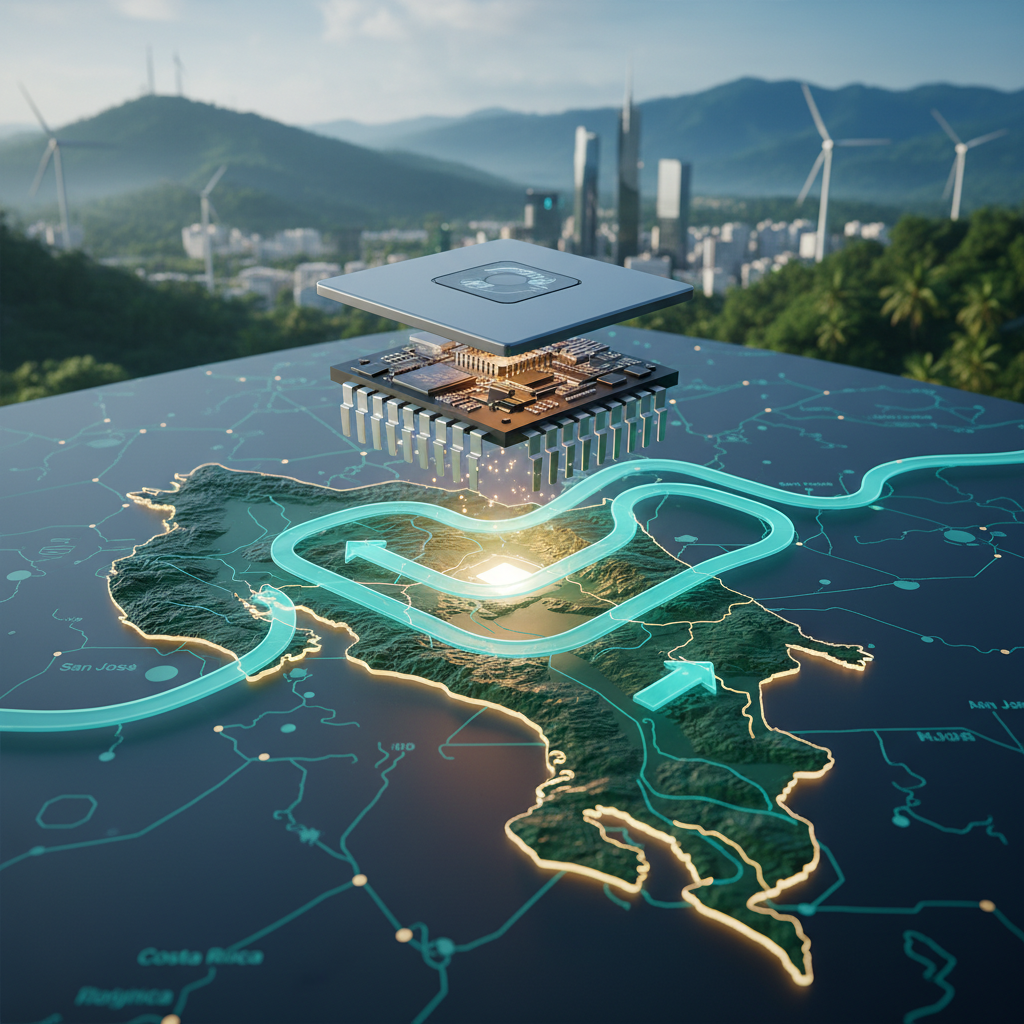
Step 3: Backend Manufacturing (Assembly, Test, and Packaging): Once the wafers are fabricated, they are shipped to ATP facilities. This is where Costa Rica comes into play. Intel's significant investment in its Costa Rican operations, particularly in assembly and test, positions our nation as a crucial node in this process. Instead of all chips going to one region for this step, companies are diversifying. "The resilience of our supply chain is paramount," stated Pat Gelsinger, Intel's CEO, in a recent interview, emphasizing the need for geographic diversification in manufacturing. Our skilled workforce and stable environment make us an attractive option for this critical phase.
Step 4: Integration into Systems: The packaged chips are then shipped to other facilities, perhaps in Mexico or Vietnam, where they are integrated onto circuit boards with other components like memory and power management units.
Step 5: Final Product Assembly and Distribution: These boards then go into the final product, say a server for a data center, assembled in a factory in Southeast Asia or perhaps a new facility in Arizona. Finally, these servers are shipped to customers globally. The entire process is now less concentrated, more spread out, and ideally, more robust.
A Worked Example: Costa Rica's Role in Intel's Strategy
Consider Intel's expansion in Costa Rica. For years, Intel had a significant manufacturing presence here, then scaled it back, and now they are investing heavily again. In 2020, Intel announced a $350 million investment to expand its assembly and test operations in Costa Rica, followed by further investments. This was not just a random decision, it was a strategic move driven by the global shifts we are discussing. "Costa Rica offers a stable environment, a highly educated workforce, and a strategic location," noted Carlos Alvarado Quesada, former President of Costa Rica, during the initial announcement, highlighting the nation's appeal. This demonstrates that Costa Rica proves you don't need Silicon Valley to be a vital part of the global tech ecosystem.
Our role is not in the bleeding-edge fabrication of chips, which is astronomically expensive and requires a different scale of infrastructure. Instead, it is in the crucial backend processes: taking those delicate wafers, cutting them, packaging them into their protective casings, and rigorously testing them to ensure they meet performance specifications. This is a sophisticated process requiring precision engineering and a highly skilled workforce, exactly what Costa Rica offers. It is a testament to the pura vida approach to AI and tech, focusing on what we do best and integrating it into the global whole.
Why It Sometimes Fails: Limitations and Edge Cases
Even with diversification, the system is not foolproof. Several factors can still cause disruptions:
- Natural Disasters: A major earthquake in Taiwan, for example, could still cripple advanced chip fabrication, regardless of where the ATP happens.
- Geopolitical Escalation: A full-blown trade war or military conflict could still lead to export bans or blockades, impacting even diversified supply chains.
- Resource Scarcity: Access to rare earth minerals, which are often concentrated in a few countries, remains a choke point.
- Skilled Labor Shortages: The highly specialized nature of semiconductor manufacturing means a shortage of engineers or technicians in any key region can slow down production.
- Cyberattacks: The increasing digitization of supply chain management makes it vulnerable to sophisticated cyberattacks that could disrupt operations or steal intellectual property.
Where This Is Heading: More Regionalization, More Automation
The trend is clear: more regionalization and more automation. Nations and blocs, like the European Union with its 'Chips Act' or the United States with its 'chips and Science Act,' are pouring billions into domestic semiconductor manufacturing. This means we will see more fabs in places like Arizona, Germany, and Japan, reducing reliance on a single geographic area.
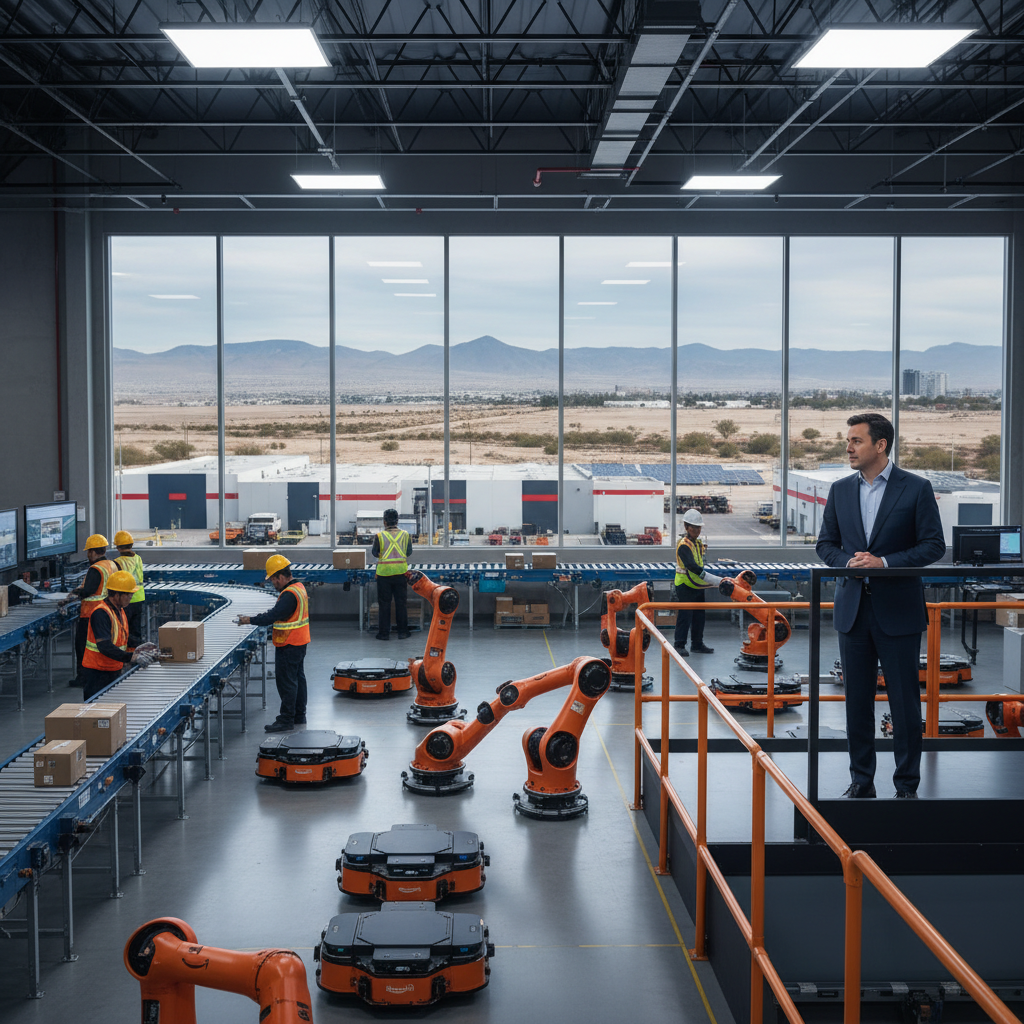
Automation, driven by AI and robotics, will also play a larger role, particularly in the labor-intensive ATP stages. This could make manufacturing less dependent on large pools of cheap labor and more on skilled technicians managing automated systems. For Costa Rica, this means continued investment in education and training to ensure our workforce remains competitive and adaptable. Our universities and technical institutes are already focusing on advanced manufacturing skills, preparing the next generation for these evolving roles. This is practical innovation in paradise, ensuring our place in the future of tech. The goal is not just to survive these shifts, but to leverage them for sustainable economic growth and technological advancement, proving that even a small nation can play a big part in shaping the future of global tech. We are not just building chips, we are building resilience. For more on the broader implications of these shifts, you can read analyses on MIT Technology Review or follow industry news on TechCrunch.