Right, so you think you know AI, eh? You've seen the chatbots, you've heard the deepfakes, and maybe you've even had a slightly unsettling conversation with a digital assistant that sounds suspiciously like your ex. But let me tell you, what's coming with multimodal AI, the kind that sees, hears, and understands the world like we do, is going to make all that look like a didgeridoo in a symphony orchestra. And Down Under, we're not just going to be playing along; we're going to be composing a whole new tune.
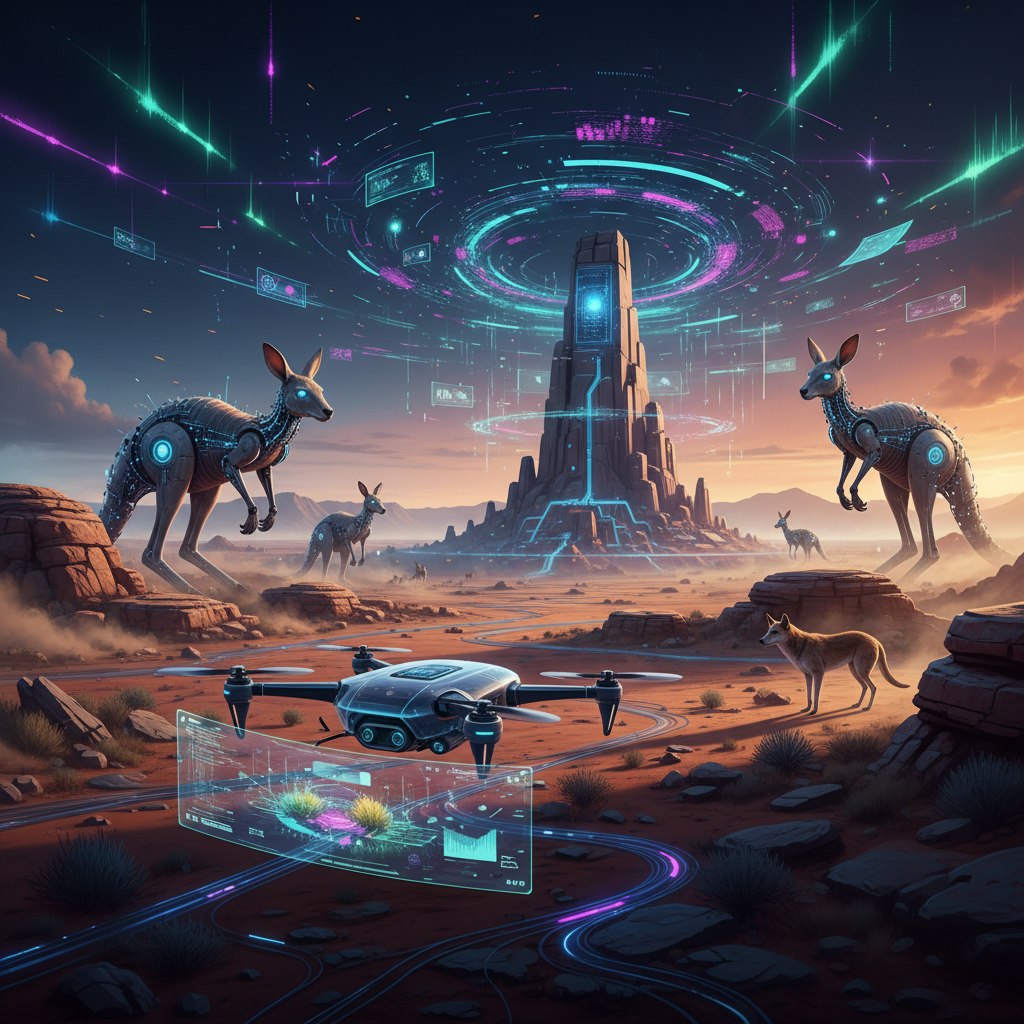
Imagine this: it's 2030. You're sitting on your verandah, the kookaburras are laughing, and your smart home, powered by a multimodal AI, just alerted you to a subtle change in the wind direction. Not just wind, mind you, but the sound of it, combined with satellite imagery showing an unusual heat signature 50 kilometres away, and the smell detected by a network of environmental sensors. The AI has analysed all this data, cross-referenced it with historical fire patterns, local flora, and even the stress calls of native birds, and it's giving you a 90 percent probability of a new bushfire ignition within the next two hours. This isn't a guess; it's an informed, multi-sensory prediction, delivered with an urgency that saves lives and livelihoods. This is the future, and it's not some sci-fi fantasy; it's already being built.
The Sensory Revolution: How We Get There
Today, we're still largely dealing with single-modality AI. One system for vision, another for audio, a third for text. They're good at their specific jobs, but they don't talk to each other like a human brain does. The leap to multimodal AI means integrating these senses, allowing AI to perceive and interpret the world in a holistic way. Think of it like teaching a computer to not just see a koala, but to hear its specific grunts, understand its behaviour from video, and know its habitat from environmental data. It's a game-changer for a country like Australia, where our environment is as complex as it is beautiful.
The journey from today's siloed AI to this integrated future is happening faster than most realise. Companies like OpenAI and Google are pouring billions into developing models that can process text, images, and audio seamlessly. We're seeing early versions of this in tools that can describe an image in natural language or generate video from a text prompt. But the real magic happens when these models are deployed in the physical world, interacting with real-time, messy, multi-sensory data.
Key Milestones on the Horizon
By 2026-2027, we'll see widespread adoption of multimodal AI in critical infrastructure monitoring. Think about our vast mining operations, for instance. Instead of just visual inspections, AI systems will be listening for subtle changes in machinery hums, detecting minute structural shifts with thermal imaging, and even analysing dust composition from drone-mounted sensors. "The ability to fuse data from multiple inputs gives us an unprecedented level of foresight," says Dr. Anya Sharma, Head of AI Research at BHP. "We're moving from reactive maintenance to predictive, almost pre-emptive, intervention. It's about safety, efficiency, and sustainability, all rolled into one." This isn't just about saving a buck; it's about protecting workers and the environment in some of the harshest conditions on Earth.
By 2028-2029, expect to see multimodal AI deeply embedded in environmental conservation. Our Great Barrier Reef, for example, is a complex ecosystem crying out for this kind of intelligence. AI-powered underwater drones, equipped with vision, audio, and chemical sensors, will be able to monitor coral health, identify invasive species by sight and sound, and even track the subtle changes in water chemistry that indicate stress. Imagine an AI that can 'hear' the health of a reef, detecting the unique soundscapes of thriving ecosystems versus struggling ones. "This technology offers a glimmer of hope for our most precious natural assets," explains Professor Liam O'Connell, a marine biologist at James Cook University. "It allows us to scale our monitoring efforts exponentially, providing real-time insights that were previously impossible." This isn't just about pretty pictures; it's about preserving a global treasure.
And by 2030, we'll be living in a world where multimodal AI is a silent, ubiquitous partner in everything from agriculture to urban planning. Farmers in the Riverina will have AI systems that analyse soil moisture through radar, crop health through hyperspectral imaging, and even pest infestations through the specific sounds they make. Urban centres will use AI to monitor traffic flow, air quality, and public safety, not just with cameras, but with microphones detecting unusual noises and thermal sensors identifying anomalies. Mate, this AI thing is getting interesting, and it’s going to make our lives a whole lot smarter, and hopefully, safer.
Who Wins and Who Loses in the AI Tsunami?
Like any technological wave, multimodal AI will create winners and losers. The big winners will be the industries that embrace this holistic data approach. Environmental management, resource extraction, agriculture, healthcare, and defence are all set to be revolutionised. Startups that can build niche multimodal solutions for Australia's unique challenges, like bushfire prediction or remote healthcare, will thrive. Australia's tech scene is like a good flat white, better than you'd expect, and this is where it will truly shine.
However, there will be losers. Jobs that involve repetitive sensory analysis, like certain types of quality control or basic surveillance, will be heavily automated. The ethical implications of pervasive sensory AI, particularly around privacy and surveillance, will be a massive battleground. Who owns the data collected by these systems? How do we prevent misuse? These aren't trivial questions, and they need to be addressed proactively. "We need robust regulatory frameworks that evolve as fast as the technology itself," warns Dr. Chen Li, a legal expert in AI ethics at the University of Sydney. "Without clear guidelines, the benefits could be overshadowed by significant societal risks." This is where our policymakers need to step up, and quickly.
What Readers Should Do Now
First, don't bury your head in the sand. Understand that this isn't just another tech fad; it's a fundamental shift in how machines perceive and interact with the world. For individuals, it means upskilling. Learn about data analysis, AI ethics, and how to work alongside intelligent systems. The jobs of the future will require collaboration with AI, not competition against it.
For businesses, start experimenting. Identify areas where integrating multiple data streams could provide a competitive advantage or solve a critical problem. Don't wait for a perfect off-the-shelf solution; start building prototypes. The companies that are agile and willing to invest in these capabilities now will be the ones leading the charge in 2030. Consider how your business could leverage visual, audio, and other sensory data to gain deeper insights. For a more global perspective on the future of AI, MIT Technology Review is always a good read.
And for governments, it's about creating an environment that fosters innovation while safeguarding public interest. Invest in AI research, develop clear ethical guidelines, and ensure that the benefits of this technology are distributed equitably. We need to be thinking about data sovereignty, especially when it comes to our unique environmental data. This isn't just about economic growth; it's about shaping a future that reflects our values.
Multimodal AI isn't just about building smarter machines; it's about building a smarter Australia. It's about giving us the tools to understand our vast, complex, and often unpredictable continent in ways we've only dreamed of. From predicting the next big weather event to safeguarding our unique biodiversity, this technology has the potential to help us write a truly remarkable next chapter. But only if we're bold enough, and smart enough, to wield it wisely. And believe me, we've got a fair dinkum shot at it.