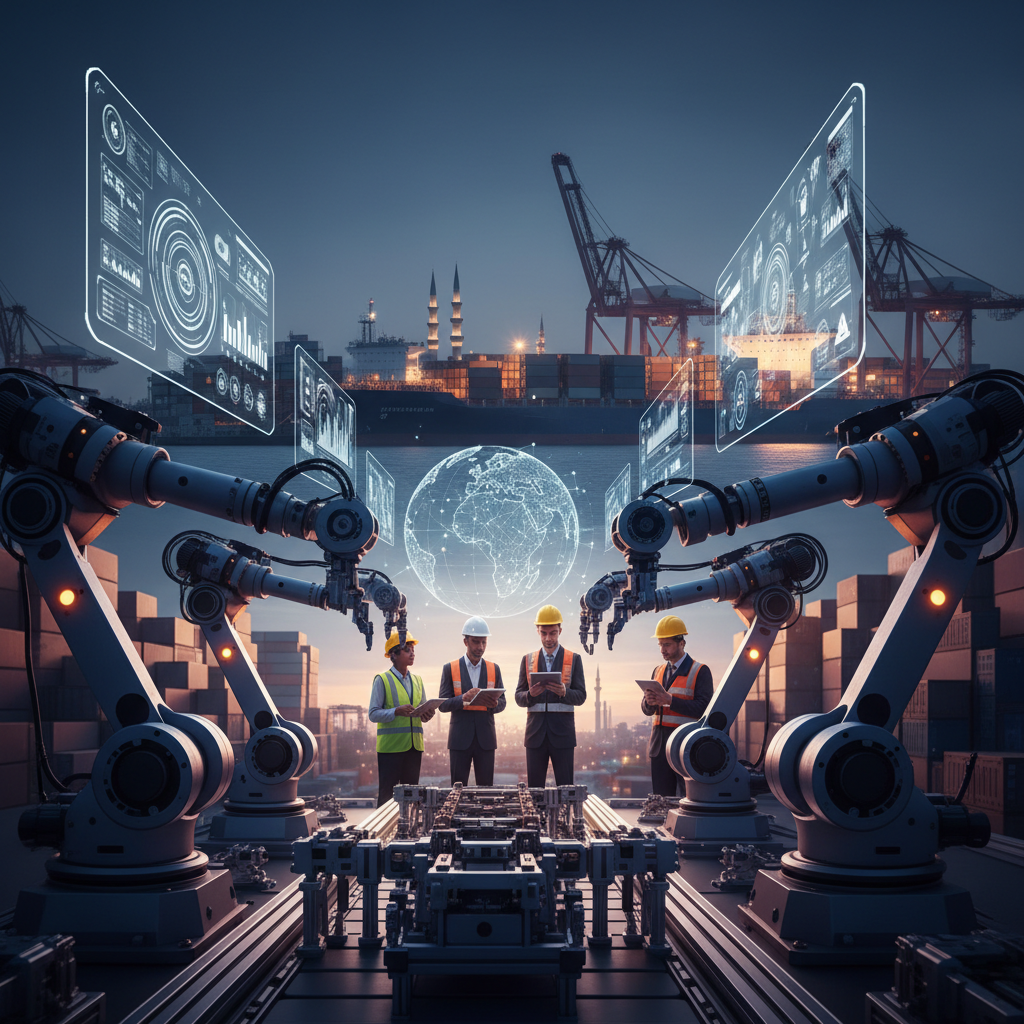

The clatter of machinery has always been part of the human story, from the first loom to the modern factory floor. But what happens when the machinery starts to think, to learn, and to make decisions that directly impact the livelihoods of millions? This is the question echoing through the halls of power, the boardrooms of tech giants like Google and Amazon, and perhaps most poignantly, in the break rooms and union halls across our world, including here in Turkey.
For years, the promise of artificial intelligence has been painted with broad strokes of efficiency and innovation. We’ve been told AI will free us from drudgery, create new industries, and usher in an era of unprecedented prosperity. And in many ways, it has delivered on some of these promises. However, a growing chorus of voices, particularly from organized labor and worker movements, is pushing back against the darker side of this technological marvel: AI-driven automation that displaces workers, intensifies surveillance, and erodes hard-won labor rights. This isn't a distant problem; it is happening now, and its implications are profound.
The Headline Development: A New Kind of Strike
Just last month, we saw headlines about workers at a major e-commerce fulfillment center, reportedly operated by a logistics partner of Amazon, protesting new AI-powered scheduling and performance monitoring systems. These systems, designed to optimize every second of a worker's day, were described by employees as relentless, leading to increased stress and impossible targets. It wasn't just about a pay dispute; it was about the algorithms themselves, about the invisible hand of AI dictating their pace, their breaks, and ultimately, their very employment. Similar stories are emerging from various sectors, from call centers using AI to screen and route calls, impacting human agent jobs, to autonomous vehicles threatening the livelihoods of professional drivers.
Why Most People Are Ignoring It: The Attention Gap
Perhaps it is the sheer speed of AI's advancement, or the dazzling allure of its capabilities, but many people are simply not connecting these abstract technological developments with the concrete realities of human labor. The focus often remains on the next big AI model from OpenAI or the latest chip from NVIDIA, rather than the human cost of their deployment. We celebrate the efficiency gains, the cost reductions, and the new services, but we rarely pause to consider the person whose job was just redesigned, or eliminated, by an algorithm. The narrative is often framed as inevitable progress, making resistance seem futile or even backward. This creates an attention gap, where the societal implications of AI on labor are often overshadowed by the technological spectacle.
How It Affects YOU: Personal Impact on Readers
Even if you are not a factory worker or a delivery driver, AI-driven automation is already touching your life. Have you noticed longer wait times to speak to a human at customer service, routed instead through increasingly sophisticated chatbots? Has your job, or someone you know, been subtly reshaped by new software that automates parts of your workflow, perhaps making your role feel less human, more machine-like? The pressure to perform faster, to be constantly monitored, to adapt to ever-changing algorithmic demands, is seeping into white-collar professions too. Legal research, data analysis, content creation, even aspects of journalism, are all being augmented or automated by AI. Your job might not disappear tomorrow, but its nature, its demands, and your autonomy within it, are almost certainly being redefined. This isn't just about their jobs; it's about our jobs, our careers, and our future economic security.
The Bigger Picture: Societal, Economic, or Political Implications
At the crossroads of innovation, Turkey, much like many nations, grapples with balancing technological advancement with social equity. The pushback from labor unions against AI automation is not merely about preserving old jobs; it is about shaping the future of work itself. If left unchecked, widespread AI automation could exacerbate income inequality, create a large underclass of displaced workers, and strain social safety nets. Politically, it could lead to increased social unrest and demands for radical policy changes, such as universal basic income. Economically, while some argue it will create new jobs, the transition period could be devastating for communities reliant on industries heavily impacted by automation. The question is not if AI will change work, but how we, as a society, will manage that change to ensure a just and equitable transition for everyone.
What Experts Are Saying: Three Perspectives
1. The Call for a New Social Contract: Sharan Burrow, former General Secretary of the International Trade Union Confederation, has often articulated the need for a global dialogue on AI's impact. She has publicly stated,