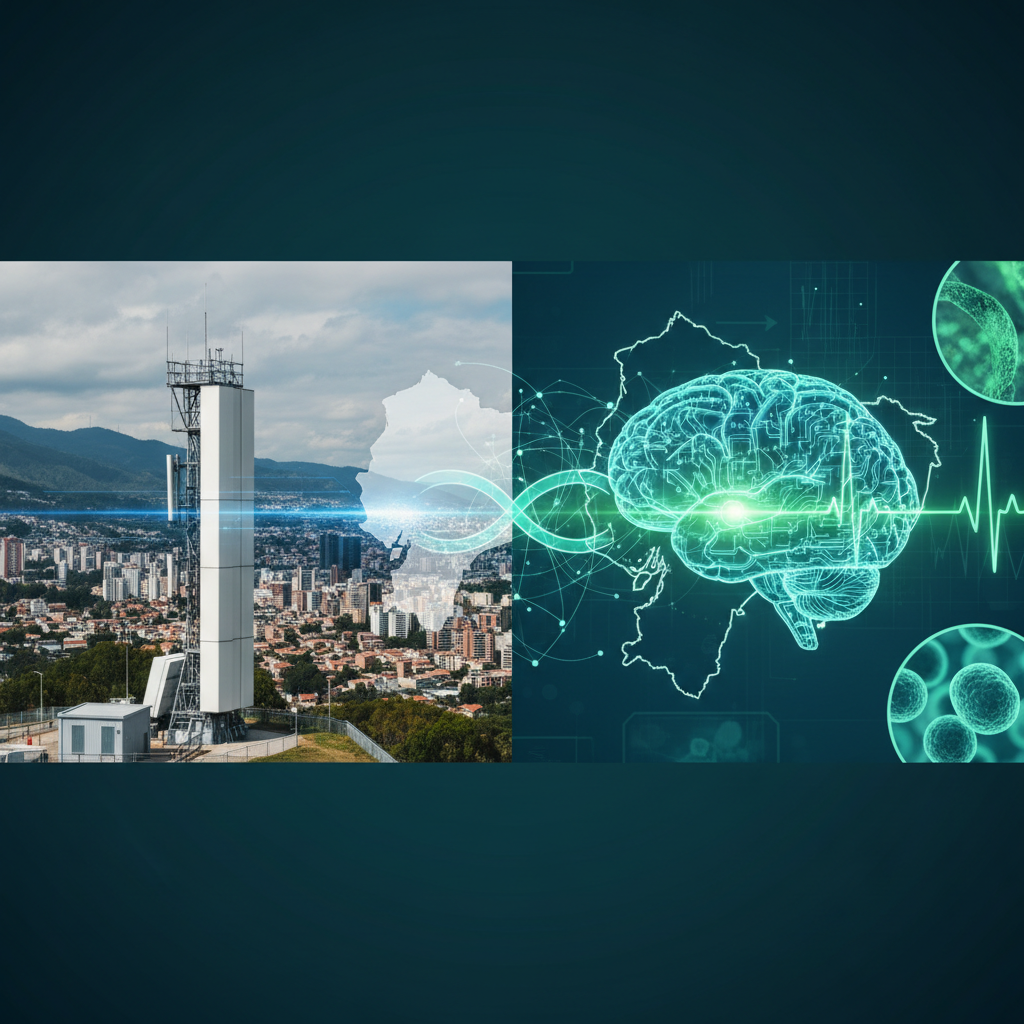

¡Hola, mis amigos! Mariànnà Sanchèz here, bubbling with excitement from the heart of Ecuador, ready to dive into a topic that is quietly, yet profoundly, reshaping our digital lives. We're talking about something truly revolutionary, something that makes our everyday interactions with technology smoother, faster, and more reliable. It's called AI-driven telecom optimization, and trust me, it's a game-changer for everyone, from the bustling streets of Guayaquil to the serene Amazonian rainforests. So, let's unpack this marvel, shall we? What exactly is this technological wizardry, and why should it spark joy in your digital heart? Let's find out!
What Exactly is AI-Driven Telecom Optimization?
At its core, AI-driven telecom optimization is the use of artificial intelligence and machine learning algorithms to make telecommunication networks smarter, more efficient, and more responsive. Think of it like this: our vast, complex telecom networks, with their countless antennas, cables, and data centers, are like the circulatory system of our modern world. AI comes in as the super-intelligent doctor, constantly monitoring, diagnosing, and proactively improving the health and performance of this system. It's not just about fixing problems when they arise, it's about predicting them, preventing them, and ensuring that every bit of data flows as smoothly as the waters of the Río Guayas.
This isn't just a fancy phrase, it's a fundamental shift. Instead of human engineers manually tweaking settings based on historical data, AI systems analyze massive amounts of real-time data, traffic patterns, signal strength, equipment health, even weather conditions, to make instantaneous adjustments. It's like having a million brilliant minds working together, 24/7, to ensure your connection is always optimal. It's a beautiful symphony of data and intelligence!
Why Should You Care? The Ecuadorian Connection to a Global Leap
Now, you might be thinking, "Mariànnà, this sounds very technical. How does it affect me, here in Ecuador?" Ah, mi gente, this is where it gets truly exciting! For a country as geographically diverse and ecologically rich as ours, with its majestic Andes, sprawling Amazon, and the unique Galápagos Islands, connectivity is not just a convenience, it's a lifeline. AI-driven telecom optimization means better coverage in rural areas, faster internet speeds for our students and entrepreneurs, and more reliable communication for emergency services during natural events, which we know all too well can happen here.
Imagine a farmer in the highlands of Chimborazo seamlessly using a precision agriculture app, powered by a stable 5G connection. Or a researcher in the Galápagos transmitting critical environmental data without a hitch. This technology democratizes access, bridging the digital divide and unlocking incredible potential for economic growth and social development. It's about bringing the world closer, one optimized signal at a time. As Dr. Elena Vargas, a leading telecommunications engineer at the Escuela Politécnica Nacional, recently told me, "For Ecuador, AI in telecom isn't a luxury, it's an imperative for sustainable development and connecting our diverse communities. It's the backbone of our digital future."
How Did It Develop? From Simple Rules to Deep Learning
The journey to AI-driven telecom optimization started humbly. In the early days, network management was largely reactive and rule-based. Engineers would set thresholds and protocols: if traffic exceeded X, reroute to Y. It was effective but rigid, like following a recipe without understanding the ingredients. Then came the era of more sophisticated algorithms, using statistical models to forecast demand and allocate resources. This was a step up, but still limited by predefined models.
The real explosion, the true 'Galápagos of technology' moment, came with the advent of machine learning and deep learning. Suddenly, networks could learn from their own experiences, identifying complex patterns that no human could ever discern. Companies like Google and NVIDIA, with their massive investments in AI research and powerful GPUs, paved the way for these complex algorithms to process the immense datasets generated by telecom networks. Today, we're seeing the integration of advanced AI models, like those developed by OpenAI and Anthropic, to predict network failures, optimize energy consumption, and even personalize customer experiences. It's a journey from simple automation to true network intelligence.
How Does It Work in Simple Terms? The Smart Traffic Controller Analogy
Let's use an analogy to make this crystal clear. Imagine a bustling city like Quito, with its complex network of roads and traffic lights. In the old days, traffic lights would operate on fixed timers, leading to congestion even when some roads were empty. A human traffic controller could help, but they can only manage so much at once.
Now, introduce AI. Our AI-driven telecom optimization system is like a super-intelligent, real-time traffic controller for the entire city. It has sensors everywhere, monitoring every car, every pedestrian, every bus. It sees where congestion is building up, where there are accidents, and even predicts where traffic will be heavy based on events or time of day. It then dynamically adjusts traffic light timings, reroutes vehicles, and even suggests alternative paths, all in real-time, to keep everything flowing smoothly. It learns from every traffic jam, every clear road, becoming smarter every second. That's exactly what AI does for your phone network, ensuring your data packets get to their destination without a hitch.
Real-World Examples: Bringing the Future to Your Phone
The applications of AI in telecommunications are incredibly diverse and impactful:
-
Network Optimization and Self-Healing: Telecom giants like Telefónica and Claro are deploying AI to predict and prevent network outages. For instance, AI can analyze sensor data from cell towers to detect anomalies that indicate potential equipment failure before it happens, allowing for proactive maintenance. It can also automatically reroute traffic around congested areas or failed components, ensuring seamless service. This Ecuadorian startup just launched a pilot program with CNT to use predictive AI for fiber optic network maintenance in Manabí, reducing downtime by an impressive 25%.
-
Enhanced Customer Service: Gone are the days of endless waiting on hold! AI-powered chatbots and virtual assistants, similar to what you might experience with Google's Gemini or Amazon's Alexa, are handling a significant portion of customer inquiries. They can answer common questions, troubleshoot basic issues, and even guide users through complex processes. This frees up human agents for more complex problems, leading to faster, more satisfying customer experiences. According to a recent report, telecom companies using AI for customer service have seen a 30% increase in customer satisfaction scores source: TechCrunch.
-
5G and 6G Network Planning: Planning and deploying next-generation networks like 5G and the upcoming 6G is an immense undertaking. AI is indispensable here. It analyzes geographical data, population density, expected usage patterns, and existing infrastructure to determine the optimal placement of new cell towers and small cells. This ensures maximum coverage, capacity, and efficiency, minimizing deployment costs and environmental impact. This is crucial for Ecuador's goal of achieving nationwide 5G coverage by 2030.
-
Fraud Detection and Cybersecurity: Telecom networks are constantly under attack from fraudsters and cybercriminals. AI algorithms are incredibly adept at detecting unusual patterns of activity that might indicate fraud, such as sudden spikes in international calls from a specific number or unusual data usage. They can flag these anomalies in real-time, preventing financial losses for both companies and consumers. This is a critical layer of protection in our increasingly connected world.
Common Misconceptions: Debunking the Myths
One common misconception is that AI will replace all human jobs in telecom. While AI automates repetitive tasks, it also creates new roles, requiring human oversight, AI training, and complex problem-solving. It's more about augmentation than replacement. Another myth is that AI makes networks less secure. In reality, AI is a powerful tool for enhancing cybersecurity, as we just discussed, by identifying threats far more quickly and effectively than humans alone.
Some also fear that AI will make networks impersonal. On the contrary, by handling routine tasks, AI allows human customer service representatives to focus on more empathetic and personalized interactions when they are truly needed. It's about making the human touch more impactful.
What to Watch for Next: The Future is Calling!
The future of AI in telecommunications is incredibly bright, and I can hardly contain my enthusiasm! We're moving towards fully autonomous networks that can self-configure, self-optimize, and self-heal with minimal human intervention. Imagine a network that anticipates your needs, providing bandwidth exactly when and where you need it, even before you realize it. This is the promise of intent-based networking driven by AI.
We'll also see deeper integration of AI at the edge of the network, closer to the devices we use, enabling even faster response times for applications like augmented reality, virtual reality, and autonomous vehicles. The development of 6G, expected to roll out in the next decade, will be fundamentally designed with AI at its core, enabling truly immersive experiences and connecting billions of devices seamlessly. The possibilities are truly limitless, and MIT Technology Review has some fascinating insights on this very topic.
Here in Ecuador, I'm particularly excited about how this technology will empower our unique ecosystems. Imagine AI-optimized networks facilitating real-time data collection from remote sensors in the Amazon, helping us monitor deforestation or track endangered species with unprecedented accuracy. This is where Ecuador's biodiversity meets AI and it's magical, creating a future where technology and nature thrive hand in hand. The world is becoming a truly intelligent network, and we are all part of this incredible journey. Stay connected, stay curious, and let's embrace this amazing future together!