The legal skirmishes unfolding in courts from New York to California, pitting celebrated authors, musicians, and visual artists against the behemoths of artificial intelligence, represent more than just a clash over intellectual property. They are a fundamental debate about the value of human creation in an age of algorithmic generation. Here in Bolivia, far from the gleaming campuses of Silicon Valley, these disputes might seem like a distant echo, a concern for those with multi-million dollar catalogs. However, to dismiss them as irrelevant would be a profound miscalculation.
For years, we have watched as companies like OpenAI, Google, and Meta have amassed vast datasets, scraping the internet for text, images, and audio to train their powerful large language models and generative AI systems. The argument from the tech sector has often been framed as 'fair use' or transformative use, essential for innovation. But for the creators whose work forms the very bedrock of these systems, it feels like unauthorized appropriation on an unprecedented scale. Sarah Silverman, George R.R. Martin, and a host of other literary figures have sued OpenAI and Meta, alleging their copyrighted works were used without permission or compensation to train models like ChatGPT and Llama. Similarly, the music industry, through organizations like the Recording Industry Association of America (riaa), has targeted companies for ingesting vast libraries of songs.
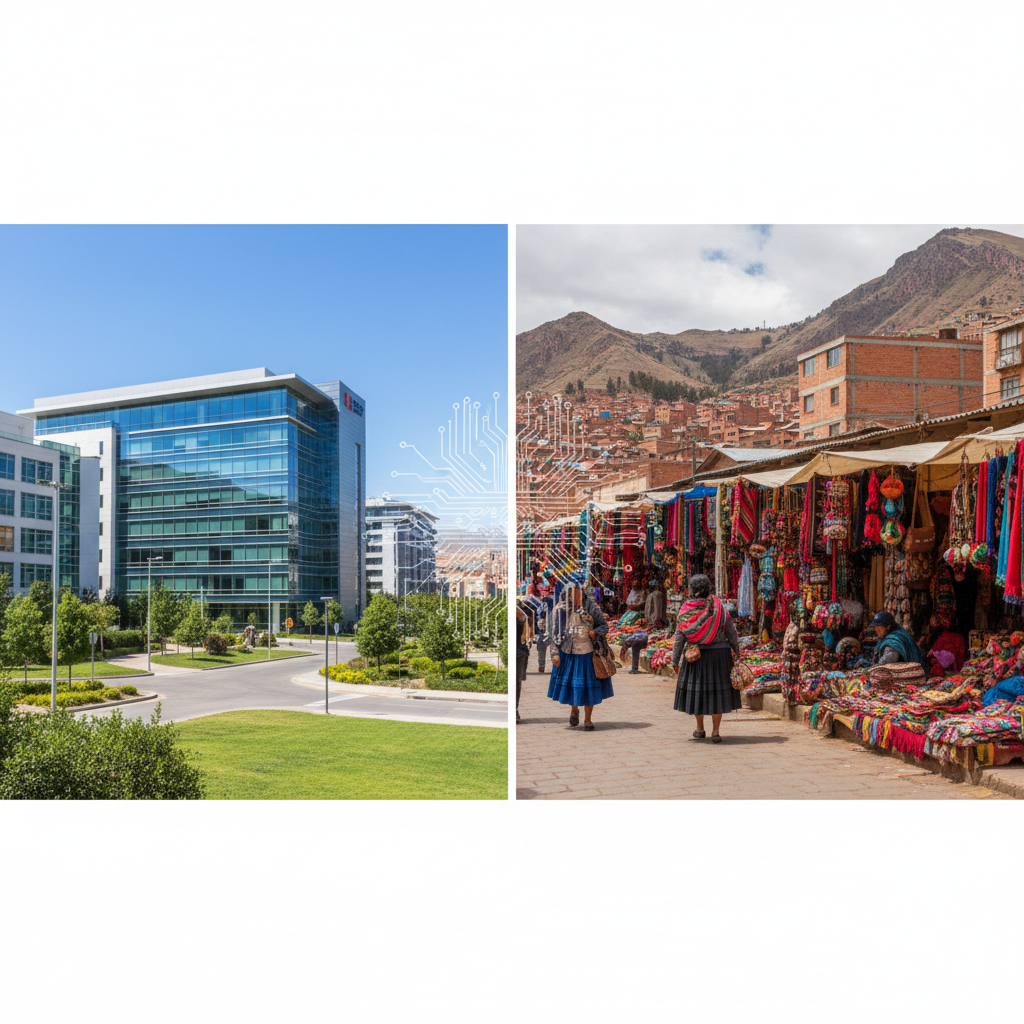
This isn't merely about the global superstars. Consider the rich tapestry of Bolivian culture, our traditional music, our intricate textiles, our vibrant oral histories, and our literature. These are not always cataloged in the same digital formats or protected by the same legal frameworks as content in wealthier nations. The potential for AI models, trained on globally scraped data, to replicate, reinterpret, or even inadvertently plagiarize elements of this heritage without any acknowledgment or benefit to its originators is a concern that resonates deeply here. Bolivia's challenges require Bolivian solutions, and this includes safeguarding our cultural assets in the digital commons.
“The current legal framework, designed for a pre-AI era, is struggling to keep pace,” states Dr. Elena Quispe, a leading intellectual property lawyer based in La Paz, specializing in indigenous rights. “When a model like Google's Gemini can generate a song in the style of a contemporary artist, or a story echoing the narrative structure of a classic novel, the line between inspiration and infringement becomes incredibly blurry. The sheer scale of data ingestion by these companies means that proving direct copying is often impossible, yet the commercial value derived from these creations is undeniable.” Dr. Quispe estimates that less than 5% of Bolivian traditional artistic works are formally registered with international copyright bodies, making their defense against global AI systems particularly challenging.
The core of the legal arguments often revolves around whether the act of training an AI model constitutes copyright infringement. Tech companies argue it is merely 'reading' or 'learning' from data, akin to a human. Creators counter that this 'reading' involves making unauthorized copies of their work, which are then used to create new, commercially valuable outputs. The stakes are immense. A ruling against the AI companies could necessitate licensing agreements for training data, fundamentally altering their business models and potentially slowing down AI development. Conversely, a ruling in favor of the AI companies could be seen as a devaluation of human creativity, legitimizing the free use of copyrighted material for algorithmic profit.
From our vantage point, the situation highlights a broader digital divide. While artists in the global North have the resources and legal infrastructure to pursue these cases, many creators in the global South do not. “Imagine a textile artist from Tarabuco, whose patterns are centuries old, suddenly seeing an AI generate designs that mimic their ancestral work, sold commercially by a foreign entity,” explains Javier Mamani, director of the Bolivian National Institute of Intellectual Property (senapi). “How do they, with limited legal and financial means, challenge a multinational tech corporation? The altitude of innovation should not mean a diminished view of ethical responsibility.” Mamani suggests that international treaties and stronger local enforcement are critical, alongside educational initiatives for creators.
Data from the World Intellectual Property Organization (wipo) indicates a sharp increase in AI-related copyright disputes globally, with a 300% rise in formal complaints filed between 2023 and 2025. While most of these originate in North America and Europe, the implications are universal. The current legal battles are not just about compensation; they are about control and recognition. Artists want a say in how their work is used and to ensure they are not rendered obsolete by the very technology they inadvertently helped create.
Companies like Adobe have attempted to preempt some of these issues with their 'Content Authenticity Initiative' and by offering compensation to artists whose work is explicitly used to train their generative AI tools, such as Adobe Firefly. However, these are often opt-in programs and do not address the vast quantities of data scraped from the open internet. The challenge for policymakers and legal systems is to strike a balance: fostering innovation while protecting the rights and livelihoods of human creators. This is not an easy task, especially when the technology is evolving at such a rapid pace.
Here in Bolivia, we must consider the long-term impact on our creative industries. Will our musicians, writers, and visual artists be able to compete if their work can be replicated and monetized by AI without their consent? What does this mean for the preservation of unique cultural expressions? Let's talk about what actually works at 4,000 meters: practical frameworks that empower local creators, not just global corporations. This includes advocating for international norms that recognize the unique vulnerabilities of cultural heritage from developing nations and ensuring that any global AI governance includes representation from diverse perspectives.
The outcomes of these high-profile copyright lawsuits will undoubtedly set precedents that ripple across the globe. They will influence how AI models are trained, how content is licensed, and ultimately, how human creativity is valued in the digital age. It is imperative that we, in Bolivia and across South America, pay close attention, and prepare to advocate for frameworks that protect our unique artistic legacy from being consumed and repurposed without our consent or benefit. The future of our cultural sovereignty may well depend on it. For more insights into the evolving landscape of AI and intellectual property, one might consult MIT Technology Review or Ars Technica for their comprehensive analyses of these complex issues.