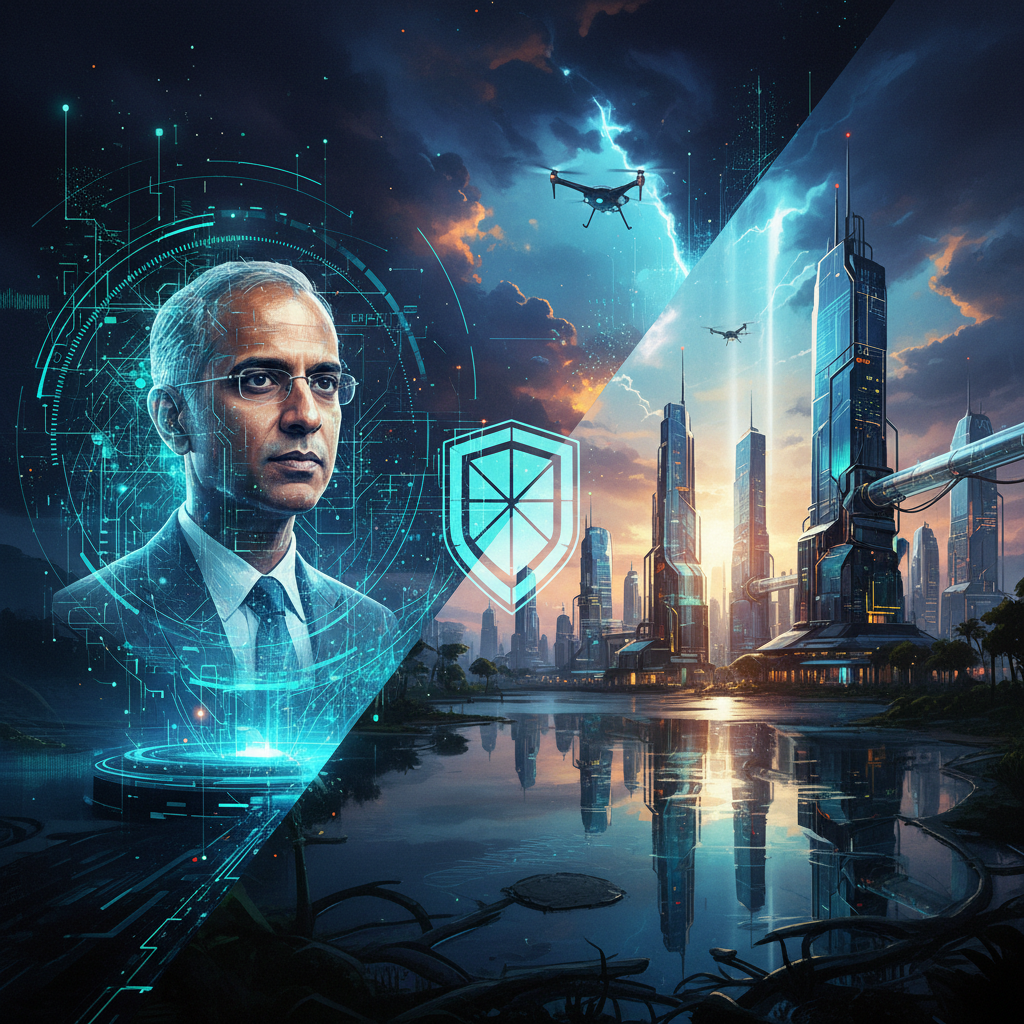
Picture this: it is April 2031, and the morning sun glints off the lagoon in Grand-Bassam, a Unesco World Heritage site known for its colonial architecture and vibrant culture. But something new hums in the air, a silent revolution powered by algorithms. In the bustling markets, vendors are no longer just haggling over prices; they are using AI-powered apps on their smartphones to predict demand for mangos and plantains, optimizing their supply chains with a precision once reserved for multinational corporations. In the local schools, children are learning not just with textbooks, but with personalized Microsoft Copilot tutors, speaking to them in fluent Baoulé or Dioula, adapting lessons to their individual pace and cultural context. This isn't a distant dream, it is the tangible outcome of a global shift, one deeply influenced by Satya Nadella's relentless AI-first strategy and Microsoft's staggering market cap surge over the past five years.
I remember sitting in my grandmother's courtyard in Yopougon, listening to her tell stories under the starry Ivorian sky. She often spoke of the 'winds of change' that swept through our land, bringing both promise and peril. Today, the wind carries algorithms, and its currents are stronger than ever. Microsoft, under Nadella's leadership, has not just embraced AI; it has become synonymous with it. From integrating OpenAI's GPT models into nearly every product to investing billions in cloud infrastructure, their strategic pivot has created an ecosystem that is now undeniably shaping our world, including here in Côte d'Ivoire.
How do we get to that Grand-Bassam of 2031 from our present reality in April 2026? It begins with infrastructure and access. Today, while connectivity is improving, many rural areas still lack reliable internet. Microsoft's Azure cloud services, coupled with initiatives like Starlink, will need to bridge this gap. Imagine community tech hubs, perhaps sponsored by local governments and international partners, equipped with low-cost, AI-enabled devices. These hubs become the new 'palabre trees' of our digital age, places where knowledge is shared and problems are solved collaboratively. We are already seeing the early stages of this with government pushes for digital literacy, but the scale needs to be immense.
Key milestones along this path will be numerous and varied. By 2027, we will likely see a significant increase in AI-powered agricultural tools, perhaps Microsoft-backed startups offering predictive analytics for cocoa farmers, helping them mitigate climate change risks and optimize yields. Think of an app that analyzes soil data, weather patterns, and market prices, then advises a farmer in Daloa on the best time to plant or harvest. This is not just about efficiency; it is about empowering our farmers, the backbone of our economy, with information that was previously out of reach. According to a recent report on global tech trends, investments in AI for agriculture in Africa are projected to grow by 150% by 2028, a clear indicator of this trajectory Reuters.
By 2029, I foresee a significant shift in our education system. The Ministry of National Education and Literacy, perhaps in partnership with Microsoft's philanthropic arms, will roll out AI-powered learning platforms across primary and secondary schools. These platforms, leveraging tools akin to Copilot, will offer personalized tutoring in local languages, helping to address the shortage of qualified teachers in remote areas. Imagine a young girl in Korhogo, struggling with mathematics, receiving patient, interactive instruction tailored to her learning style, all through an AI interface. This is the story they don't want you to hear, the quiet revolution happening in classrooms, away from the headlines of market caps and valuations.
The healthcare sector will also undergo a profound transformation. By 2030, AI diagnostics, powered by Microsoft's cloud and data analytics, will become more prevalent in our clinics and hospitals. Picture a nurse in Bouaké using an AI tool to quickly analyze medical images for early detection of diseases like malaria or tuberculosis, significantly reducing diagnostic times and improving patient outcomes. This will be critical for a region where access to specialist doctors remains a challenge. We are already seeing similar initiatives in other parts of the world, as detailed by Wired's coverage on AI in global health.
However, with every wave of change, there are winners and losers. Who wins? Certainly, the tech-savvy entrepreneurs who can leverage Microsoft's AI tools to build local solutions. The young people who embrace digital literacy and acquire AI skills will find themselves at a significant advantage in the job market. Farmers who adopt precision agriculture, and clinics that integrate AI diagnostics, will see improved efficiency and better outcomes. Our government, if it plays its cards right, could leverage AI for better urban planning, resource management, and even public safety, creating smarter cities like Abidjan.
But who loses? Those who are left behind by the digital divide. The older generations, less accustomed to technology, might struggle to adapt. Workers whose jobs are automated without adequate reskilling programs could face unemployment. There is also the critical question of data privacy and algorithmic bias. As AI becomes more integrated into our lives, whose data is being collected, how is it being used, and are the algorithms fair to everyone, regardless of their background or location? This is where our local context becomes paramount. We must ensure that these powerful tools are developed and deployed with an understanding of our unique cultural nuances, not just as one-size-fits-all solutions from Redmond.
Dr. Aminata Diallo, a leading Ivorian AI ethicist at Félix Houphouët-Boigny University, told me something I'll never forget during our conversation last month. She said, “The algorithm does not know the rhythm of the djembe, nor the wisdom of our proverbs. If we do not infuse our values, our humanity, into its design and deployment, it will only reflect the values of its creators, wherever they may be.” Her words resonate deeply. We cannot simply be passive recipients of this technological tide; we must be active participants, shaping its direction to serve our people.
What should readers do now, in April 2026? For individuals, it means embracing digital literacy. Learn about AI, understand its capabilities, and critically, its limitations. For businesses, it means exploring how Microsoft's AI tools, from Copilot to Azure AI services, can enhance productivity and innovation. For our government and policymakers, it means investing in robust digital infrastructure, fostering AI education, and developing ethical guidelines that protect our citizens while encouraging innovation. We must also advocate for local data centers and cloud infrastructure to ensure data sovereignty and reduce latency, making AI services more accessible and efficient across the country. As detailed by TechCrunch, the push for localized AI infrastructure is a global trend, and Côte d'Ivoire must not be left behind.
The future is not just happening to us; we are building it, brick by digital brick. Satya Nadella's vision has indeed catalyzed an unprecedented era of AI advancement and economic growth for Microsoft. But for us in Côte d'Ivoire, the true measure of this success will not be found in market cap numbers, but in the empowered farmer, the educated child, and the healthier community, all thriving under the Ivorian sun, guided by tools that respect our heritage and uplift our future. It is a future we must shape with our own hands, ensuring the digital wind carries the scent of our own progress, not just the echoes of distant boardrooms.