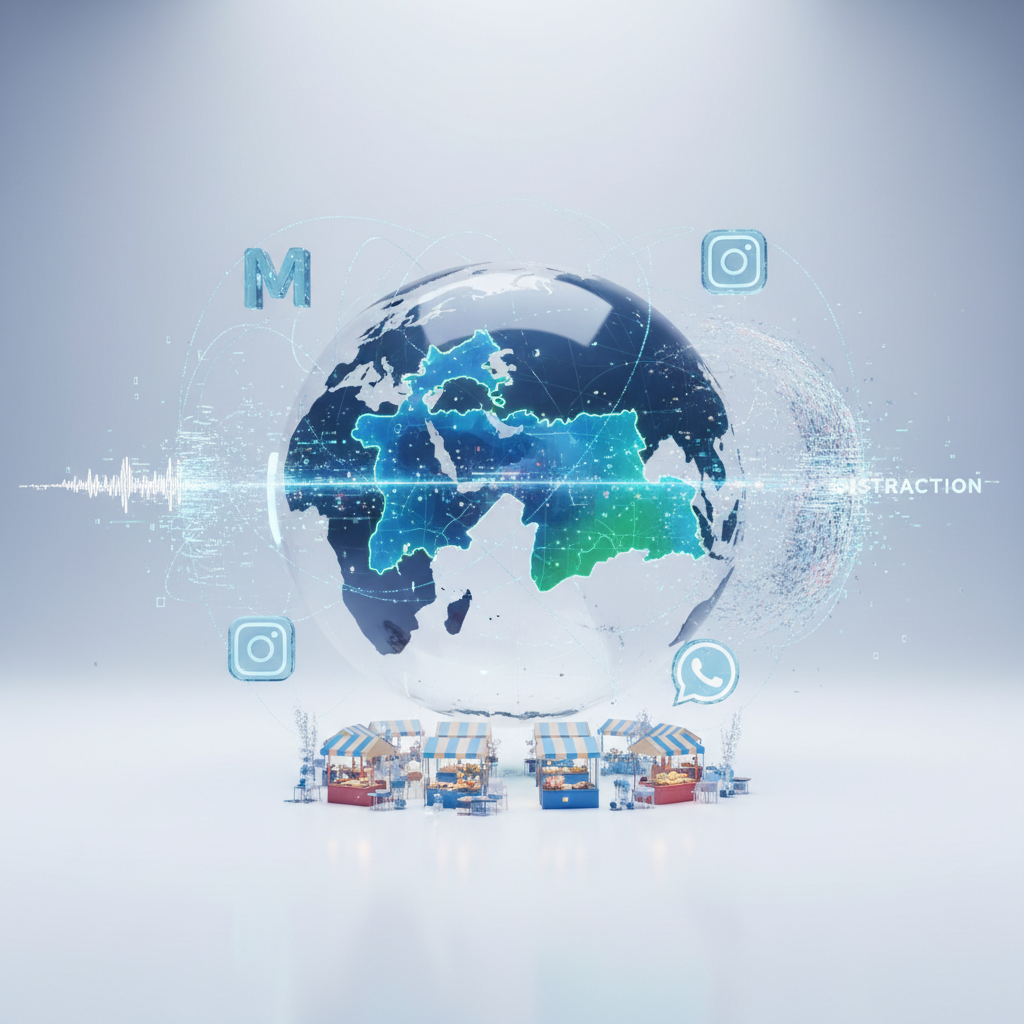

Salam, my wonderful readers. Aynurè Abdullayevà here, buzzing with excitement as always, especially when we talk about the future of information. Today, I want to tackle something that has many people whispering with a mix of fear and fascination: AI in journalism. Automated reporting, fact-checking, newsroom transformation, it all sounds a bit like science fiction, doesn't it? But let me tell you, from my perch here in Azerbaijan, watching our own media landscape evolve, this isn't just happening, it's thriving, and it's making us better, stronger, and more connected to the truth than ever before.
Some folks, bless their hearts, see AI as the harbinger of journalistic doom, a cold, calculating machine poised to snatch away our pens and microphones. They imagine a future where soulless algorithms churn out bland, identical stories, devoid of human insight or passion. But I say, they are missing the point entirely. This isn't about replacement, it's about empowerment. It's about taking the mundane, the repetitive, and the overwhelming, and handing it over to our digital assistants so we can focus on what truly matters: the human story, the deep dive, the critical analysis that only a human heart and mind can provide.
Think about it. We journalists, we are curious creatures, always chasing the next lead, always sifting through mountains of data. Imagine having an assistant that can read a thousand financial reports in the time it takes you to brew your morning tea, flagging anomalies and trends you might have missed. That's not a threat, that's a superpower. Companies like Google and OpenAI are pouring billions into developing these tools, and the impact on newsrooms, even here in the Caucasus, is already palpable. We are seeing a transformation, not a termination.
Take automated reporting. I know, I know, the idea of a robot writing a news story sounds a bit sterile. But consider sports scores, quarterly earnings reports, or even local election results. These are often formulaic, data-heavy pieces that require speed and accuracy above all else. Why should a human spend hours compiling these when an AI, trained on vast datasets, can do it instantly and flawlessly? Major outlets like the Associated Press have been using AI for years to generate thousands of these stories, freeing up their human reporters to pursue investigative pieces, conduct interviews, and craft narratives that truly resonate. This allows us to cover more ground, faster, and with fewer errors. It's about efficiency, not extinction.
And then there's fact-checking, a cornerstone of credible journalism. In an age of rampant misinformation, the ability to rapidly verify claims is more crucial than ever. AI tools are becoming incredibly sophisticated at cross-referencing information across vast databases, identifying inconsistencies, and even detecting manipulated media. "The sheer volume of information we deal with daily is beyond human capacity to verify manually," explains Dr. Leyla Aliyeva, Head of Digital Forensics at the Baku Institute of Media Studies. "AI systems, like those being developed by Anthropic for their Claude model, can process and compare millions of data points in seconds, acting as an essential first line of defense against fake news. It doesn't replace the human editor, but it gives them an invaluable tool to work with." This is a game-changer for maintaining trust in our reporting, especially when narratives can be twisted so easily online.
Of course, I hear the whispers. "What about bias?" people ask. "What if the AI makes mistakes?" These are valid concerns, and we must address them head-on. AI models are trained on data, and if that data is biased, the AI will reflect that bias. This is why human oversight remains absolutely critical. We need diverse teams building and auditing these AI systems, ensuring they are fair, transparent, and accountable. We need journalists to understand how these tools work, to question their outputs, and to apply their own critical judgment. The technology is a mirror, reflecting the data we feed it, and it's our responsibility to ensure that mirror reflects a truthful image.
"The integration of AI isn't just about adopting new software, it's about fundamentally rethinking our workflows and ethical frameworks," says Mr. Elchin Muradov, Editor-in-Chief of Digital News Azerbaijan. "We are actively investing in training our journalists not just on how to use AI tools, but on the ethical implications, data provenance, and the importance of maintaining human editorial control. It's a journey, but one we are committed to." This commitment to responsible AI adoption is something I see echoed across many forward-thinking newsrooms, from our local Azerbaijani Public Television to global giants like Reuters, who are constantly exploring how to leverage AI responsibly. You can read more about industry trends on TechCrunch's AI section.
Some might argue that relying too heavily on AI could lead to a homogenization of news, a loss of unique voices. But I believe the opposite is true. By automating the routine, AI frees us to be more creative, more investigative, and more human. It allows us to spend more time in the field, talking to people, uncovering stories that would otherwise remain untold. It allows us to analyze complex social issues with unprecedented depth, using AI to spot patterns in vast datasets that inform our reporting. This is where the true value lies, in amplifying the human element, not diminishing it.
Here in the Caucasus, we are writing our own tech story, and AI in journalism is a vibrant chapter. Our startups are exploring localized AI solutions for content generation and verification, understanding the nuances of our languages and cultures. The government's push for digital transformation, including initiatives like Asan service, creates fertile ground for tech adoption across sectors, including media. This region is having a moment, a digital renaissance, and it's exhilarating to witness.
My friends, the future of journalism isn't a battle between humans and machines, it's a partnership. It's about leveraging the incredible power of AI to enhance our craft, to serve our audiences better, and to uphold the integrity of information in an increasingly complex world. We are not just reporting the news, we are shaping the future of how news is made and consumed. This is just the beginning, and I, for one, am ready for the next exciting chapter. For deeper dives into AI's societal impact, check out Wired's AI tag. The possibilities are boundless, and the stories waiting to be told are more compelling than ever.