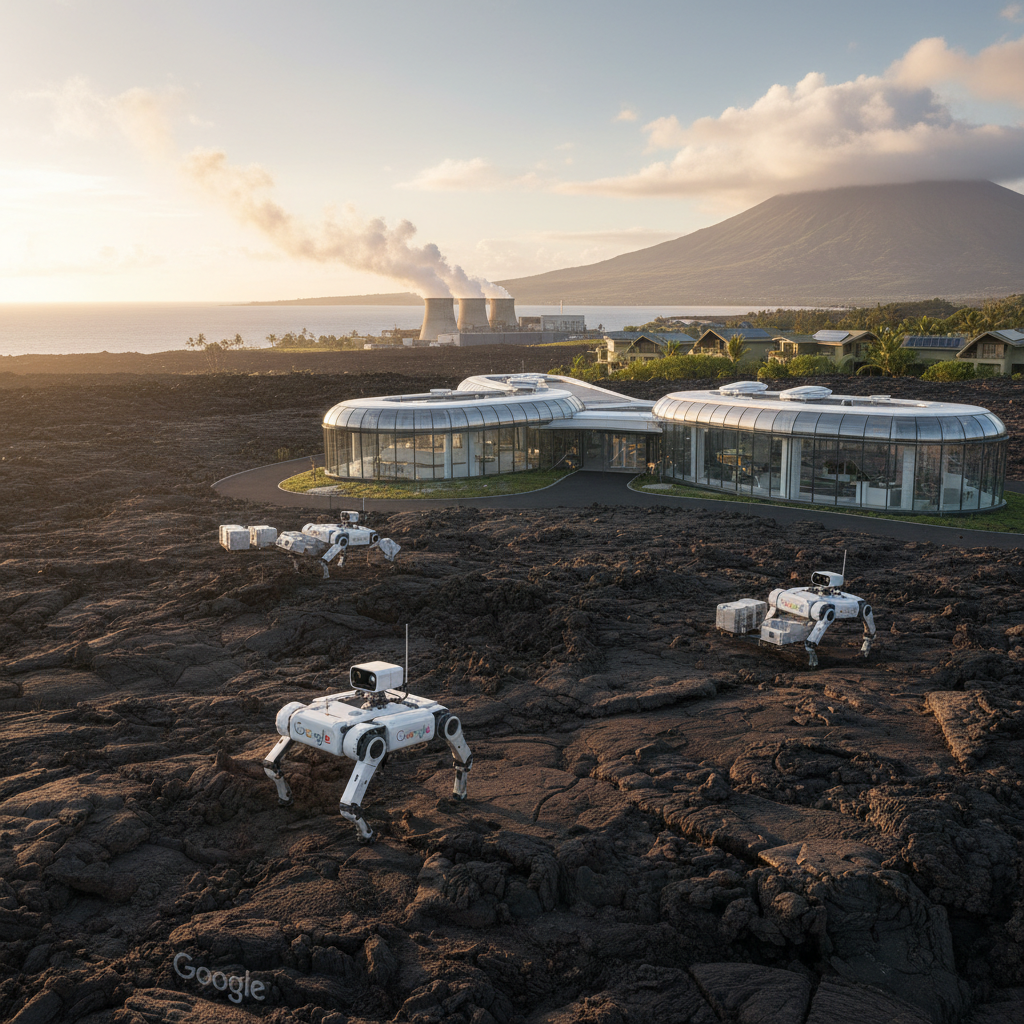

Our islands, forged by fire and ocean, have always demanded resilience. We build not just for today, but for generations, understanding that the land itself dictates our terms. This deep-rooted wisdom, this connection to 'aina, is something I often reflect on when I look at the relentless march of technological progress. Now, as AI infiltrates every sector, the construction industry, often seen as slow to adapt, is finally feeling the seismic shifts. And for Hawaii, this isn't just about efficiency, it's about survival, sustainability, and building with aloha.
I've been watching the developments in AI for construction with a keen eye, particularly the buzz around multimodal AI models like Google's Project Astra. Imagine an AI that doesn't just process blueprints, but sees the job site through drone footage, hears the hum of machinery, understands the geological surveys, and learns from decades of local building codes and environmental data. This isn't science fiction anymore, it's the very near future, and it holds immense potential for places like Hawaii, where every square foot of land and every building decision carries profound implications.
Traditionally, construction has been a labyrinth of manual processes, prone to delays, cost overruns, and safety hazards. From initial design to final handover, the human element, while invaluable, introduces variability. AI, particularly advanced models capable of processing diverse data types, promises to bring a level of precision and foresight previously unimaginable. We're talking about AI optimizing building designs for energy efficiency and structural integrity against tsunamis or earthquakes, monitoring job sites in real time for safety compliance, and predicting project bottlenecks before they even emerge.
Take building design optimization. In Hawaii, this isn't merely about aesthetics or cost. It's about designing structures that can withstand the forces of nature, integrate seamlessly with the natural environment, and respect cultural sites. AI models can analyze vast datasets of local climate patterns, seismic activity, soil composition, and even traditional Hawaiian architectural principles. They can generate thousands of design iterations, evaluating each against a complex set of parameters, from material stress under high winds to solar gain for natural cooling, all while minimizing environmental impact. This is where the concept of 'aloha means more than hello because it's a framework for ethical AI' truly comes into play. We need AI that understands our unique context, not just generic engineering principles.
“The ability of AI to synthesize complex environmental data with design constraints is a game-changer for regions with unique geological and climatic challenges, like Hawaii,” stated Dr. Sarah K. Miller, a leading civil engineer and professor at the University of Hawaii at Manoa. “We’re moving beyond simple CAD tools to intelligent systems that can proactively recommend resilient design strategies, reducing risk and improving long-term sustainability.” Her insights underscore the critical need for AI to be locally informed and context-aware.
Safety monitoring is another area where AI's impact is already being felt globally, and it's particularly crucial in our bustling construction zones. Computer vision AI, deployed through drones and fixed cameras, can continuously scan job sites. It can detect if workers are wearing proper personal protective equipment, identify unsafe conditions like unstable scaffolding, or even predict potential fall hazards. This isn't about replacing human oversight, but augmenting it, providing an always-on 'guardian' that can alert supervisors to immediate dangers, preventing accidents before they happen. Companies like Trimble are already integrating AI into their construction management platforms, offering predictive analytics for safety and project progress.
Project management, the often-thankless task of coordinating myriad moving parts, is ripe for AI intervention. Large language models, combined with advanced scheduling algorithms, can analyze project plans, identify critical paths, allocate resources optimally, and even predict potential delays based on historical data and real-time site conditions. Imagine an AI assistant that can process daily reports, weather forecasts, material delivery schedules, and subcontractor availability, then proactively adjust timelines and flag potential conflicts. This frees up human project managers to focus on problem-solving and stakeholder communication, rather than chasing down data points. This level of foresight is invaluable in a place where supply chain logistics can be particularly complex and costly.
Globally, we're seeing major players invest heavily in this space. OpenAI and Google are pushing the boundaries of multimodal AI, which is exactly what construction needs: systems that can see, hear, and understand the physical world. Microsoft's Azure AI platform is being leveraged by construction tech startups to build predictive maintenance solutions for heavy machinery. NVIDIA's GPUs, the backbone of much of today's AI, are powering the complex simulations needed for architectural design optimization and digital twin creation. This isn't just about software, it's about a complete ecosystem shift.
However, the integration of AI isn't without its challenges. Data privacy, algorithmic bias, and the ethical implications of autonomous decision-making are concerns that must be addressed head-on. We must ensure that AI tools are developed with transparency and accountability, and that their deployment respects the cultural sensitivities of our communities. The future is being built on volcanic rock, and we must ensure it's built on solid ethical ground too.
“We’ve seen incredible advancements in AI for construction, but the human element, particularly local knowledge and cultural understanding, remains paramount,” noted John A. Smith, CEO of Pacific Construction Group, a prominent firm operating across Oceania. “AI should be a tool to empower our workforce and enhance our practices, not replace the wisdom gained over generations of building in this unique environment.” His perspective echoes a sentiment shared by many local leaders: technology must serve the people and the land, not the other way around.
As we look ahead, the potential for AI to transform how we build in Hawaii and across the wider Pacific is immense. From designing climate-resilient infrastructure to managing complex projects with unprecedented efficiency, AI offers a path to a more sustainable and safer future. But it requires us to be intentional, to infuse our technological advancements with the spirit of aloha, ensuring that these powerful tools serve our communities and protect our precious environment. Hawaii sits at the crossroads of Pacific and Silicon Valley, and we have a unique opportunity to shape how this technology evolves, creating models that are not just smart, but wise. This isn't just about building structures, it's about building a better future, one that honors our past and safeguards our future. The conversation around AI in construction is no longer theoretical, it's happening now, and we must be active participants in shaping its trajectory. For more insights into emerging AI applications, you can always check out resources like TechCrunch's AI section.
I believe the next decade will see a profound shift in how our built environment is conceived, constructed, and maintained, driven by intelligent systems. The islands have always taught us adaptation, and now, with AI as our ally, we have the chance to adapt with unprecedented foresight and care. This is our moment to lead, to show the world how technology, guided by core values, can truly build a better tomorrow.