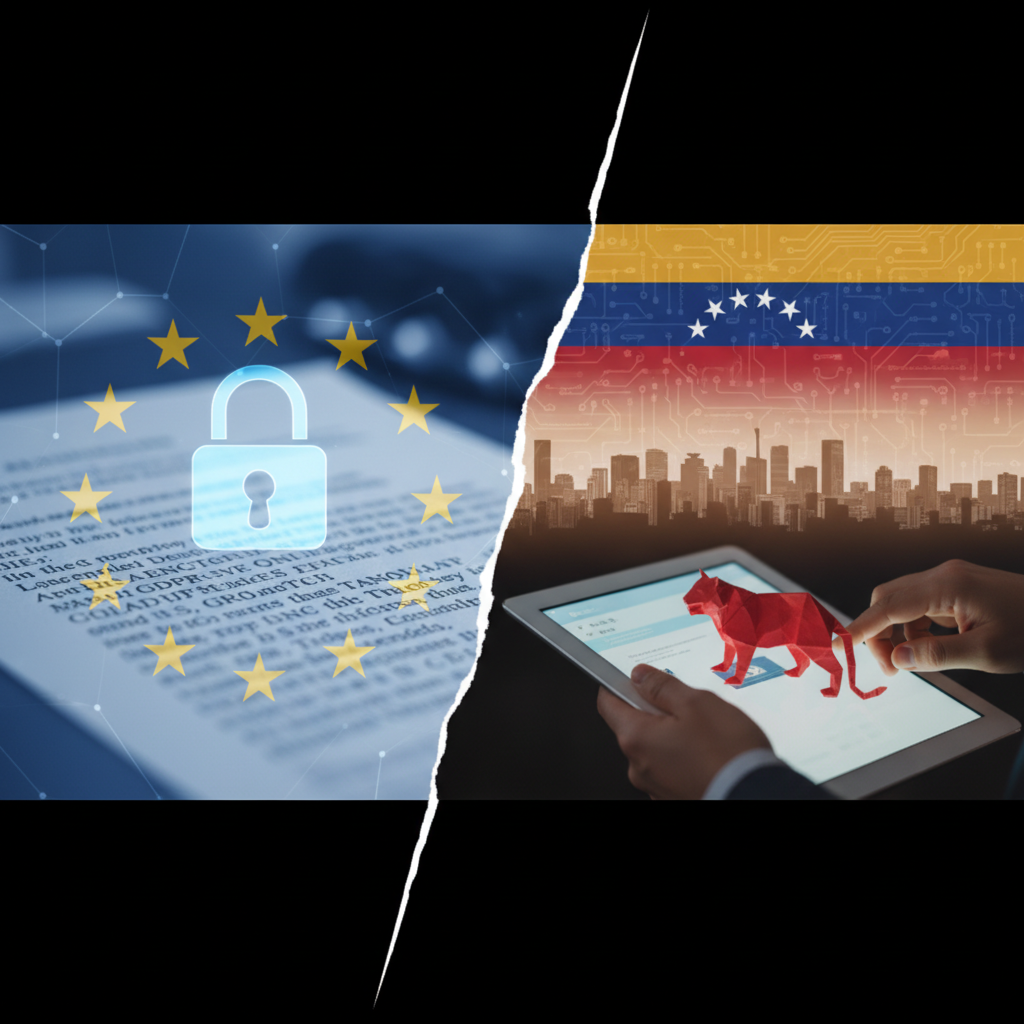

The world, particularly the West, loves its regulations. GDPR, Ccpa, countless others. They are supposed to be the shining shields protecting our digital selves in this wild new AI era. From my vantage point here in Caracas, however, these grand pronouncements often feel like whispers carried on a distant wind, barely reaching the barrios where real innovation, born of necessity, truly thrives. We are talking about data privacy in the age of algorithms, and the global patchwork of regulations is less a coherent quilt and more a tattered blanket, especially when you consider places like Venezuela.
The policy move is clear: governments worldwide, spooked by the unchecked power of AI and the data it devours, are scrambling to legislate. Europe led the charge with GDPR, a beast of a regulation that promised to give individuals control over their personal data. California followed with Ccpa, then Cpra, creating a ripple effect across the United States. Now, we see similar efforts in Brazil, India, and even nascent discussions in some corners of our own Latin America. The intent is noble: protect the citizen, curb corporate overreach, ensure ethical AI development. But who are these laws really protecting, and who are they truly impacting?
Behind these regulations are lawmakers and privacy advocates, often from highly developed nations, who envision a world where data is a right, not a commodity to be exploited. They are reacting to a legitimate fear: that companies like Google, OpenAI, and Meta, with their insatiable appetite for data to train ever more powerful models, could create a surveillance society or perpetuate deep-seated biases. "The digital frontier cannot remain a lawless wild west," declared European Commissioner for Justice, Didier Reynders, last year. "Our citizens deserve robust protections, and our regulations, like the GDPR, are the bedrock of that trust." He speaks of trust, but from here, trust is something you build with your neighbor, not something a distant bureaucracy grants you.
What does this mean in practice, especially for us? For a Venezuelan startup trying to make a name for itself, selling an AI-powered logistics solution to a client in Spain, GDPR is a mountain of paperwork, a labyrinth of legal jargon. It means hiring expensive compliance officers, investing in data localization, and navigating complex consent mechanisms. For a small team of brilliant engineers, perhaps working remotely from Maracaibo or Valencia, this can be an insurmountable barrier. They are already battling hyperinflation, unreliable infrastructure, and the daily grind of survival. Adding a thick layer of foreign legal complexity can stifle their ingenuity before it even has a chance to breathe. This is where the rubber meets the road, where the lofty ideals of Brussels collide with the harsh realities of a developing economy.
Industry reactions are, predictably, mixed. Big tech players, with their armies of lawyers and lobbyists, have largely adapted. They see compliance as a cost of doing business globally. They build their systems with privacy by design, or at least claim to. Smaller companies, however, especially those operating across borders, feel the squeeze. "We spent nearly 20% of our seed funding just on legal compliance for GDPR when we expanded into Europe," confided Maria Elena Rojas, CEO of 'Canaima AI', a Venezuelan startup specializing in agricultural AI, during a recent virtual conference. "It is a necessary evil, I suppose, but it certainly slows down innovation for those of us without deep pockets." Her words echo a common sentiment: the regulations, while well-intentioned, often favor the established giants and penalize agile newcomers. You can read more about how startups navigate these waters on TechCrunch.
Civil society perspectives are even more complex. In Europe, privacy advocates celebrate these laws as vital safeguards. In Venezuela, the conversation is different. Here, where data privacy often feels like a luxury, overshadowed by more immediate concerns like food security or political stability, the focus shifts. Many argue that the real threat to data privacy comes not from commercial AI models, but from state surveillance or cybercrime. "While the EU debates cookie banners, we are worried about our digital footprint being used against us by those in power," stated Ricardo Mendoza, a digital rights activist in Caracas. "The crisis created something unexpected: a heightened awareness of digital vulnerability, but not necessarily in the way the West understands it." This is an unpopular opinion from Caracas, but it is a truth many here live daily. We are not just worried about Meta knowing our shopping habits, we are worried about who else knows our location or our communications.
So, will it work? Will this global patchwork of regulations truly protect us in the AI era? My opinion, from this corner of the world, is a resounding 'maybe', and only for some. For the average European citizen, yes, GDPR offers significant protections. For the tech giants, it is a hurdle they can clear. But for the innovators in places like Venezuela, the rules often feel like they were written for a different game entirely. They create a two-tiered system: one where data protection is robust and enforced, and another where it is largely theoretical or secondary to other pressing issues. This disparity is not just about legal frameworks, it is about resources, priorities, and power dynamics.
Venezuela's tech diaspora is reshaping AI globally, not by meticulously adhering to every letter of every foreign law, but by innovating around the edges, by finding solutions born of scarcity and resilience. They leverage decentralized technologies, they build with privacy in mind not because of a legal mandate, but because it is often the only way to operate securely in an insecure environment. They are the ones who understand that real data protection often comes from the ground up, from community-driven initiatives and robust encryption, not just from top-down legislation. The global North can legislate all it wants, but until it understands the diverse realities of the global South, its grand privacy designs will remain, for many, just a distant echo. For more on the broader implications of AI, you might find articles on MIT Technology Review insightful.