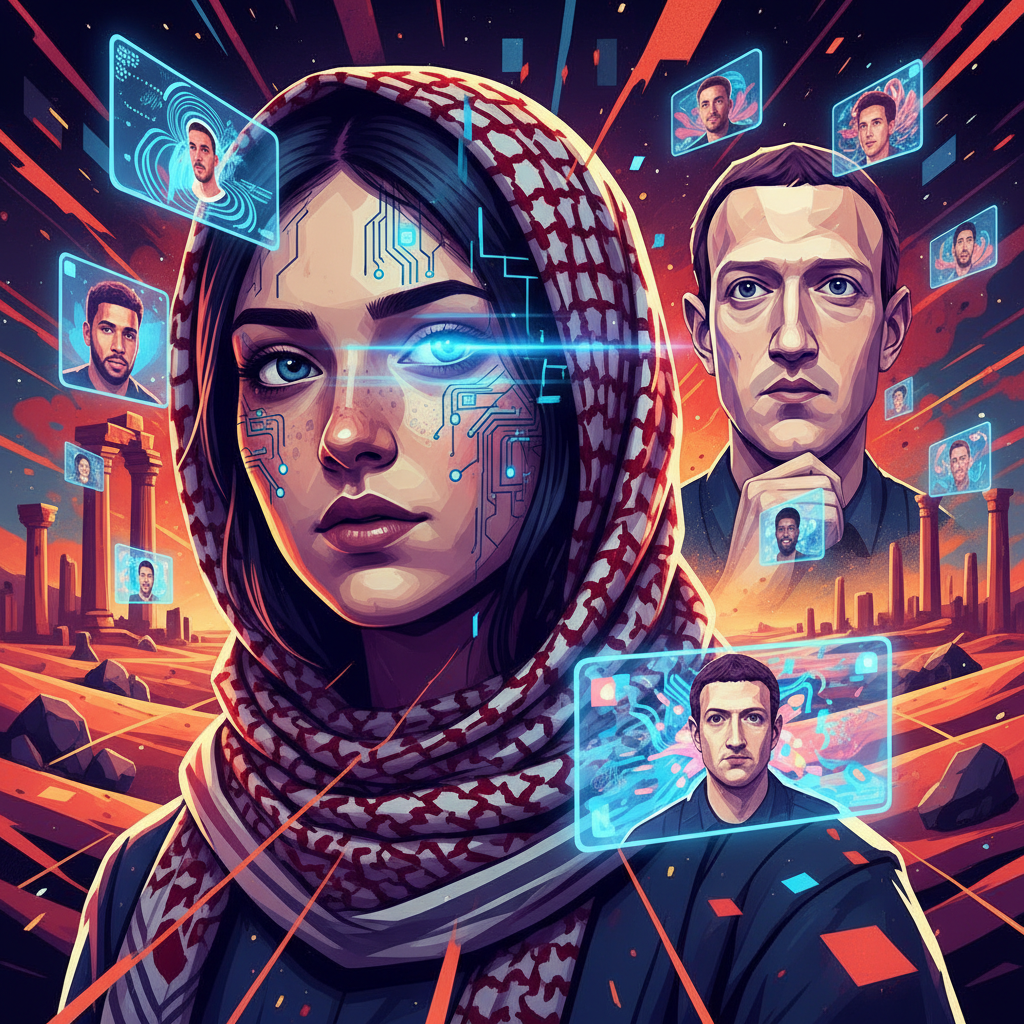
Let us be frank. The digital landscape is no longer just about algorithms and data packets; it is about identity, influence, and the very fabric of our social lives. Here in Jordan, we have always valued authenticity, community, and the wisdom passed down through generations. But what happens when the most engaging voices, the most captivating faces, are not real at all? This is the uncomfortable question we must confront as AI influencers, these virtual celebrities, amass millions of followers, and their digital tendrils reach even into our homes in Amman.
The risk scenario is stark and immediate. Imagine a young person in Irbid or Aqaba, scrolling through their feed, encountering a perfectly curated, eternally youthful, and flawlessly articulate AI personality. This virtual being offers lifestyle advice, promotes products, or even shares opinions on complex social issues. The lines between genuine human connection and algorithmic simulation blur with every post. The danger is not just that these AI entities might mislead, but that they fundamentally alter our perception of reality, trust, and even what it means to be human.
Consider the recent phenomenon of Lil Miquela, a virtual influencer with millions of followers on Instagram. She 'lives' a life indistinguishable from any human celebrity, collaborating with major brands like Prada and Calvin Klein. Her creators, Brud, have built an entire narrative around her, complete with friendships, heartbreaks, and political stances. While she is disclosed as AI, the psychological impact on impressionable audiences remains a significant concern. The technical explanation for this rise is rooted in advancements in generative AI, particularly large language models and sophisticated image and video synthesis. Tools from companies like Meta AI and OpenAI are making it increasingly easy to create hyperrealistic avatars and imbue them with persuasive, human-like communication abilities. Deepfake technology, once a niche concern, is now mainstream, enabling the creation of believable faces and voices at scale. The underlying algorithms learn from vast datasets of human behavior, speech, and appearance, allowing them to generate content that resonates deeply with target audiences.
This is not a distant, theoretical problem. It is happening now. A recent report by MIT Technology Review highlighted the rapid proliferation of these virtual entities, noting that some AI influencers already command engagement rates higher than their human counterparts. The ability to control narrative, promote agendas, and monetize attention without the complexities of human emotion or ethical boundaries presents a powerful, and frankly, terrifying prospect.
The expert debate on this topic is, predictably, fractured. On one side, proponents argue that AI influencers are simply a new form of entertainment and marketing, an evolution of digital media. They point to the creative potential, the ability to experiment with new forms of storytelling, and the efficiency of managing a virtual persona that never sleeps, never ages, and never demands a salary in the traditional sense. Dr. Anya Sharma, a digital ethics researcher at the University of Cambridge, recently stated, "While concerns about authenticity are valid, we must also acknowledge the innovative artistic and commercial avenues these AI entities open up. The key is transparency and education, not outright prohibition." This perspective often aligns with the Silicon Valley ethos of 'move fast and break things,' prioritizing innovation above all else.
However, a growing chorus of critics, particularly from regions like ours, views this trend with deep skepticism. They emphasize the profound ethical implications. Professor Omar Al-Fayez, a sociologist at the University of Jordan, articulated this concern powerfully in a recent symposium: "When we outsource our role models, our tastemakers, and even our moral compasses to algorithms, we risk losing something fundamental about human society. These AI entities are designed to maximize engagement and profit, not to foster genuine well-being or critical thought. We must ask: who benefits from this erosion of reality?" His words echo a sentiment common here in Amman: that technology must serve humanity, not the other way around. The West has it backwards when it assumes technological advancement automatically equates to societal progress.
Another critical voice comes from Dr. Sarah Khattak, a media psychologist based in Dubai, who warned, "The constant exposure to idealized, unattainable virtual personas can exacerbate body image issues, mental health challenges, and feelings of inadequacy, especially among adolescents. The algorithmic optimization of these influencers means they are designed to exploit psychological vulnerabilities for engagement." This is not merely about a new marketing channel; it is about the very mental health of a generation growing up in a world where the most 'perfect' beings are not even real.
The real-world implications for Jordan are particularly acute. Our society, while increasingly connected, still places immense value on family, community, and religious principles. The rise of AI influencers, often promoting lifestyles and values that are culturally dissonant, could create significant societal friction. Imagine an AI influencer promoting consumerism or secular ideals that clash with traditional Jordanian values. The subtle, yet pervasive, influence could be deeply destabilizing. Furthermore, the economic implications are not trivial. If brands increasingly opt for AI influencers due to lower costs and greater control, what happens to the human creative economy? To the aspiring Jordanian artists, designers, and content creators who rely on these opportunities?
Consider the potential for misuse. An AI influencer, designed to be highly persuasive, could be weaponized for political propaganda, misinformation campaigns, or even radicalization. Unlike human influencers, who might have a conscience or face public backlash, an AI entity can be reprogrammed and deployed with ruthless efficiency. This is a significant national security and social cohesion concern. The Jordanian government, through institutions like the Ministry of Digital Economy and Entrepreneurship, has been proactive in fostering digital literacy, but the pace of AI development often outstrips policy. Reuters has reported on several instances of AI-generated misinformation campaigns globally, demonstrating the tangible threat.
So, what should be done? First, transparency is paramount. All AI-generated content, especially that designed for public influence, must be clearly labeled. This is not a suggestion; it is a necessity. Platforms like Instagram and TikTok, owned by Meta and ByteDance respectively, must implement robust detection and labeling mechanisms. Second, we need comprehensive digital literacy programs that specifically address the nature of AI-generated content and its psychological impact. Education is our first line of defense. Our schools and universities, perhaps even partnering with organizations like the King Abdullah II Fund for Development, need to equip our youth with the critical thinking skills to navigate this new reality.
Third, regulatory frameworks are urgently needed. Jordan's approach makes more sense than Silicon Valley's 'wait and see' attitude. We need proactive legislation that holds platforms and creators accountable for the content generated by their AI influencers, particularly concerning misinformation, cultural insensitivity, or the promotion of harmful behaviors. This could involve establishing clear guidelines for disclosure, setting standards for ethical AI development, and imposing penalties for violations. Perhaps a regional body, drawing on expertise from across the Arab world, could collaborate on a unified approach.
Finally, and perhaps most importantly, we must foster a culture that values genuine human connection and critical engagement over superficial digital perfection. We must remind ourselves, and our children, that true influence comes from character, wisdom, and lived experience, not from an algorithmically optimized avatar. The rise of virtual celebrities is not just a technological marvel; it is a profound societal challenge that demands a distinctly human response. Unpopular opinion from Amman, perhaps, but one that I believe is essential for our future.
For further reading on the broader implications of AI in digital economies, you might find this article insightful: When Algorithms Dictate Your Daily Bread: The Shadowy Control of Gig Platforms in Kazakhstan's Digital Economy [blocked].
We cannot allow the dazzling allure of AI to blind us to its potential pitfalls. Our humanity, our culture, and our collective well-being are too precious to be left to the whims of code and profit motives. We must engage with this technology thoughtfully, critically, and with a clear understanding of what we stand to lose if we do not.