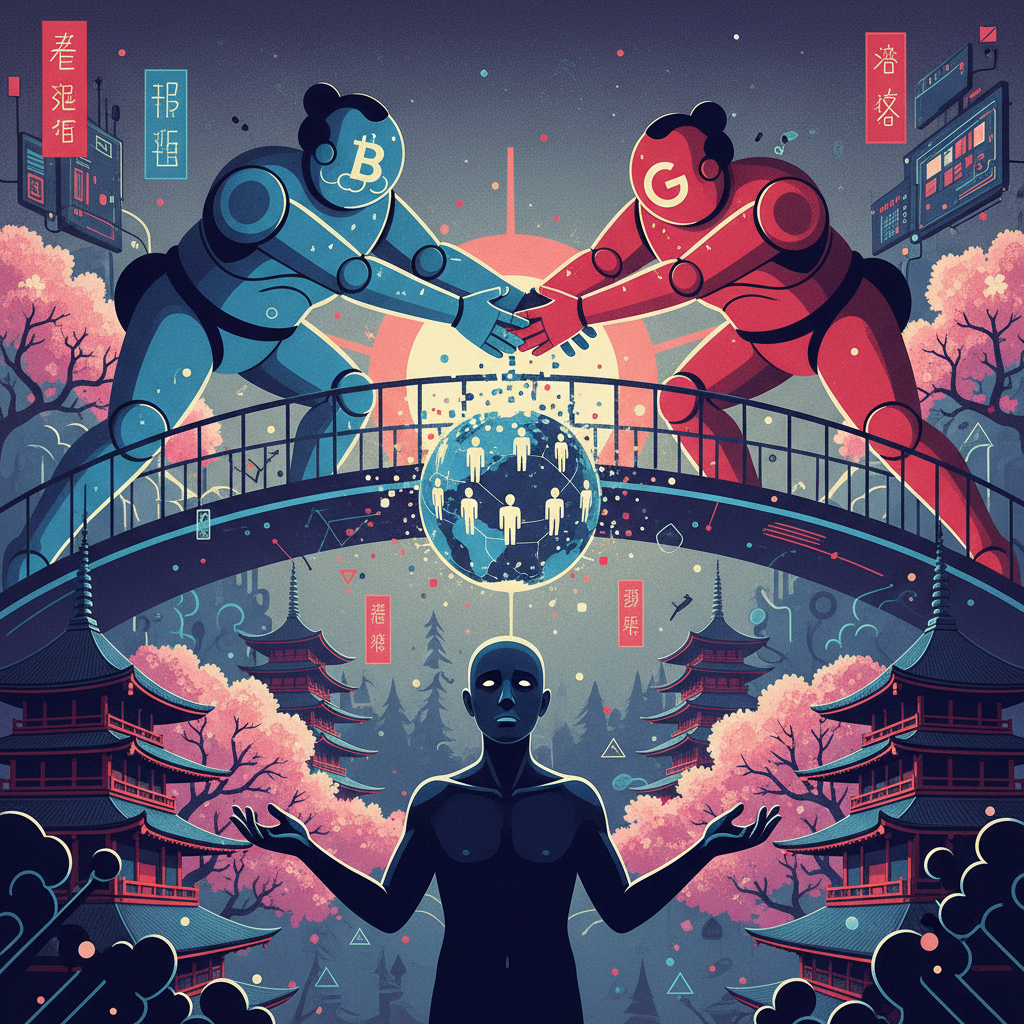
In a quiet Tokyo lab, a young researcher once whispered something that changed my perspective. She spoke not of teraflops or neural networks, but of her grandmother, who used a simple AI companion to share stories when family was far away. It was a poignant reminder that for all the grand pronouncements about artificial intelligence, its true impact, its kokoro or heart, lies in how it touches individual lives. Yet, as I observe the increasingly fraught landscape of global AI development from my home in Japan, I cannot help but feel a chill. The geopolitical tensions between superpowers are not merely simmering; they are actively fueling an AI technology cold war, transforming what should be a tool for human flourishing into a new arena for strategic competition.
This is not a theoretical exercise. We are witnessing a clear bifurcation of the AI world, driven by a zero-sum mentality that sees technological leadership as paramount to national security and economic prosperity. On one side, we have the Silicon Valley giants like Google, OpenAI, and Microsoft, backed by immense capital and a culture of rapid innovation. On the other, China's formidable tech ecosystem, spearheaded by companies like Baidu, Tencent, and Huawei, operates with significant state support and a different set of priorities. The competition is fierce, extending from the foundational models that power large language models like Google's Gemini and OpenAI's GPT, to the advanced semiconductors from NVIDIA that are essential for training them, and even to the very data that feeds these hungry algorithms. This rivalry, I believe, is not only wasteful but profoundly dangerous.
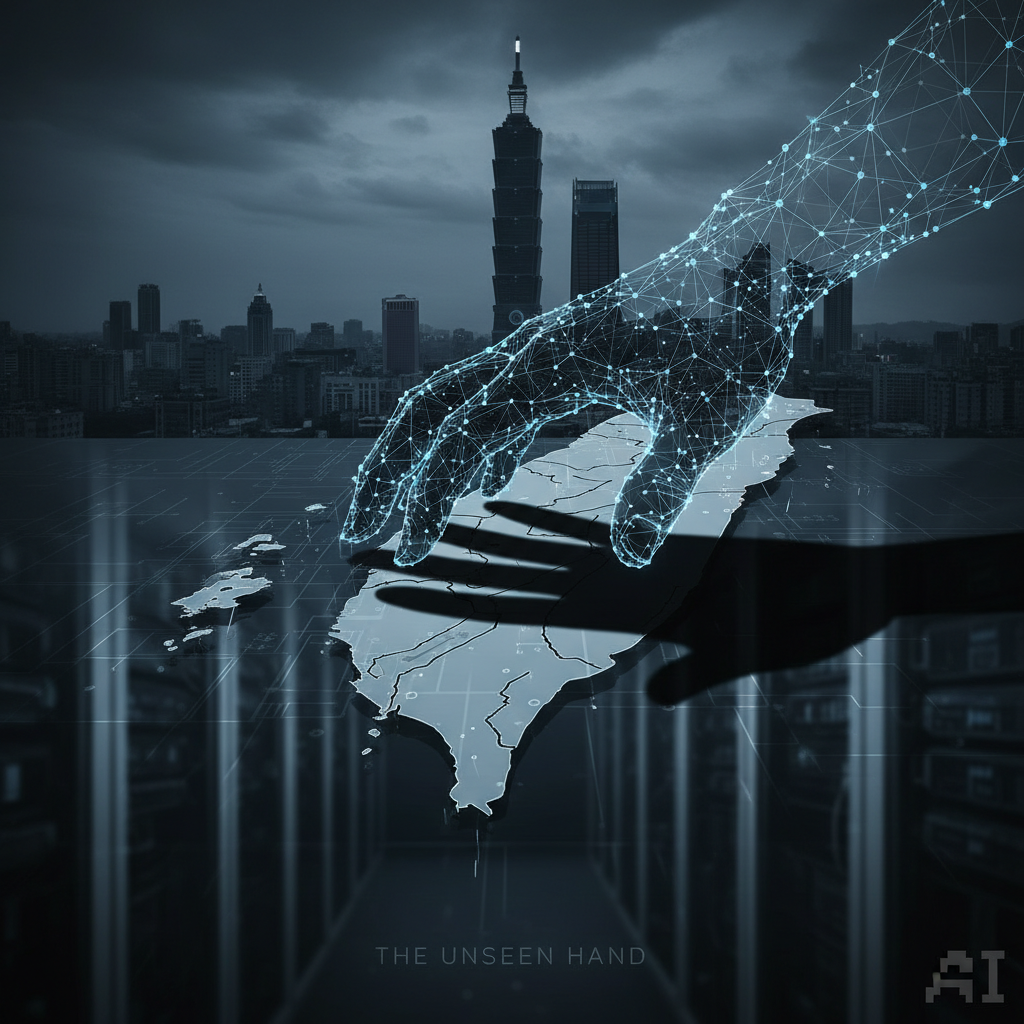
Consider the recent moves. The United States, for instance, has imposed stringent export controls on advanced AI chips, effectively attempting to slow China's progress in critical areas. In response, Beijing has doubled down on its domestic semiconductor industry, pouring billions into initiatives aimed at achieving self-sufficiency. This tit-for-tat dynamic creates a technological iron curtain, forcing nations to choose sides and stifling the open collaboration that has historically accelerated scientific advancement. "This isn't just about economic advantage, it's about shaping the future global order," explained Dr. Kenji Tanaka, a senior fellow at the Japan Institute of International Affairs. "Both Washington and Beijing view AI as the ultimate strategic asset, capable of transforming everything from defense capabilities to economic productivity. The stakes are incredibly high, and compromise feels increasingly distant."
Some might argue that this competition is a necessary evil, a natural consequence of great power rivalry, and that it even spurs innovation. They might point to the rapid advancements in AI capabilities we have seen in recent years, suggesting that the pressure to outperform rivals leads to breakthroughs. Indeed, the pace at which models like Anthropic's Claude and Meta's Llama have evolved is astonishing, pushing the boundaries of what we thought possible. Perhaps, they say, a little competition is healthy, forcing companies and nations to invest more, work harder, and ultimately deliver more powerful AI.
However, this perspective, while appealing in its simplicity, overlooks the profound human cost and the long-term implications. When AI development becomes primarily a nationalistic endeavor, driven by strategic competition rather than collective human benefit, we risk creating fragmented, incompatible, and potentially weaponized technologies. Imagine a world where AI systems developed in one bloc cannot communicate effectively with those from another, or worse, where they are designed with inherent biases or vulnerabilities that serve national interests over universal ethical standards. The very notion of a global AI safety framework, so crucial for mitigating risks like autonomous weapons or widespread disinformation, becomes a distant dream when trust is eroded and collaboration is viewed with suspicion. "The pursuit of 'AI supremacy' at all costs is a dangerous path," stated Professor Akiko Sato, an expert in AI ethics at Keio University. "It diverts resources from addressing global challenges like climate change and healthcare, instead channeling them into a technological arms race. We are seeing a chilling effect on open research and data sharing, which are vital for responsible AI development."
Moreover, this cold war mentality fosters a climate of fear and distrust. Companies are pressured to align with national interests, potentially compromising their ability to serve a global customer base or collaborate with international partners. Researchers, once united by the common pursuit of knowledge, find themselves navigating complex geopolitical boundaries. This is particularly concerning for countries like Japan, which has historically thrived on international cooperation and open markets. We find ourselves caught between two technological titans, each demanding allegiance, each with their own vision for the future of AI. Our own efforts, such as the development of advanced robotics and AI for an aging society, could be hampered by restricted access to critical components or research partnerships.
The human side of the machine, the very essence that drew me to this field, seems to be getting lost in the clamor for dominance. We are building powerful tools, but for what purpose? To win a technological race, or to genuinely improve lives? The former risks creating a future where AI serves division, while the latter promises a world where AI can bridge gaps, foster understanding, and solve shared problems. I remember a conversation with Mr. Hiroshi Nakamura, a retired engineer from Fujitsu, who expressed his concern. "When I started, technology was about making things better for everyone, about connection. Now, it feels like it's about drawing lines, about who has more power. It's a sad evolution for something so promising." His words echoed the sentiments of many I have spoken with, a quiet unease about the direction we are heading.
We must resist the siren song of technological nationalism. The global challenges we face, from pandemics to climate change, require collaborative AI solutions, not isolated, competitive ones. Instead of a cold war, we need a global effort to establish shared ethical guidelines, transparent development practices, and open research initiatives. Organizations like the MIT Technology Review have consistently highlighted the need for international cooperation on AI governance, a call that grows more urgent with each passing day. We should be building bridges, not walls, in the digital realm.
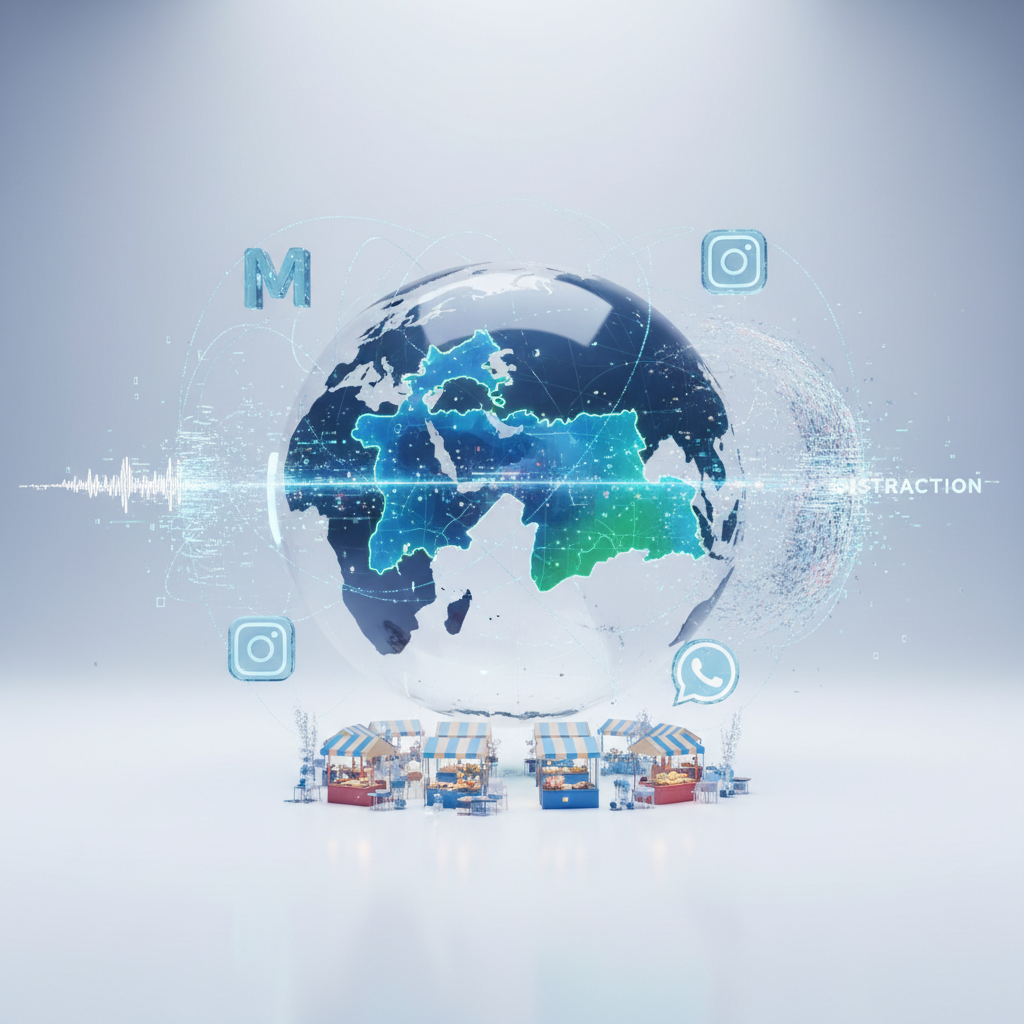
Perhaps it is time for a different kind of leadership, one that prioritizes shared humanity over nationalistic ambition. Can we, as a global community, find a way to steer this powerful technology towards collective good, rather than allowing it to become another instrument of division? The alternative, a future shaped by two competing AI ecosystems, each viewing the other with suspicion, is a bleak one indeed. It is a future where the warmth of human connection, the very thing AI could enhance, might be sacrificed at the altar of technological supremacy. The choice, ultimately, is ours to make. We must demand that our leaders, and the tech giants like Satya Nadella of Microsoft and Sundar Pichai of Google, recognize that true innovation lies not in isolation, but in collaboration for the betterment of all. The path forward, I believe, lies in fostering a global dialogue, perhaps even a 'Kyoto Protocol for AI,' where nations commit to shared principles and open exchange, ensuring that the human heart of AI remains beating strong. More discussion on the global implications of AI can be found on Reuters Technology.
This is not just about the algorithms; it is about the world we are building for our children and grandchildren. We have a chance to shape a future where AI serves as a tool for unity, not division. Let us not squander this opportunity by succumbing to the allure of a technological cold war. The human spirit, after all, thrives on connection, not on competition that isolates and alienates. For further insights into the global AI landscape, TechCrunch offers extensive coverage of startups and industry trends.