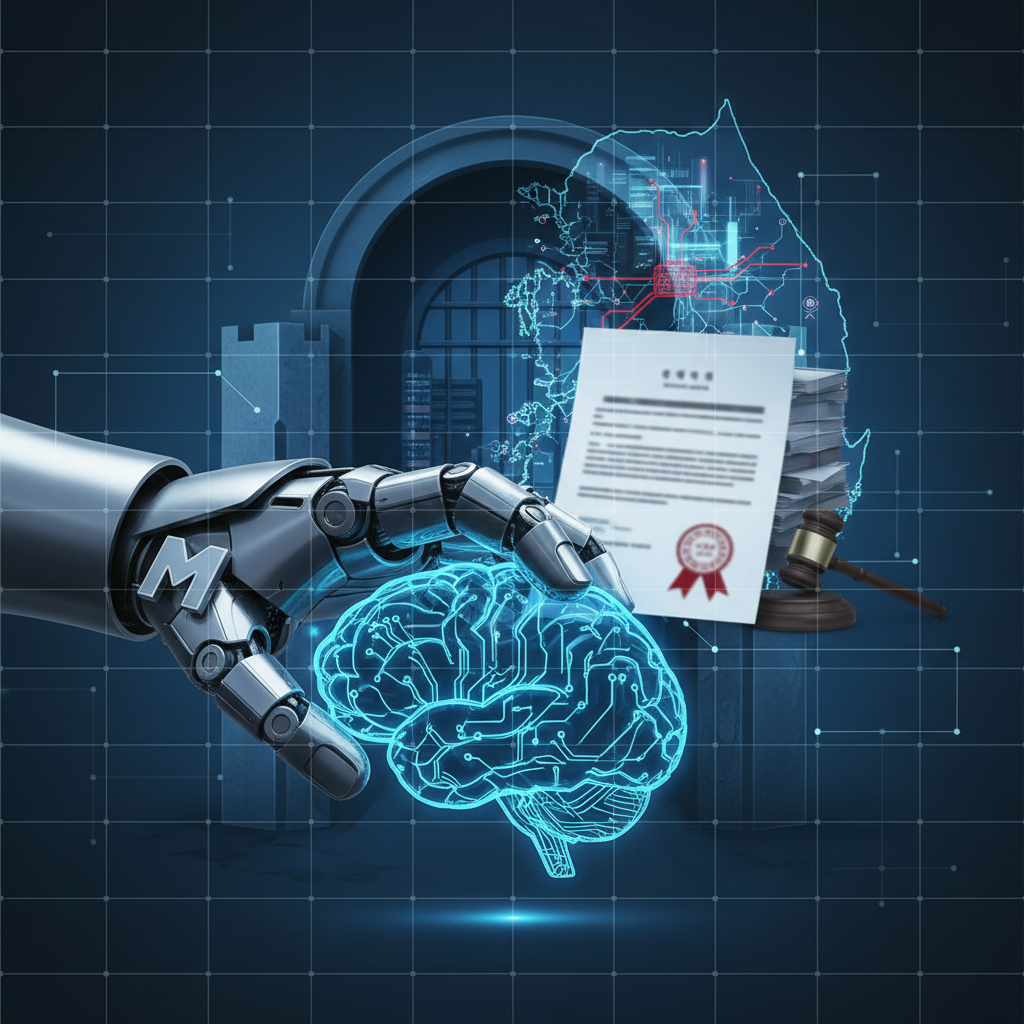

The recent absorption of Inflection AI's entire founding team and most of its staff into Microsoft, a move that saw CEO Mustafa Suleyman take the helm of Microsoft AI, was not merely a corporate maneuver. It was a seismic event, a clear signal of the intense gravitational pull exerted by tech behemoths in the global AI race. For us in South Korea, and across Asia, this development is more than just Silicon Valley drama; it is a stark reminder of the challenges in nurturing independent AI innovation and the pressing need for robust regulatory frameworks to ensure a diverse and competitive future.
This phenomenon, where a promising startup with significant funding is effectively 'acqui-hired' for its talent and intellectual property rather than its product line, highlights a critical vulnerability in the AI ecosystem. Inflection AI, once valued at an estimated $4 billion and backed by luminaries like Reid Hoffman and Bill Gates, had developed Pi, a personal AI assistant. Its sudden pivot, or rather, its dissolution into a larger entity, underscores the immense capital and computational resources required to compete at the frontier of large language models. Even with substantial investment, the sheer scale of infrastructure and research required often proves insurmountable for independent players.
The Policy Move: Addressing Market Concentration
The immediate aftermath of the Microsoft-Inflection integration saw renewed calls for regulatory scrutiny, particularly concerning anti-competitive practices. The core policy question here revolves around market concentration. When a handful of technology giants can effectively absorb promising startups, it stifles competition, limits consumer choice, and centralizes control over foundational AI technologies. This is not a new concern, but the speed and scale of AI development amplify its urgency.
In South Korea, the Fair Trade Commission (FTC) has been increasingly vigilant regarding mergers and acquisitions in the digital sector. While the Inflection deal was not a traditional acquisition that would trigger a full merger review, its implications are not lost on local regulators. The Korean approach to AI is fundamentally different from some Western counterparts, often emphasizing a balance between rapid technological adoption and the safeguarding of domestic industrial competitiveness. The FTC, alongside the Ministry of Science and ICT, is exploring mechanisms to monitor talent migration and the consolidation of critical AI expertise, recognizing that human capital is as vital as computational power.
Who is Behind the Scrutiny and Why?
The impetus for this regulatory introspection comes from multiple fronts. Lawmakers, particularly those focused on innovation and economic fairness, are concerned about the long-term health of the startup ecosystem. If the most promising ventures are consistently bought out before they can mature into independent competitors, the entire innovation pipeline risks becoming a feeder system for established players. This can deter new investment in deep tech startups, as investors may question the potential for significant independent returns.
Professor Kim Min-Joon, an expert in competition law at Seoul National University, articulated this concern recently. He stated, “While talent mobility is a cornerstone of a dynamic economy, the pattern we are observing in AI raises flags. We must ensure that the market remains open to new entrants and that innovation is not monopolized by a few powerful entities. The FTC is certainly watching these developments closely, even if direct intervention is complex.” His sentiment reflects a broader understanding that the 'winner takes all' dynamic, if unchecked, can lead to stagnation rather than accelerated progress.
What It Means in Practice for South Korea
For South Korea, a nation deeply invested in its technological prowess and home to global giants like Samsung and LG, the Inflection scenario is a cautionary tale. Our domestic AI ecosystem, while vibrant, faces similar pressures. Korean startups, often incubated within larger chaebols or supported by government programs like the K-Startup Grand Challenge, need clear pathways to growth without the constant threat of being subsumed. The government’s recent initiatives, such as the 'AI Semiconductor Industry Growth Strategy' and significant investments in sovereign AI infrastructure, aim to build resilience against such external pressures.
Furthermore, the incident underscores the importance of intellectual property protection and the cultivation of a strong domestic talent pool. If top AI researchers and engineers are consistently lured away by global tech giants, it could impede Korea's ambition to become a leading AI hub. This is why initiatives promoting advanced AI education and research, coupled with competitive compensation structures within local firms, are paramount. Samsung's latest move reveals a deeper strategy in this regard, with increased internal R&D spending and strategic partnerships aimed at retaining and attracting top AI minds, recognizing the value of proprietary talent.
Industry Reaction: A Mixed Bag
The industry reaction to the Inflection-Microsoft development has been predictably mixed. Larger Korean tech firms, while publicly advocating for a healthy ecosystem, privately understand the strategic value of talent acquisition. They too engage in fierce competition for top AI engineers. However, many smaller and mid-sized AI startups express concern. One CEO of a promising Seoul-based AI healthcare startup, who requested anonymity, remarked, “It is disheartening. We work tirelessly to build something unique, only to see the goalposts constantly shifted by the sheer scale of resources available to the giants. It makes fundraising harder, and retaining our best people a constant battle.”
This sentiment is echoed by venture capitalists who are now scrutinizing investment opportunities more carefully, weighing the potential for independent success against the likelihood of an early, albeit lucrative, exit via acquisition. The fear is that this trend could lead to a less diverse landscape of AI applications, as smaller, more niche innovations struggle to gain traction against the broad offerings of consolidated players.
Civil Society Perspective: Ethical AI and Concentrated Power
From a civil society perspective, the concentration of AI power raises significant ethical and societal questions. Organizations advocating for responsible AI development are concerned that fewer, larger entities controlling foundational models could lead to less diverse perspectives in AI design, potentially embedding biases or limiting the range of societal benefits. When a single company controls a significant portion of the AI research and development, it also concentrates the power to shape societal norms and influence public discourse through its AI products.
Ms. Lee Ji-Hye, a researcher at the Korean Civil Society Network for AI Ethics, highlighted this point. “The development of AI should not be dictated by the commercial interests of a few corporations. We need a multitude of voices, approaches, and ethical considerations embedded from the ground up. When talent is consolidated, so too is the worldview that shapes these powerful technologies. This is a critical issue for democratic societies.” Her organization advocates for greater transparency and public oversight in AI development, pushing for open standards and interoperability to counteract market dominance.
Will It Work? The Path Forward
Whether current and proposed regulatory measures will effectively address the challenges posed by AI market consolidation remains to be seen. The speed of technological change often outpaces the legislative process, creating a constant game of catch-up for regulators. However, the proactive stance taken by South Korean authorities, focusing on both anti-monopoly concerns and the strategic development of a robust domestic AI ecosystem, offers a pragmatic approach.
Effective regulation will likely involve a multi-pronged strategy: enhanced antitrust scrutiny for 'acqui-hires' that significantly reduce competition, incentives for independent AI research and development, and robust investment in public AI infrastructure and talent development. Furthermore, fostering international cooperation on AI governance, particularly within Asian economic blocs, could create a more level playing field for regional innovators. The goal should not be to stifle growth, but to ensure that the growth benefits a broader spectrum of society and fosters genuine, diverse innovation.
The Inflection AI episode serves as a powerful case study. It reminds us that while technological advancement is exhilarating, its trajectory is not predetermined. It is shaped by policy, by investment, and by the collective will to ensure that the future of AI is not just powerful, but also equitable and diverse. The stakes are too high to leave it solely to market forces; active, informed governance is essential. The global AI landscape is a complex tapestry, and ensuring its vibrancy requires constant vigilance and thoughtful intervention from Seoul to Silicon Valley. For more insights into the broader implications of AI consolidation, readers may find value in reports from MIT Technology Review or Reuters Technology. The future of AI is not just about algorithms; it is about the architecture of power and opportunity.