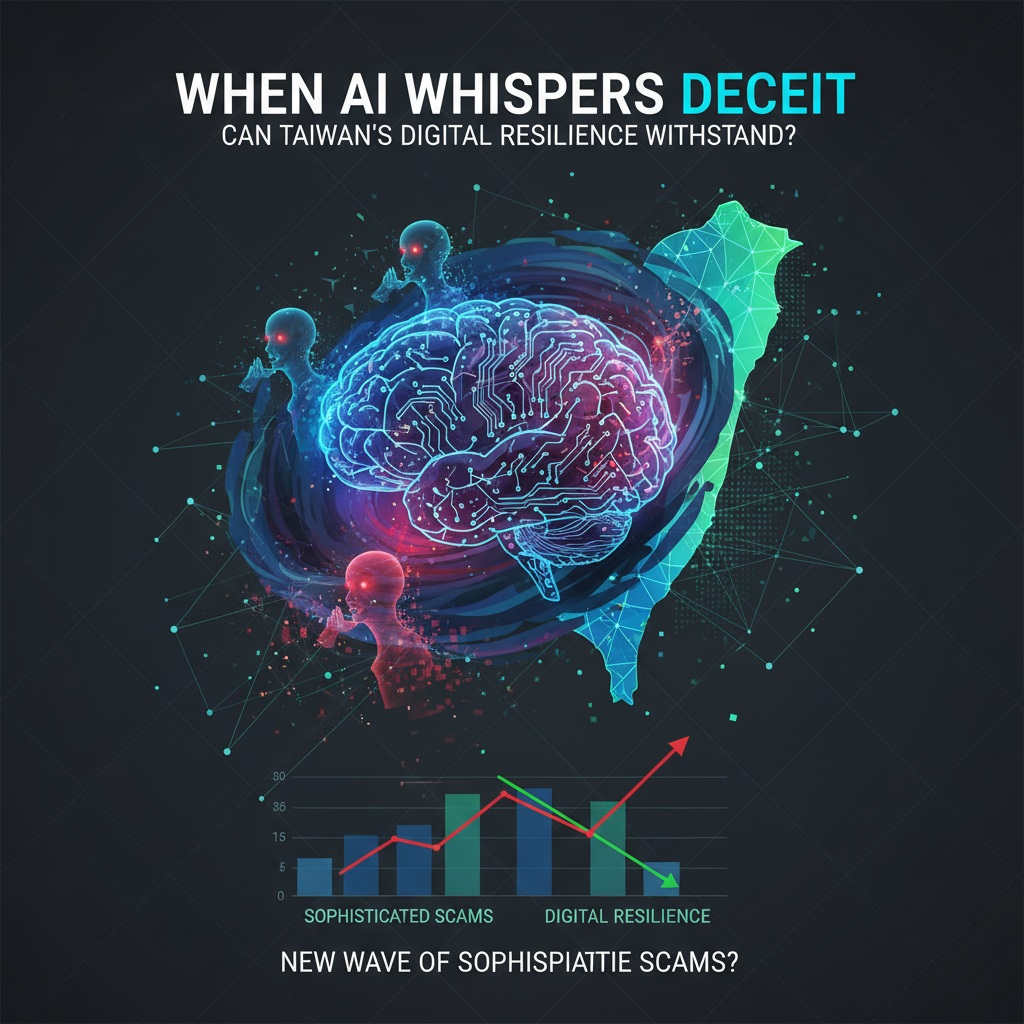

Is the digital world becoming an increasingly treacherous landscape, where the very tools designed for convenience are weaponized for deceit? This question weighs heavily as we observe the escalating sophistication of AI-powered scams, from voice cloning to deepfake phishing, which are now eroding trust and siphoning billions globally. The ease with which malicious actors can now mimic voices, faces, and even conversational styles signals a profound shift in the nature of cybercrime. We must ask: Is this a temporary surge, a mere technological growing pain, or are we witnessing the dawn of a new, perpetually challenged digital normal?
Historically, scams have always adapted to the prevailing communication technologies. From the Nigerian prince emails of the early internet to elaborate telephone cons, human gullibility and trust have been the constants exploited. However, the advent of generative AI has introduced a qualitatively different dimension. Previously, a scammer might need weeks, if not months, to cultivate a convincing persona or gather enough personal information to execute a high-value fraud. Now, with readily available AI models, a few seconds of audio can be enough to clone a voice, and publicly available images can fuel deepfake video generation. This drastically reduces the barrier to entry for sophisticated fraud, democratizing deception in a troubling manner.
The data tells a more nuanced story, revealing not just an increase in volume but a significant leap in complexity. Reports from the US Federal Trade Commission indicate that consumers lost nearly $10 billion to fraud in 2023, a staggering increase from previous years, with imposter scams being a primary driver. While not all of this is AI-powered, the qualitative shift is undeniable. A recent study by the Anti-Phishing Working Group (apwg) noted a 40 percent increase in phishing attacks targeting financial institutions in the latter half of 2023, many exhibiting hallmarks of advanced social engineering facilitated by AI. In Taiwan, the National Communications Commission (NCC) has reported a noticeable uptick in voice phishing attempts where the caller's voice eerily resembles a family member or a bank official. These are not merely automated calls; they are often interactive, dynamic conversations designed to exploit emotional vulnerabilities.
Consider the case of the Hong Kong finance worker who, in early 2024, reportedly transferred $25 million after being duped by deepfake video calls of his company's chief financial officer and other colleagues. This incident, widely reported across Asia, serves as a stark reminder that even seasoned professionals are susceptible. The technology is advancing at a pace that outstrips public awareness and, critically, regulatory response. OpenAI, Google, and Meta have all made significant strides in their generative AI capabilities, releasing models that can produce highly realistic audio and video. While these companies implement safeguards, the open-source community and illicit actors quickly adapt, often bypassing these protections. Let's separate fact from narrative: the tools are out there, and they are being used.
Experts across the globe are grappling with the implications. Dr. Hsing-Chung Chen, a professor of computer science at National Taiwan University specializing in cybersecurity, recently articulated his concerns. He stated, “The challenge is no longer merely identifying suspicious links or unusual email addresses. It is about verifying the authenticity of human interaction itself. Our traditional methods of authentication are simply inadequate against AI-generated deception.” He advocates for a multi-layered approach combining advanced biometrics, behavioral analysis, and robust public education campaigns. His perspective resonates deeply within Taiwan's tech community, which understands the critical importance of digital trust for our export-driven economy.
Across the Pacific, Sam Altman, CEO of OpenAI, has acknowledged the dual-use nature of AI, often emphasizing the need for responsible development and deployment. However, the practical application of these ethical guidelines in the face of rapid technological dissemination remains a significant hurdle. Meanwhile, cybersecurity firms like Palo Alto Networks are reporting a surge in demand for AI-powered detection tools, creating a digital arms race where defensive AI must constantly evolve to counter offensive AI. According to a recent TechCrunch report, venture capital investment in AI security startups has doubled in the last two years, reflecting the market's recognition of this escalating threat.
Taiwan's position is more complex than headlines suggest. As a global leader in semiconductor manufacturing, particularly through companies like Tsmc, our digital infrastructure is a constant target. The island's high internet penetration and tech-savvy population also make it fertile ground for both the development of AI and its exploitation. The government, through agencies like the Ministry of Digital Affairs, has been proactive in launching public awareness campaigns, often using popular local figures to convey messages about scam prevention. However, the sheer volume and sophistication of these new AI-driven attacks mean that vigilance must extend beyond simple caution.
From a financial perspective, the implications are profound. Banks are investing heavily in AI-driven fraud detection systems, but these are often reactive, learning from past attacks rather than predicting novel ones. The cost of fraud is ultimately borne by consumers and businesses, manifesting in higher insurance premiums, increased transaction fees, and a general erosion of confidence in digital transactions. A recent Reuters article highlighted how financial institutions are struggling to keep pace, with many admitting that their current systems are not fully equipped to handle deepfake voice or video authentication bypasses.
My verdict is clear: AI-powered scams are not a fad; they are the new normal. The underlying generative AI technologies are here to stay, and their capabilities will only continue to improve. We are entering an era where digital authenticity can no longer be assumed. The challenge is not to eliminate these threats entirely, which is an unrealistic goal, but to build robust, adaptive defenses and cultivate a collective skepticism that matches the cunning of the attackers. This requires a concerted effort from technology developers, governments, financial institutions, and individual citizens. Without a fundamental shift in how we approach digital trust and verification, the financial and social costs will only continue to mount. Taiwan, with its robust tech ecosystem and inherent geopolitical vulnerabilities, must lead by example in developing and deploying these next-generation defenses. It is not merely a matter of financial security, but of national digital sovereignty.