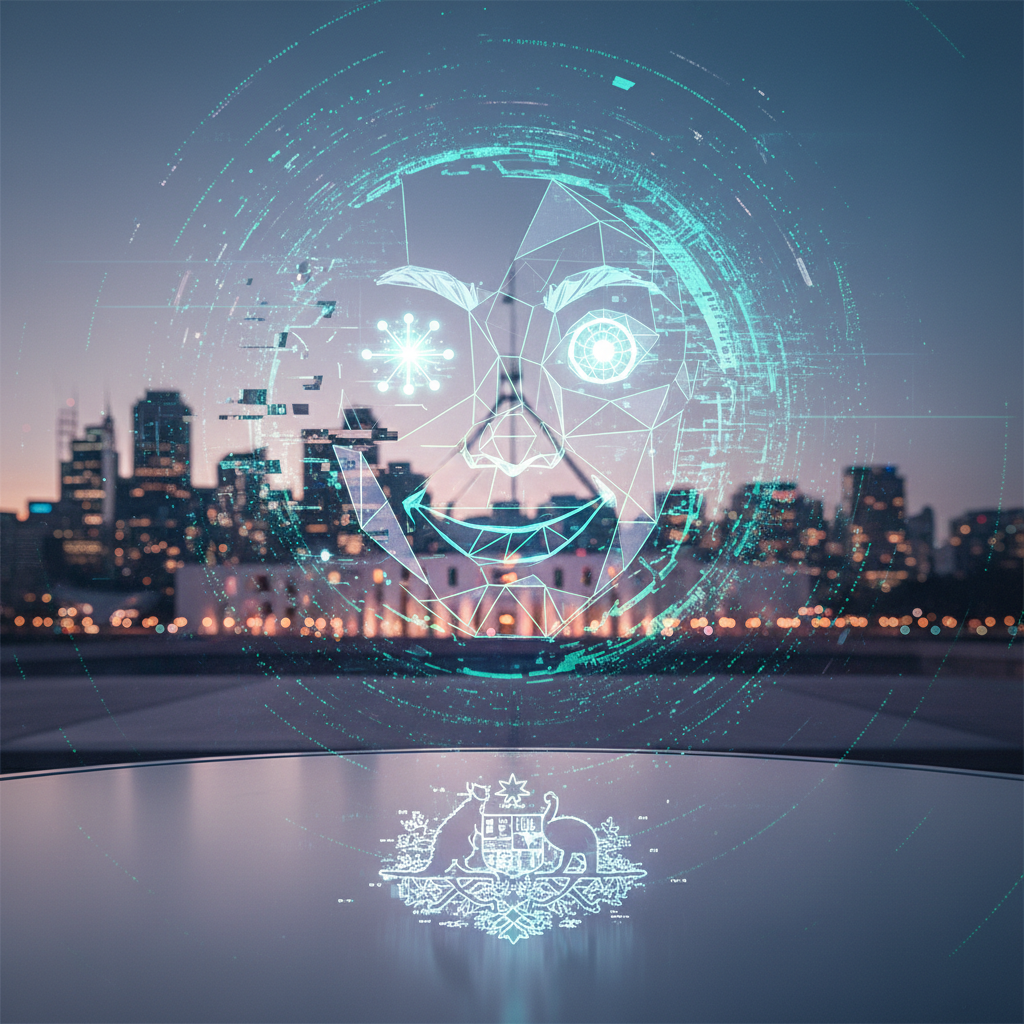
Right, let's cut to the chase. You've probably seen those uncanny videos, the ones where a famous face says something utterly out of character, or a politician appears to be dancing the Nutbush with a koala. For a while, these AI-generated deepfakes were mostly a bit of a laugh, a digital novelty. But mate, this AI thing is getting interesting, and it's not all fun and games anymore, especially when it comes to something as fundamental as our elections.
What Exactly Are These Deepfakes, Anyway?
At its core, a deepfake is a piece of media, usually video or audio, that has been altered or generated by artificial intelligence to depict someone doing or saying something they never actually did or said. Think of it as Photoshop on steroids, but for moving pictures and sound. The 'deep' in deepfake comes from 'deep learning,' a subset of AI that uses neural networks. These networks are trained on vast amounts of data, like real videos and audio of a person, to learn their facial expressions, vocal patterns, and mannerisms. Once trained, the AI can then map these characteristics onto new footage or generate entirely new content, making it appear as if the person is performing the new actions or speaking new words. The goal, of course, is to make it look and sound incredibly convincing, often indistinguishable from reality to the untrained eye.
Why Should You Care, Especially if You're Not Running for Office?
Because the stakes are higher than a kookaburra's laugh at sunrise. We're talking about the very fabric of democracy here. Imagine a deepfake video of a prime ministerial candidate admitting to some scandalous, fabricated crime just days before an election. Or an audio clip of a beloved community leader endorsing a fringe, extremist group. The damage isn't just to that individual's reputation, it's to public trust in information, in the media, and ultimately, in the electoral process itself. If people can't trust what they see and hear, how do they make informed decisions? It creates a fertile ground for misinformation, confusion, and cynicism, which is exactly what bad actors want. For us Australians, who pride ourselves on a robust, if sometimes rowdy, democratic system, this is a genuine concern. We might be a bit more skeptical than some, but even the most cynical Aussie can be swayed by a well-produced lie.
How Did This Digital Wizardry Develop?
The concept isn't entirely new. Hollywood has been using visual effects to manipulate reality for decades. But the democratisation of these tools, making them accessible to anyone with a powerful enough computer and some open-source software, that's the game-changer. The term 'deepfake' itself gained prominence around 2017, when a Reddit user started sharing AI-generated pornographic videos. Since then, the technology has advanced exponentially, fueled by breakthroughs in generative adversarial networks, or GANs, and more recently, diffusion models. Companies like NVIDIA have been instrumental in pushing the boundaries of what's possible with AI-generated media, providing the computational horsepower needed for these complex models. What started as a niche online phenomenon has rapidly evolved into a sophisticated tool, capable of producing highly realistic content with relatively little effort. The speed of this evolution has caught many off guard, including governments and tech giants.
How Does It Work in Simple Terms? Think of a Master Forger.
Imagine you want to forge a painting by a famous artist. You'd study their brushstrokes, their colour palette, their signature style, right? That's what deep learning models do. They take thousands of existing images or videos of a target person, say, our Treasurer, Jim Chalmers. The AI then analyses every nuance, every flicker of an eyebrow, every vocal inflection. Then, another part of the AI, the 'discriminator,' tries to tell the difference between the AI-generated fake and the real thing. It's a constant back-and-forth, like a digital cat and mouse game, with the 'forger' getting better and better at fooling the 'detector.' Eventually, the forger becomes so good that even the detector struggles to tell the difference. That's when you get a deepfake that looks and sounds incredibly real. It's essentially an AI learning to mimic a person's digital essence and then applying it to new scenarios. It's like a digital puppet show, but the puppet is a perfect replica of a real person, and the puppeteer is an algorithm.
Real-World Examples: From Pranks to Propaganda
- Political Disinformation Campaigns: This is where the real danger lies. In 2020, a deepfake audio clip of Belgium's Prime Minister Alexander De Croo was circulated, making it sound as if he was advocating for climate inaction. While quickly debunked, it showed how easily such content could spread and sow doubt. More recently, ahead of various elections globally, we've seen deepfake videos of candidates making fabricated statements, designed to sway public opinion or suppress voter turnout. These aren't just isolated incidents; they're becoming a standard tactic in the playbook of those looking to destabilise democratic processes. According to Reuters, the use of AI-generated content in political campaigns is expected to surge dramatically in the coming years.
- Corporate Espionage and Stock Manipulation: It's not just politics. Imagine a deepfake audio call from a CEO instructing their team to sell off shares based on false information, or a video of a company spokesperson announcing a fake scandal. Such content could cause market panic, manipulate stock prices, and lead to significant financial losses. The potential for economic disruption is enormous.
- Extortion and Harassment: Deepfakes have been used to create non-consensual intimate imagery, leading to severe psychological harm and reputational damage for victims. This darker side of the technology highlights the urgent need for robust legal frameworks and ethical guidelines.
- Misleading Public Narratives: Beyond elections, deepfakes can be used to distort historical events, create false narratives about social issues, or even frame individuals for crimes they didn't commit. This undermines objective truth and makes it harder for societies to address real problems. The ability to manufacture 'evidence' out of thin air is a terrifying prospect.
Common Misconceptions: Not All Fakes Are Deep
One big misconception is that any altered image or video is a deepfake. Not quite. A simple Photoshopped image or a video edited with traditional software isn't a deepfake. The key is the AI generation aspect, the deep learning models creating new, synthetic content that never existed. Another myth is that deepfakes are always perfectly undetectable. While they're getting incredibly good, subtle tells often exist, like inconsistent lighting, unusual blinking patterns, or distorted audio. However, these 'tells' require a keen eye and often specialised detection software. The average punter scrolling through their feed might not notice a thing. Also, some think only sophisticated state actors can create them. While they have the resources for the best, the tools are becoming so accessible that almost anyone with a decent computer can dabble, which is a scary thought.
What to Watch For Next: The Arms Race Continues
The fight against deepfakes is an ongoing technological arms race. On one side, the generative AI models are getting better and faster, making fakes even more convincing. On the other, researchers are developing more sophisticated detection tools. Companies like Google and Meta are investing heavily in watermarking technologies and provenance systems to verify the origin of digital content. Legislation is also slowly catching up, with some countries introducing laws to criminalise the creation and dissemination of malicious deepfakes. Here in Australia, we're seeing discussions about how our existing laws around defamation, harassment, and electoral interference might apply, or where new laws are needed. It's a complex legal and ethical minefield.
We also need to become more digitally literate as a society. Critical thinking, media literacy, and a healthy dose of skepticism are our best defenses. If something seems too wild, too perfect, or too outrageous, it probably is. Don't share it without checking. Remember, Australia's tech scene is like a good flat white, better than you'd expect, and our researchers are on the case. But ultimately, the responsibility falls to all of us to question what we see and hear, especially when it comes to our democracy. As Dr. Hany Farid, a leading expert in digital forensics at the University of California, Berkeley, once put it, "The problem with deepfakes is not just that they can create false realities, but that they can make us doubt true realities." That's a chilling thought, isn't it? The future of information integrity, and indeed our elections, depends on how well we adapt to this new digital frontier. We've got to be smarter than the algorithms, or at least, smart enough to call out their bull. For more on the technical side of things, MIT Technology Review often covers the latest in detection methods. And if you're keen on the broader ethical implications, Wired has some cracking pieces.
Down Under, we do things differently, and hopefully, that includes a healthy dose of common sense and a refusal to be fooled by digital trickery. But it won't happen by accident; it'll take vigilance from everyone.