
Picture this: you're cruising down the Pacific Motorway, windows down, the salty air filling your lungs, and a brand new track comes on. It's catchy, the beat's infectious, and the lyrics just get you. You Shazam it, add it to your playlist, and hum it for days. Only later do you find out that this earworm, this absolute banger, wasn't penned by a human songwriter, nor performed by a band sweating it out in a garage. It was birthed by an AI, a sophisticated algorithm from a company like OpenAI's Jukebox or Google's MusicLM, fed millions of songs and told to create something 'new and popular.'
It sounds like science fiction, doesn't it? But mates, this is our reality in April 2026. AI-generated music isn't just a novelty anymore, it's a bona fide chart-topper, and it's sparking an existential rumble across the music industry. But beyond the boardrooms and royalty debates, I'm fascinated by something even deeper: what is this doing to us, the listeners, the human beings who find solace, joy, and identity in music? My Irish roots taught me to question, my Australian home taught me to build, and right now, I'm questioning the very foundations of our musical experience.
Down here in Australia, we've always had a fierce connection to our music, from the raw energy of Ac/dc to the soulful stories of Paul Kelly. Music is woven into the fabric of our lives, soundtracking our barbecues, our road trips, our quiet moments of reflection. So, when algorithms start crafting the tunes that dominate our airwaves, what happens to that connection? Are we still finding meaning, or are we simply consuming perfectly engineered sonic wallpaper?
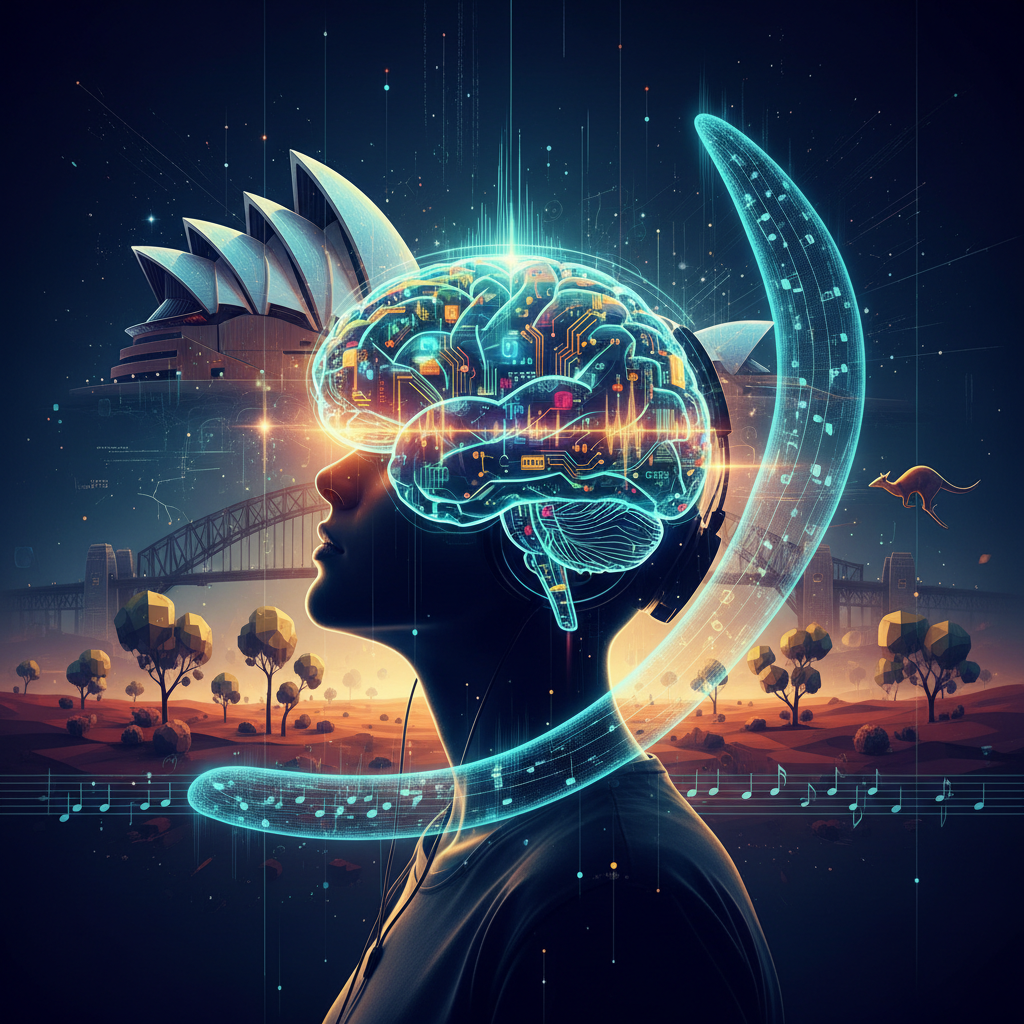
Recent research is beginning to peel back the layers of this fascinating psychological puzzle. A study published in Nature Machine Intelligence last year highlighted that listeners often rate AI-generated tracks as equally, if not more, 'pleasing' than human-composed ones, especially when they're unaware of the source. This isn't just about technical proficiency, it's about emotional resonance. The AI isn't just mimicking; it's learning what makes us tick, what chord progressions evoke nostalgia, what lyrical themes resonate with our collective unconscious.
Dr. Anya Sharma, a cognitive psychologist from the University of Sydney, shared her insights with me. "When we listen to music, our brains aren't just processing sounds, we're engaging in a complex dance of expectation, memory, and emotion," she explained. "AI-generated music, particularly from advanced models, is becoming incredibly adept at hitting those sweet spots. The concern isn't that it's bad music, it's that its perfection might bypass the very human struggle and vulnerability that often makes art so profound. We might be losing the 'story behind the song' in a quest for optimal auditory pleasure." She makes a powerful point; the grit, the mistakes, the sheer human effort often imbue music with a deeper meaning for us.
Think about it: when you hear a song written by a human, you're often subconsciously aware of the journey, the pain, the joy that went into its creation. There's a shared humanity, a sense of connection with the artist. But with AI, that narrative is absent. It's a product, perfectly tailored, but perhaps lacking the soul that comes from lived experience. This isn't to say it's inherently bad, not at all. It's just different, and our brains are adapting to this new form of artistic consumption.
One of the most intriguing psychological effects is what some researchers are calling 'algorithmic intimacy.' Spotify's recommendation engine, powered by sophisticated AI, already knows our musical tastes better than some of our closest friends. Now, imagine that same AI not just recommending, but creating the music it knows you'll love. It feels personal, doesn't it? Almost like the AI is a musical confidant. Yet, this intimacy is one-sided. We're developing a relationship with an algorithm, and the implications for our social connections and even our sense of self are profound. Are we becoming less discerning, less critical, simply because the music is so perfectly aligned with our existing preferences?
Dr. Ben Carter, a social psychologist based in Melbourne, noted, "The more we outsource our creative consumption to algorithms, the more we risk narrowing our cultural horizons. If AI constantly feeds us what it thinks we want, based on past data, where's the room for serendipity, for challenging our tastes, for discovering something truly novel and unexpected?" He raises a crucial point about the 'filter bubble' effect extending into our sonic landscape. We might find ourselves in a comfortable, but ultimately creatively stagnant, echo chamber of algorithmically approved tunes.
This isn't just an abstract academic debate. It's playing out in our homes, our cars, and on our devices. The Australian Recording Industry Association (aria) has even begun discussions on how to categorise and credit AI-generated tracks for chart eligibility, a clear sign that this isn't a fringe phenomenon. Major labels like Universal Music Group and Sony Music are investing heavily in AI music startups, recognising that the future isn't about fighting the tide, but learning to surf it. There's something happening in the Southern Hemisphere that Silicon Valley hasn't noticed yet, and that's our unique blend of embracing innovation while still holding onto our cultural identity.
So, what's a music lover to do in this brave new world? It's not about rejecting AI music outright. That's like trying to stop the tide from coming in. Instead, it's about conscious consumption. Here's my practical advice, straight from the heart of a tech enthusiast who still loves a good pub rock band:
- Stay Curious, Always: Don't let algorithms be your sole musical guide. Actively seek out human artists, local bands, and genres you wouldn't normally listen to. Go to a gig at your local RSL or pub. Talk to people about music. Expand your horizons beyond what the AI deems 'optimal' for you.
- Question the Source: When you hear a track you love, take a moment to find out who made it. Was it a human artist, an AI, or a collaboration? Understanding the origin can deepen your appreciation or provoke interesting thought.
- Support Human Creativity: Buy an album, stream directly from an artist's page, go to live shows. The human creative spirit needs nurturing, now more than ever. Remember, the 'existential crisis' isn't just for the industry, it's for the artists themselves.
- Embrace Collaboration: The most exciting future might not be AI vs. human, but AI with human. Imagine artists using AI as a tool to unlock new creative avenues, to experiment with sounds and structures previously unimaginable. This is where the magic truly happens, where human ingenuity guides algorithmic power.
The rise of AI-generated music topping charts is more than just a business story; it's a profound psychological experiment playing out in real time. It challenges our definitions of art, creativity, and even our emotional responses. As we navigate this exhilarating, sometimes bewildering, new era, let's remember the power of human connection and the irreplaceable value of a story told by a human voice, even as we marvel at the incredible capabilities of our silicon-based counterparts. The future of music is here, and it's asking us to listen a little more deeply, and think a little more critically, about what truly moves us. For more on the broader implications of AI in creative fields, check out some excellent analysis on The Verge.
This is the startup story of the decade, not just for the companies making the AI, but for us, the listeners, as we redefine our relationship with the very art that shapes our lives. It's a wild ride, and I for one, am absolutely buzzing to see where it takes us next.