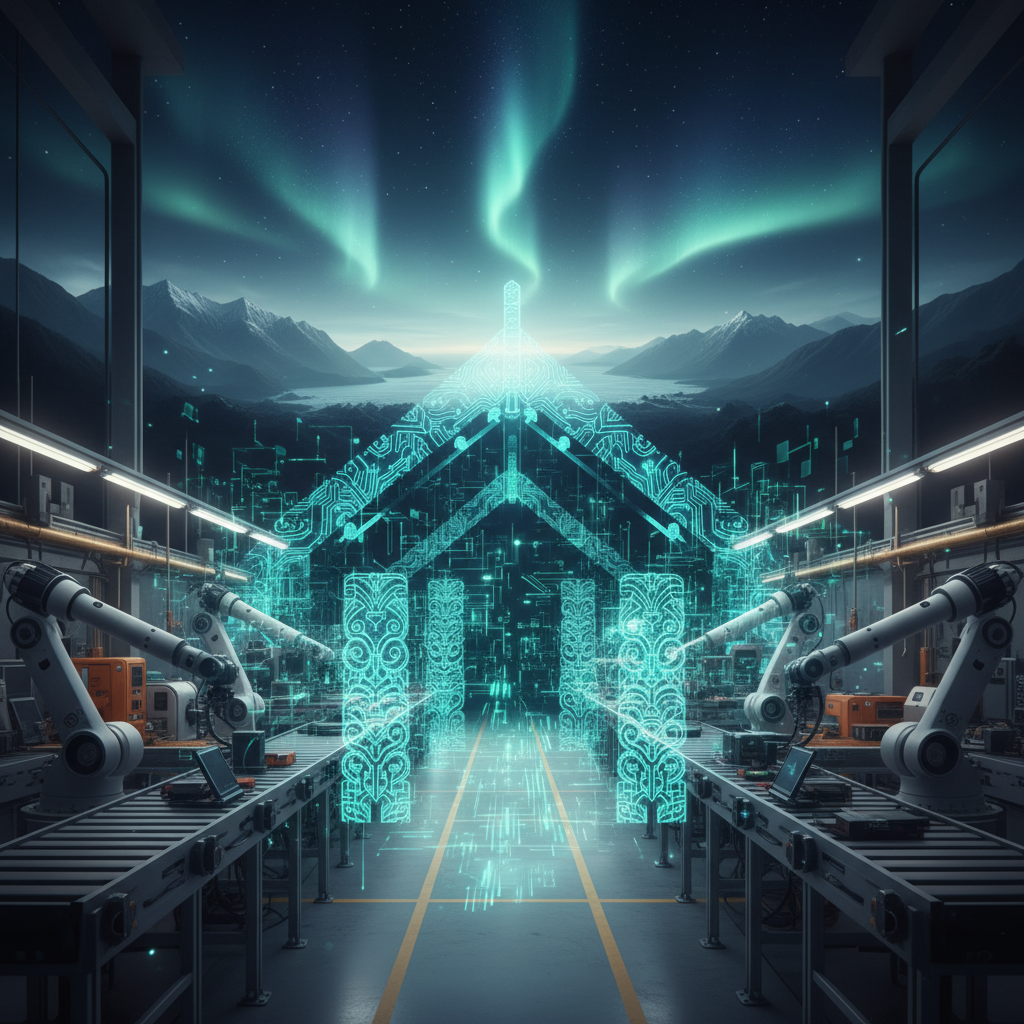

E ngā mana, e ngā reo, tēnā koutou katoa. Greetings to all the esteemed voices out there. Here in Aotearoa, we often speak of the marae, a central gathering place where community comes together, where knowledge is shared, and where the well-being of all is paramount. It is a living, breathing ecosystem of connection and purpose. When I look at the future of manufacturing, particularly how artificial intelligence is weaving itself into the very fabric of production, I see something akin to a 'Digital Marae'. It is a place where every machine, every process, every piece of data is connected, conversing, and contributing to a greater whole. This is not just about making things faster or cheaper, it is about making them smarter, more sustainable, and ultimately, more aligned with human values.
What is AI in Manufacturing: Predictive Maintenance, Quality Control, and Smart Factories?
At its heart, AI in manufacturing refers to the application of artificial intelligence technologies to optimize and automate various aspects of the production process. We are talking about three big ideas here: predictive maintenance, quality control, and smart factories. Think of it as giving factories a brain, eyes, and a nervous system. Predictive maintenance is like a doctor who can tell you exactly when your car is about to break down, long before it actually does, allowing you to fix it preemptively. Quality control, powered by AI, is like having an eagle-eyed inspector who never blinks, catching even the tiniest flaw in a product. And a smart factory? That is the entire marae itself, a fully integrated ecosystem where all these intelligent components work together seamlessly, learning and adapting in real time.
Why Should You Care?
Why does this matter to you, whether you are a factory worker in Hamilton or a consumer in Helsinki? Because it touches everything. For businesses, it means less downtime, reduced waste, and higher quality products. This translates to better competitiveness and more resilient supply chains, something we have all learned to value deeply in recent years. For workers, it means a shift from dangerous, repetitive tasks to more supervisory, analytical, and skilled roles. It is about creating safer environments and more engaging work. For the planet, it is about efficiency. Less energy consumption, less material waste, and optimized resource use are critical steps towards a more sustainable future. As a nation, Aotearoa's approach to AI is rooted in indigenous wisdom, emphasizing kaitiakitanga, guardianship of the environment. This means we must ensure that these technological advancements serve the planet, not just profit.
How Did It Develop?
The journey to today's AI-powered factories began long before the current AI boom. It started with basic automation in the mid-20th century, moving through programmable logic controllers in the 1970s and 80s. The rise of big data and the Internet of Things IoT in the 2000s laid the groundwork, connecting machines and generating vast amounts of information. But it was the dramatic leaps in machine learning and deep learning algorithms over the last decade that truly unlocked the potential for intelligent manufacturing. Companies like Google's DeepMind and NVIDIA, with their powerful processing units, have pushed the boundaries of what AI can learn and achieve, making complex pattern recognition and real-time decision-making possible on the factory floor. The convergence of these technologies has created the perfect storm for smart manufacturing to flourish.
How Does It Work in Simple Terms?
Imagine a traditional factory as a waka, a canoe, being paddled by many people. Everyone has their job, but communication might be slow, and if one paddler gets tired, the waka slows down. Now, imagine that waka is equipped with sensors everywhere. These sensors are like tiny ears and eyes, constantly listening to the hum of the engine, feeling the vibration of the paddles, and watching the water. This data, the sounds and sights, is fed into a central intelligence, the AI brain. This brain learns what normal sounds and vibrations feel like. When something starts to sound a little off, or vibrate a little differently, the AI immediately flags it. That is predictive maintenance in action, telling you to check that specific paddle before it breaks and leaves you stranded.
For quality control, imagine the AI is not just listening, but also seeing. High-resolution cameras, often combined with computer vision algorithms, inspect every single product as it moves down the line. It is faster and more consistent than any human eye. If a tiny scratch or a misplaced component is detected, the AI can immediately pull that item off the line, preventing a faulty product from reaching a customer. This level of precision is truly remarkable.
Finally, a smart factory brings all this together. The AI brain coordinates the entire waka. It can adjust the speed of production based on demand, reroute materials to avoid bottlenecks, and even optimize energy consumption. It is a self-optimizing, self-healing system, constantly learning from its own operations and external factors like supply chain disruptions or market changes. It is a living, breathing entity, much like our natural ecosystems, striving for balance and efficiency.
Real-World Examples
-
Siemens' Amberg Electronics Plant: This facility in Germany is often cited as a prime example of a smart factory. It produces over 15 million products annually with a reported quality rate of 99.9985 percent. AI and automation allow the plant to achieve this near-perfect quality while adapting to over 1,000 product variants. Their systems predict machine failures and optimize production schedules in real time, showcasing the power of a fully integrated digital approach.
-
General Electric's Predix Platform: GE has been a pioneer in industrial IoT and AI for predictive maintenance. Their Predix platform collects data from thousands of industrial assets, from jet engines to power turbines. By analyzing this data, they can predict potential failures, allowing for maintenance to be scheduled precisely when needed, reducing costly unplanned downtime. This has reportedly saved millions for their clients in the energy and aviation sectors.
-
BMW's Quality Control: In their automotive plants, BMW employs AI-powered computer vision systems to inspect vehicles for defects. These systems can identify minute imperfections in paintwork, body panels, and assembly long before a human eye might catch them. This significantly improves the final product quality and reduces the need for manual re-inspection, speeding up the overall process. This kind of precision ensures that a brand known for quality maintains its reputation.
-
Fanuc's Zero Down Time ZDT System: The Japanese robotics giant Fanuc uses AI to monitor its robots deployed in factories worldwide. The ZDT system collects data from over 200,000 robots, predicting when a component might fail and recommending preventative maintenance. This proactive approach minimizes unexpected breakdowns, a critical factor in high-volume manufacturing environments. This is a powerful example of how AI can extend the lifespan and reliability of complex machinery globally.
Common Misconceptions
One common misconception is that AI in manufacturing means fully automated, human-less factories. While automation is a significant component, the reality is more nuanced. Technology must serve the people, not the other way around. AI often augments human capabilities, taking over the mundane and dangerous tasks, but leaving the complex problem-solving, strategic thinking, and creative design to human experts. Another myth is that it is only for huge corporations. While large companies are leading the charge, the scalability of cloud-based AI solutions means that even small and medium-sized enterprises SMEs can now access powerful tools for predictive maintenance and quality control, democratizing access to this technology.
What to Watch for Next
Looking ahead, we are going to see even deeper integration of AI with other emerging technologies. The combination of AI with digital twins, virtual replicas of physical assets, will allow for even more sophisticated simulations and optimizations. Edge AI, where processing happens directly on the factory floor rather than in the cloud, will enable faster, more secure, and more reliable real-time decision-making. We will also see a greater emphasis on explainable AI XAI, ensuring that manufacturers understand why an AI system made a particular recommendation, fostering trust and enabling continuous improvement. The push for sustainability will also accelerate, with AI playing a crucial role in optimizing energy grids for factories and reducing their carbon footprint. The journey towards truly intelligent, self-optimizing, and sustainable manufacturing is well underway, and it is a path that holds immense promise for our collective future. For more on how AI is transforming industries, you might find articles on AI business news insightful. The conversations around AI research and analysis also continue to shape our understanding of what is possible. It is a dynamic space, and one that demands our thoughtful engagement and ethical consideration, especially here in Aotearoa where we value long-term well-being above all else. You can also find more on the broader implications of AI on Wired's AI section.