
Let’s be honest, for years, when Silicon Valley talked about Artificial Intelligence, they really meant cloud AI. All your queries, your photos, your voice commands, they all zipped off to some massive server farm in Oregon or Ireland. The big tech giants, like Google with its Gemini or OpenAI with its GPT models, built their empires on this centralized model. But now, Apple, in its grand partnership with OpenAI, is pushing something different, something that feels a bit more grounded, a bit more personal: on-device AI. So, what exactly is this ‘on-device AI’ everyone is suddenly buzzing about?
What is On-Device AI? A Local Brain in Your Pocket
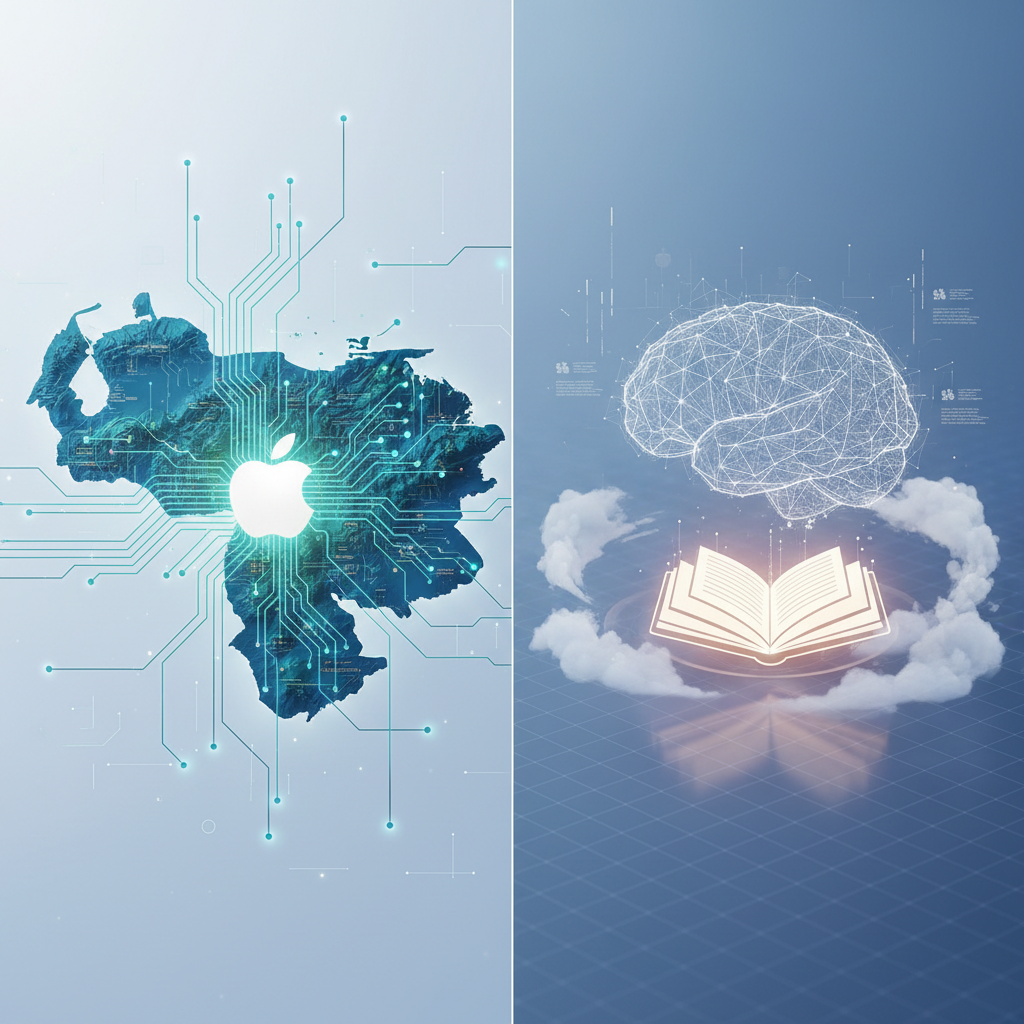
Simply put, on-device AI refers to artificial intelligence models and processing that happen directly on your personal device, like your iPhone, Mac, or even a smart home gadget, rather than relying on constant communication with remote cloud servers. Think of it this way: instead of calling a distant expert every time you need an answer, you have a highly capable assistant living right inside your phone, ready to help without ever leaving your side. It’s like having a miniature, specialized data center in your pocket, powered by chips designed for this very purpose.
This isn't just about a faster Siri, though that’s certainly a welcome side effect. It’s about fundamental architectural changes. The AI models themselves, often smaller and more optimized versions of their cloud-based siblings, are downloaded and run locally. This means your data, your prompts, your personal information, often stays right there on your device. It’s a significant departure from the 'send everything to the cloud' paradigm that has dominated the tech world for the last decade.
Why Should You Care? Privacy, Speed, and Autonomy
For us, far from the tech hubs, this shift is more than just a technical curiosity. It’s about sovereignty, about control, and yes, about practicality. Why should you care about on-device AI?
First, there’s privacy. This is the big one. When your data stays on your device, it’s not being sent across the internet, stored on remote servers, or potentially accessed by third parties. This is a massive win for personal data security, especially in an era where data breaches are as common as a Caracas sunset. "The privacy implications of true on-device processing are profound," says Dr. Elena Rojas, a cybersecurity expert at the Universidad Central de Venezuela. "It shifts the power dynamic back to the user, away from the corporate giants who have historically monetized our data." For many, particularly in regions where digital surveillance is a concern, this is not just a feature, it’s a necessity.
Second, speed and reliability. No internet connection? No problem. On-device AI works offline. This is huge for places with spotty or expensive internet, which, let’s be honest, is a reality for many of us outside the privileged few. Imagine your AI assistant still working perfectly even when the electricity goes out, or when you are deep in the Amazon jungle, far from any cell tower. The latency, the delay caused by sending data back and forth to the cloud, is virtually eliminated. Your AI assistant responds instantly, making interactions feel much more natural and fluid.
Third, cost. While the upfront cost of a powerful device might be higher, the long-term operational costs can be lower. Less reliance on cloud computing means less data usage, which can translate to savings on internet bills. For developing economies, this efficiency is not a luxury, it’s a critical factor in digital inclusion.
How Did It Develop? From Simple Commands to Complex Models
The idea of on-device processing isn't new. Your smartphone has always done some local computing. Early versions of voice assistants, like the first iterations of Apple’s Siri or Google Assistant, performed basic tasks on the device. But for anything complex, anything requiring real 'intelligence,' they had to phone home to the cloud. This was because the AI models were simply too large and too computationally intensive to run on a small, battery-powered device.
The real breakthrough came with advancements in specialized hardware and more efficient AI models. Companies like Apple started designing their own chips, the A-series for iPhones and M-series for Macs, with dedicated Neural Engines. These are essentially mini-processors optimized specifically for AI tasks, capable of handling complex calculations with incredible speed and efficiency, all while consuming minimal power. Simultaneously, AI researchers began developing 'edge AI' or 'tiny ML' models, which are smaller, more compact versions of their cloud counterparts, designed to run effectively on limited hardware. This dual evolution, better chips and leaner models, made true on-device AI a reality. It’s a testament to how crisis can breed innovation, even in the highly competitive tech sector.
How Does It Work in Simple Terms? Think of a Local Chef
Imagine you want to cook a complex Venezuelan pabellón criollo. In the old cloud AI model, you’d call a master chef in another country, describe your ingredients, and wait for them to tell you every single step, ingredient by ingredient. This takes time, costs money for the call, and you hope they understand your local ingredients. If the phone line drops, you’re stuck.
With on-device AI, it’s like that master chef has moved into your kitchen. They have a smaller, highly efficient cookbook designed for your local ingredients, and they know exactly how to use your appliances. They can whip up that pabellón instantly, without needing to call anyone, and they don’t need to send your recipe details anywhere. Your kitchen, your data, your chef. That’s the magic. The AI model, the 'chef's brain,' is right there, processing your requests directly.
Real-World Examples: More Than Just a Smart Assistant
-
Advanced Photo Editing: Imagine your iPhone automatically enhancing photos, removing unwanted objects, or even generating new elements, all without uploading them to a server. Apple’s Photos app already does a lot of on-device processing for features like facial recognition and scene analysis, but with more powerful on-device AI, this will become far more sophisticated, almost like having a professional editor built-in. This is a game-changer for content creators who value privacy and speed.
-
Personalized Health Monitoring: Wearable devices, like the Apple Watch, can use on-device AI to analyze your health data, detect anomalies, and offer personalized insights. This data, which is highly sensitive, can remain encrypted and processed locally, providing immediate feedback without ever leaving your wrist. This is a critical step towards truly private and proactive health management.
-
Real-time Language Translation: Imagine holding your phone up to a menu in a foreign country, and it instantly translates the text, or having a real-time conversation translated seamlessly, all without an internet connection. This is a powerful application, especially for travelers or for facilitating communication across language barriers in remote areas. Google has been pushing this for years, but on-device models make it faster and more reliable.
-
Enhanced Accessibility Features: On-device AI can power sophisticated accessibility tools, such as advanced screen readers that understand complex visual information, or voice controls that adapt to individual speech patterns, all in real-time. This can dramatically improve the lives of individuals with disabilities, offering them greater independence and access to technology.
Common Misconceptions: It’s Not a Cloud Killer
Many think on-device AI means the end of cloud AI. That’s an unpopular opinion from Caracas, but it’s simply not true. On-device AI is not here to replace cloud AI; it's here to complement it. Think of it as a hybrid approach. The cloud will still handle the most massive, computationally intensive tasks, like training the foundational AI models or processing huge datasets for scientific research. On-device AI will handle the personal, immediate, and privacy-sensitive tasks. It’s a division of labor, not a hostile takeover. The cloud will remain the brain, but your device will become a highly intelligent, semi-autonomous limb.
Another misconception is that on-device AI is less powerful. While the models are often smaller, they are highly optimized for specific tasks and for the hardware they run on. The efficiency gains are staggering. A smaller model running on a dedicated neural engine can often outperform a larger, general-purpose model trying to do the same task on less optimized hardware.
What to Watch For Next: The Decentralized Future
The partnership between Apple and OpenAI is just the beginning. We are going to see a massive push towards more powerful, more efficient on-device AI across the entire tech industry. Expect other players, from Samsung to Google, to double down on their own hardware and software integrations. The competition will be fierce, and that’s a good thing for consumers.
Look for advancements in federated learning, a technique where AI models are trained on decentralized data right on your device, without ever sending the raw data to the cloud. This allows the AI to learn from a vast pool of diverse user data while maintaining individual privacy. This could be a game-changer for personalized AI experiences.
Also, keep an eye on how developers leverage these new capabilities. The ability to run powerful AI models locally will open up a whole new world of applications that prioritize privacy, speed, and offline functionality. This is particularly exciting for innovators in places like Venezuela, where connectivity can be a challenge but ingenuity is abundant. Venezuela's tech diaspora is reshaping AI globally, and this shift towards on-device intelligence offers new avenues for local solutions that don’t rely on constant, expensive internet access.
Ultimately, on-device AI isn't just a technical upgrade; it’s a philosophical one. It’s a move towards a more personal, more private, and more resilient form of computing. It acknowledges that not all intelligence needs to reside in a distant, centralized server. Sometimes, the smartest thing is the one right here, in your hand, working just for you. This crisis created something unexpected, a renewed focus on individual autonomy in the digital realm. And that, my friends, is something worth paying attention to. For more on the technical underpinnings of this shift, consider exploring the research on machine learning basics. The future, it seems, is not just in the cloud, but also very much in your pocket.