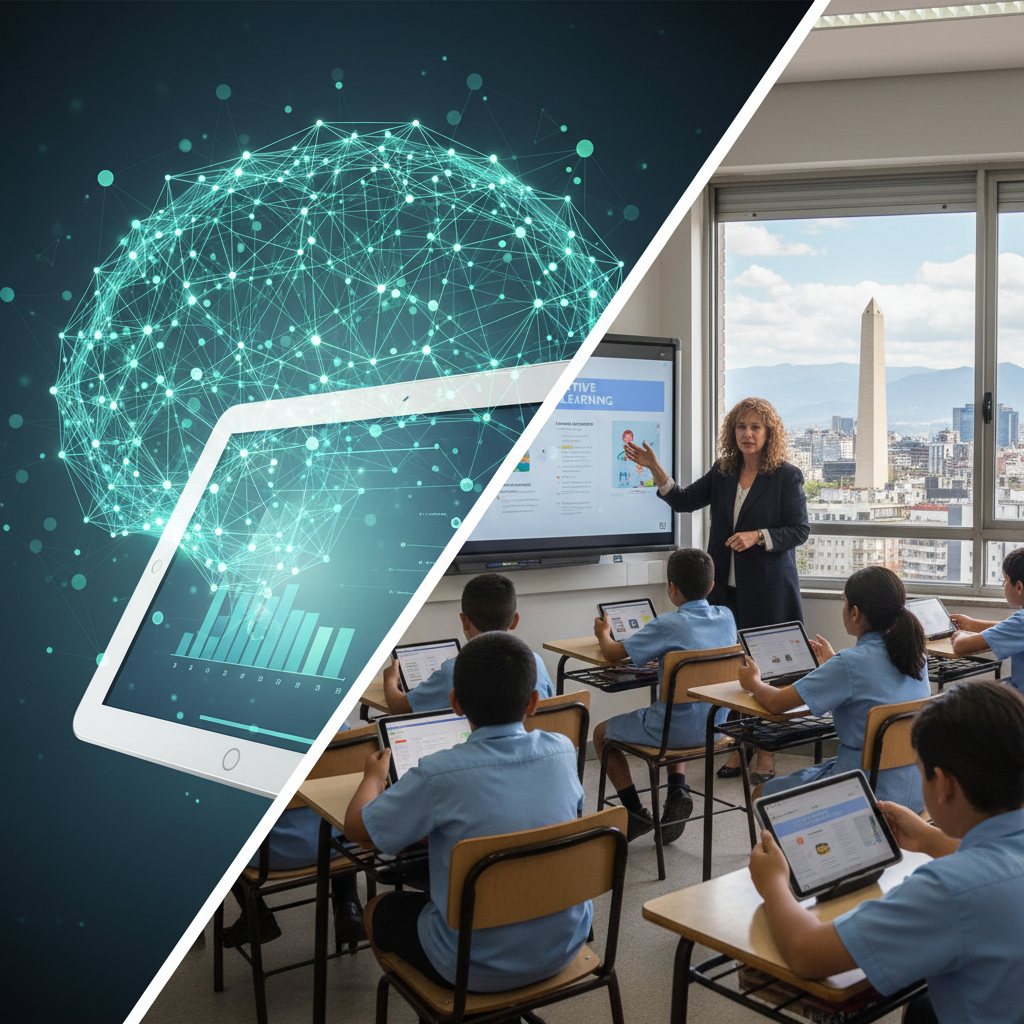

The conversation surrounding artificial intelligence in education often devolves into a binary debate: is it a tool for unprecedented cheating or a panacea for all pedagogical woes? This simplification, particularly prevalent in our region, overlooks a more profound and potentially transformative application: AI-driven adaptive learning. As a journalist from Buenos Aires, I find myself asking, as always, 'but does this actually work?' Let's look at the evidence, not just the marketing brochures.
What is AI-Driven Adaptive Learning?
At its core, AI-driven adaptive learning refers to educational systems that utilize artificial intelligence to tailor the learning experience to each individual student. Unlike traditional one-size-fits-all instruction, or even early computer-aided education, these platforms dynamically adjust content, pace, and teaching methods based on a student's real-time performance, learning style, and specific needs. Imagine a digital tutor that understands when you are struggling with a concept, not just because you got an answer wrong, but because it recognizes patterns in your errors, your response times, or even your engagement levels. It then provides targeted interventions, supplementary materials, or different explanations until mastery is achieved. This is not simply about automating quizzes; it is about creating a personalized educational journey for every learner.
Why Should You Care?
In a country like Argentina, where educational disparities are a persistent challenge, the promise of personalized learning is particularly compelling. Our public education system, while robust in its ideals, often struggles with overcrowded classrooms and limited resources, making individualized attention a luxury. The potential for AI to bridge these gaps, to offer every student, from La Quiaca to Ushuaia, a tailored learning path, is significant. Consider the economic implications: a more effectively educated populace translates directly into a more productive workforce, better innovation, and a stronger economy. Conversely, if these systems are poorly implemented or inaccessible, they could exacerbate existing inequalities, creating a new digital divide. As Dr. Sofía Peralta, a leading educational technologist at the Universidad de Buenos Aires, recently stated, "The potential for equity is immense, but so is the risk of widening the chasm if we do not approach this with careful policy and infrastructure planning."
How Did It Develop?
The concept of adaptive learning is not new. Educators have long recognized that students learn differently. The roots of AI-driven adaptive learning can be traced back to the programmed instruction movement of the mid-20th century, pioneered by figures like B.F. Skinner. However, the real breakthrough came with advancements in computational power and artificial intelligence, particularly machine learning. Early iterations in the 1980s and 90s were often rule-based systems, clunky and limited. The explosion of big data, cloud computing, and sophisticated algorithms in the last decade, particularly with the rise of companies like OpenAI, Google DeepMind, and Microsoft, transformed these nascent systems into powerful, dynamic platforms. Today's AI models, capable of processing vast amounts of data and identifying complex patterns, allow for truly intelligent adaptation.
How Does It Work in Simple Terms?
Think of it like a highly skilled football coach for each player on a team. A traditional coach gives the same drills to everyone. An early computer program might give a different drill if a player fails a test. An AI-driven adaptive learning system, however, observes each player's every move on the field. It notices that one defender consistently misjudges through balls, while another struggles with aerial duels. It then generates specific, personalized drills for each, adjusting the difficulty and type of drill based on their immediate performance. If a player improves, the system moves them to the next challenge. If they falter, it provides a different angle, a simpler exercise, or even a video tutorial from a legendary player like Lionel Messi, until they grasp the technique. This continuous feedback loop and personalized curriculum are what differentiate it.
Real-World Examples
- Knewton (now Wiley Knewton): One of the early pioneers, Knewton developed a platform that analyzes student performance data to recommend personalized learning paths, content, and assessments. It has been used in higher education to improve retention rates and student success in subjects like mathematics and economics.
- Duolingo: While primarily a language learning app, Duolingo employs adaptive algorithms to adjust lesson difficulty and review frequency based on a user's performance, ensuring that challenging concepts are revisited and mastered. Its success demonstrates the power of personalized pacing.
- aleks (Assessment and Learning in Knowledge Spaces): Used widely in K-12 and higher education, Aleks is an AI-based assessment and learning system that uses adaptive questioning to quickly and accurately determine exactly what a student knows and doesn't know. It then constructs a personalized learning path, focusing only on the topics the student is ready to learn.
- Microsoft's Education Initiatives: Companies like Microsoft are heavily investing in this space. Their Copilot tools, integrated into educational platforms, aim to offer personalized tutoring and content creation assistance. Satya Nadella's vision for AI extends to making learning more accessible and tailored, a significant shift from generic software to intelligent educational companions. This is a space where TechCrunch regularly reports on new product rollouts and partnerships.
Common Misconceptions
One prevalent misconception is that AI will replace teachers. This is simply not the case. AI-driven adaptive learning tools are designed to augment, not supplant, human educators. They handle the repetitive tasks, the data analysis, and the individualized content delivery, freeing up teachers to focus on mentorship, critical thinking development, and addressing complex emotional or social needs that AI cannot. Another myth is that these systems are infallible. Like any AI, they are only as good as the data they are trained on, and biases can inadvertently be encoded. Furthermore, the 'black box' nature of some advanced AI models raises questions about transparency and accountability in educational outcomes. The Argentine perspective is more nuanced here; we understand that technology is a tool, and its impact depends entirely on how it is wielded and regulated.
What to Watch For Next
The future of AI-driven adaptive learning will likely see deeper integration with virtual and augmented reality, creating even more immersive and interactive personalized environments. The development of more sophisticated emotional AI could allow systems to better understand a student's frustration or engagement, adjusting not just content but also pedagogical approach. Ethical considerations, particularly regarding data privacy and algorithmic bias, will become paramount. Governments and educational institutions, especially in regions like ours, must develop robust frameworks to ensure equitable access and responsible deployment. The economic instability that often characterizes our region creates both challenges and innovations in technology, and how we harness AI in education will be a critical determinant of our future. We must demand transparency and verifiable results, not just promises, from the tech giants pushing these solutions. As we navigate this evolving landscape, Buenos Aires has questions Silicon Valley can't answer alone; the answers will emerge from a collaborative effort rooted in local needs and global best practices.